Josep Borrell: I am less hopeful about immediate revival of JCPOA
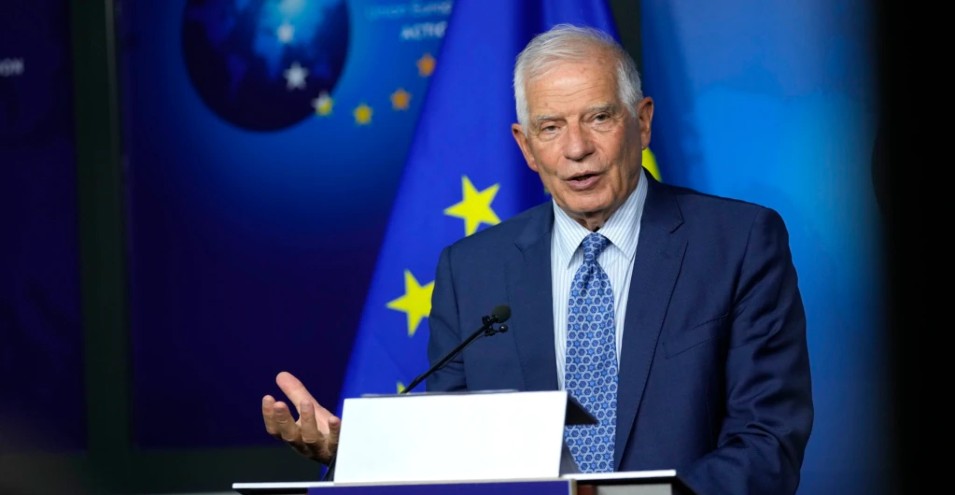
The EU’s foreign policy chief says his hope for an immediate revival of the JCPOA has diminished.
Josep Borrell said on Monday, September 5, “I must regretfully say that compared to 28 hours ago, I now have less confidence in reviving the JCPOA.”
He further clarified that Iran’s response to the proposed final text, with demands for greater guarantees and closing the complementary safeguards file, does not contribute to reviving the JCPOA and the process of reviving the nuclear agreement is “in danger.”
Mr. Borrell, speaking at a press conference in Brussels, added: Recent interactions between Iran and the United States show that their positions have diverged further.
He said: “But our latest interaction was not convergent but divergent. It would be very concerning if the process does not move closer. The entire process is in danger.”
Mr. Borrell added: “Therefore, I am consulting with other parties to the JCPOA negotiations, especially the United States.”
The EU’s foreign policy chief, regarding Tehran’s request to close the file on the origin of uranium particles at Iran’s undeclared sites, said: If the Islamic Republic seeks to achieve an immediate agreement on reviving the JCPOA, this request does not contribute to the matter.
While Washington has warned that Tehran should not link the issue of IAEA investigations into nuclear materials and undeclared locations to a potential JCPOA revival agreement, the spokeswoman for the Islamic Republic’s Foreign Ministry said on Monday that “closing the complementary safeguards file in the negotiation process” is part of the “guarantees” that the Islamic Republic is seeking to make this potential agreement “stronger.”
Nasser Kanaani, regarding Iran’s recent response to the proposed text for JCPOA revival, said the main reason for Tehran’s insistence on the demand to “close the complementary safeguards file in the negotiation process” is to “keep the International Atomic Energy Agency away from political behavior and political games.”
Rafael Grossi, the Director General of the Agency, has repeatedly warned in recent months that Iran is not cooperating regarding the source of uranium discovered at its undeclared sites.
In recent months, a resolution was also passed on this matter in the Agency’s Board of Governors.
Warning about Russia’s hybrid warfare
The EU’s foreign policy chief also warned about “very challenging weeks” ahead for Europe’s economy and energy due to Russia’s “hybrid warfare” pressure.
Mr. Borrell called on EU member states to be prepared for the conditions ahead: “The coming weeks will be very challenging. While Ukrainians pay the price of Russian military aggression with their lives, other European countries face energy and economic pressures.”
He added: “Other countries, especially African countries, are also suffering from the consequences of Russia’s war against Ukraine, and the European Union is trying to use sanctions as a tool to prevent conflict.”
The EU’s foreign policy chief emphasized that the impact of European sanctions on Russia’s economy is “certainly increasing,” especially in advanced technologies.
He stated: Russia’s energy sector itself is in decline, as the country lacks Western technology to develop its oil and gas sector.
Source: Radio Farda