Two U.S. Senators: Potential JCPOA Revival Agreement Will Be Presented to Congress
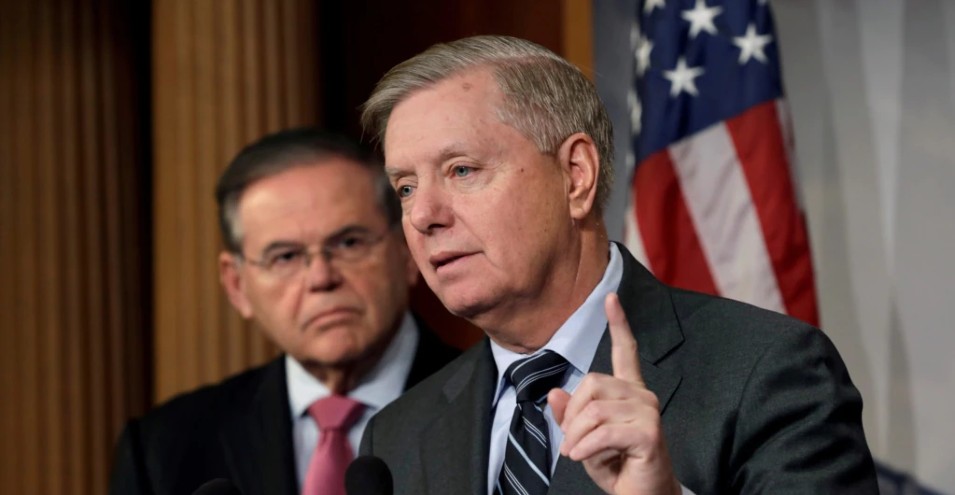
Bob Menendez and Lindsey Graham, two influential Democratic and Republican senators who have traveled to Israel, said Monday, September 5, at a press conference in Jerusalem that the Joe Biden administration has “committed” to bringing any agreement with Iran for reviving the JCPOA to Congress for review.
The two senators, however, said they “expect” such an agreement to face “bipartisan opposition” from both Democrats and Republicans.
Senator Menendez, chairman of the Senate Foreign Relations Committee from New Jersey, added that it remains unclear what the outcome of a congressional vote would be.
Many U.S. senators and members of the House of Representatives have in recent weeks presented numerous proposals to obstruct the revival of the JCPOA and have attempted in various ways to ensure that even if such an agreement is implemented, Iran would not benefit from it.
One of the proposals presented is a request to “make permanent” sanctions laws against Iran, known as “AIPAC,” which was first applied in limited form in 1996 during Bill Clinton’s presidency.
Although the “AIPAC” law was renewed in 2016 for another 10-year period, a number of bipartisan Israel-supporting representatives are calling for this law to be made permanent.
Nevertheless, if the statements of Senators Menendez and Graham regarding the “Biden administration’s commitment” to bringing the new U.S.-Iran agreement to Congress materialize, it would still require a two-thirds opposition vote from members to block it.
Given the need for a two-thirds vote from senators, which is considered a “legal threshold” for overriding a bill or law vetoed by the president, if Joe Biden approves and seeks to implement the JCPOA revival agreement, the possibility that the Senate could stand against Mr. Biden and derail his plan seems extremely unlikely.
Senator Menendez, who also strongly opposed the JCPOA in 2015, told the Monday press conference in Israel that he has no assurance that the new agreement, compared to the original JCPOA, would be an improved text to serve American interests and those of its ally, Israel.
Senator Graham, chairman of the Senate Armed Services Committee, also mentioned at the conference regarding reports published in Israeli media that the Mossad chief was not allowed to attend this committee during his current trip to Washington to speak against the agreement between America and Iran, only saying “he made his points to the commission.” However, Mr. Graham provided no further explanation as to how the Mossad chief’s statements were conveyed.
Israeli media reported that the Senate Armed Services Committee did not accommodate David Barnea, and one or two of his meetings with committee members are personal in nature.
Meanwhile, talks between the Mossad chief and U.S. officials are scheduled to begin on September 6 in Washington. The reason for the delay in these negotiations and the postponement of his trip, which was supposed to take place late last week, remains unclear.
Tom Nides, U.S. Ambassador to Israel, announced on September 5 that Joe Biden, in his latest phone conversation with Yair Lapid, Prime Minister of Israel’s transitional government, said that America would “never” tie Israel’s hands in defending itself in accordance with its needs and has “committed” that Iran would “never” gain access to nuclear weapons.
Joe Biden had spoken with Yair Lapid late last week. Israeli media reported that Mr. Lapid had waited a long time for such a conversation and his requests for this talk had been rejected multiple times.
On September 4, after his phone call with Joe Biden, Yair Lapid said that his government would “vigorously” continue its “campaign” against the JCPOA revival agreement. Lapid’s remarks were interpreted as an indication of his failure in his efforts to convince Mr. Biden to withdraw from JCPOA revival negotiations.
Source: Radio Farda