New York Times Insists on Accuracy of Its Report on Khamenei’s Physical Condition
The American newspaper New York Times emphasizes that its report from last week regarding the illness and recent surgery of Ali Khamenei, the leader of the Islamic Republic of Iran, was accurate and will not back down from it.
On Friday, September 22, the New York Times wrote that the sources who cooperated with the newspaper on the report about Ali Khamenei’s illness and surgery and provided this news to the media were “senior sources.”
Although the New York Times did not name its sources, it appears that the “senior sources” referred to figures close to the government’s leadership or other high-level sources within Tehran’s state apparatus.
Following scattered reports by state media over several days that apparently contradicted each other to prevent the news of the leader’s illness from being published, the New York Times on September 17 cited “four sources” to report that the reason for canceling his regular schedules was intestinal obstruction and surgical intervention.
The New York Times had emphasized that Khamenei’s condition was improving relatively after the surgery, but he still has difficulty with continuous sleep and cannot sit for long periods.
A few days before the New York Times’ report from last week, Abbas Abdi, a senior journalist in Tehran, had expressed unprecedented confidence in an article in Etemaad newspaper that the fate of the JCPOA negotiations had been entrusted to Ibrahim Raisi. He made no reference to this matter.
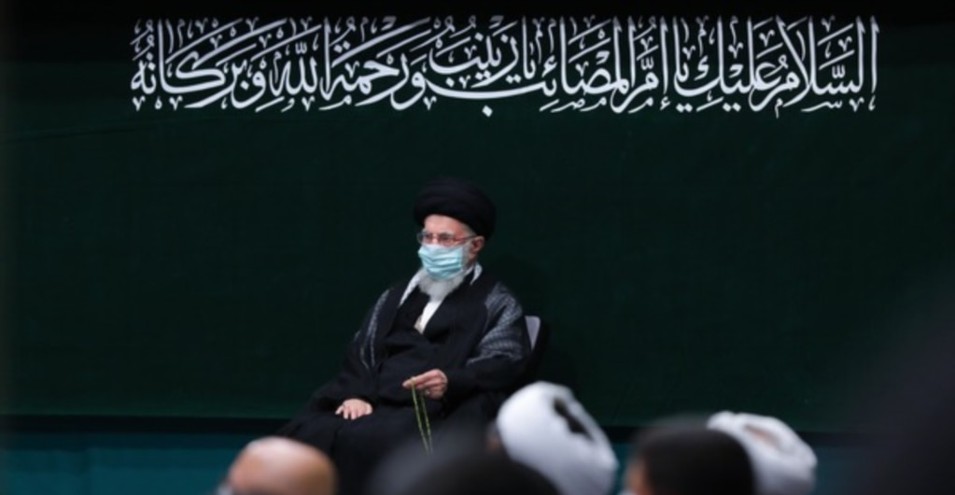
It was after the American newspaper’s report was published that Ali Khamenei appeared last week both at the Arbaeen ceremony and in a meeting with “war veterans,” but the leader of the Islamic Republic did not appear in his usual condition. His voice noticeably lost its usual strength, and by standing and speaking to the audience, he demonstrated that the New York Times’ account regarding his inability to sit for a relatively long time was accurate.
Ayatollah Khamenei had never given speeches standing before people except during Friday prayers or when present at the General Staff headquarters or similar ceremonies. His standing before the audience at “Husainiyeh Jamaran” is also considered a loss of dignity for the “leader.”
Khamenei’s statements in recent days, which apparently were inadvertently expressed, such as repeating the phrase “even I feel tired” and “young people should appreciate their youth,” were interpreted as another sign of his underlying illness.
Mr. Khamenei was also seen in two recent speeches still wearing a mask on a face that looked gaunt and ill compared to a few months ago.
The disease “intestinal obstruction” has been added to his prostate illness, for which he underwent surgery several years ago.
“Intestinal obstruction” is even after surgery in any person at any age among diseases that carry the risk of death and mortality. Such an acute illness in an 83-year-old person is an indication of the possibility of rapid reduction in the person’s lifespan.
In a brief explanation about its report from last week, the New York Times states that it had given Islamic Republic officials the opportunity to comment on the report prepared by this newspaper, but they did not respond to this invitation.
The New York Times subsequently affirmed the accuracy of its report content, stating that Ibrahim Raisi on September 22 did not allow Farnaz Fassihi, an Iranian-born journalist for the newspaper and author of the report on the Iranian government leader’s illness, to attend a meeting of journalists and senior editors from several American newspapers and media outlets with the Iranian president, and demanded that the New York Times apologize.
The deteriorating condition of the aged leader of the regime, at a time when the Iranian people have again taken to the streets in the past week to protest, may play a decisive role in the fate of his regime, which he has ruled for 33 years.
Source: Radio Farda