UN High Commissioner for Human Rights Calls for Independent Investigation into Mahsa Amini’s Death
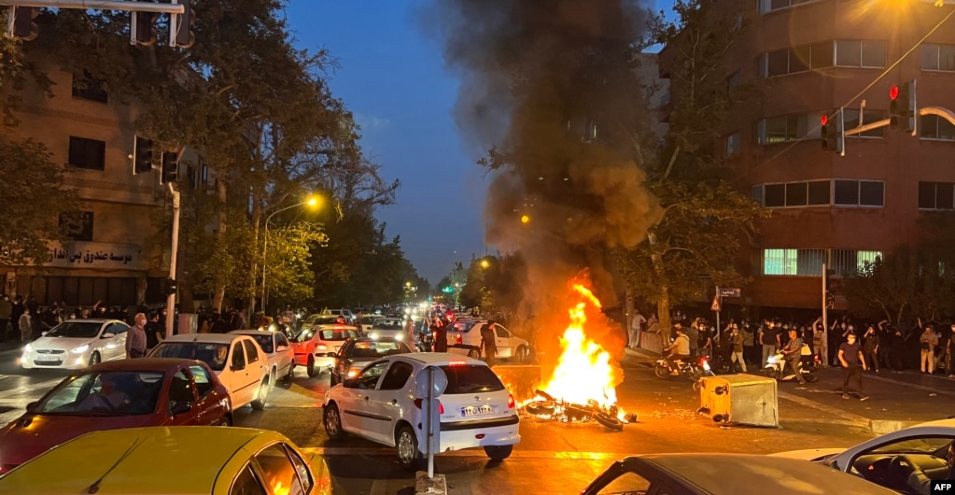
As protests over Mahsa Amini’s death expand across various Iranian cities, the acting head of the UN High Commissioner for Human Rights called for an investigation into Amini’s death on Tuesday, September 29, and expressed concern over the violent crackdown on protests.
Nada Al-Nashif said in a statement: “The tragic death of Mahsa Amini and allegations of torture and mistreatment must be swiftly, impartially and effectively investigated by a competent and independent authority, and in particular it must be ensured that Amini’s family achieves justice and truth regarding their daughter’s death.”
The UN High Commissioner for Human Rights office added that in recent months the activities of morality police patrols and their treatment of women who do not comply with hijab regulations have increased.
According to the agency, verified video footage shows that morality police officers beat women, struck them with batons, and forcibly threw them into vehicles.
Mahsa Amini was detained by a morality police unit on Tuesday of the previous week and was transferred to a police station. She lost consciousness during detention and was then transferred to Kasraii Hospital, but died after three days.
The Iranian government has not yet responded to the UN High Commissioner for Human Rights statement, but has previously rejected all criticisms from this body and accused UN inspectors and experts of political bias and collaboration with enemies of the Iranian government.
Anthony Blinken, US Secretary of State, also wrote on Tuesday in a tweet: “Mahsa Amini should be alive today. But the people of Iran and America are now mourning her. We call on the Iranian government to end the systematic suppression of women and allow peaceful protests to take place.”
Iranian law enforcement released closed-circuit camera footage of the moment Mahsa Amini lost consciousness and claims that she had a history of heart disease or brain tumors. Some media experts in Iran say the images are edited and, unlike all closed-circuit camera footage, the date and time of recording are not specified.
Amjad Amini, Mahsa’s father, rejected claims about his daughter’s heart disease in interviews with Iranian news sites and also said on Tuesday in an interview with the Ravand24 website: “I clearly refute all the statements made by Commander Rahimi, the commander of the police force.”
Mr. Amini added: “They have not responded to my request to see the video recorded inside the morality police vehicle and at the police station.”
He accused the police of transferring his daughter to the hospital too late and said that if she had been transferred more quickly, doctors could have saved her life.
Mr. Amini added that he was not allowed to see his daughter’s body in the hospital, but from a distance he observed bruising on her foot.
Mahsa Amini was buried on Saturday morning in her hometown of Saqez. Shortly after the funeral ceremony ended, protests began in the city and gradually spread to other cities in Kurdistan, including Sanandaj, Mahabad, Marivan, and Divandarreh.
So far, the United States, France, the European Union, and Javaid Rehman, the UN Special Rapporteur on human rights in Iran, have condemned Tehran for the mistreatment that led to Mahsa Amini’s death.
Source: Radio Farda