Sandstorm; Sky of Iraq and Khuzestan Iran Turn Orange
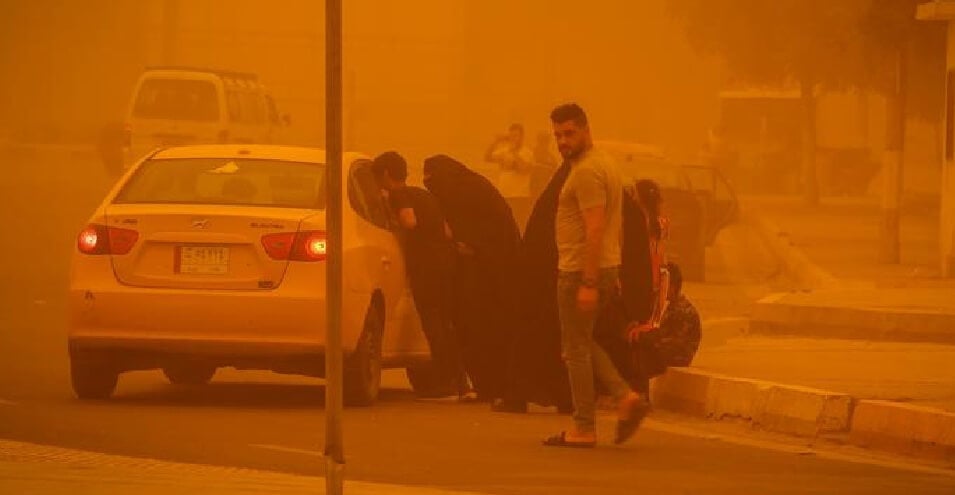
Due to a sandstorm and dust in Iraq, a number of flights have been cancelled and many people have been hospitalized due to respiratory problems. In Khuzestan province, schools, universities and banks were closed following the announcement of an “orange alert.”
Dust and sand have covered the skies of five Iraqi provinces in the central and western regions. A layer of dust has settled on streets and cars, and has even entered homes.
Respiratory problems sent at least 60 people to hospitals in Najaf. At least 50 people also went to hospitals in Karbala on Sunday with respiratory problems. In Anbar province, located in western Iraq, 30 similar hospital visits have been reported.
Flights at Baghdad and Najaf airports have been suspended due to “limited visibility” and horizontal visibility in these areas has dropped to less than 500 meters.
272 Days of Dust and Sand Annually
With the onset of summer, winds from the northwest blow through the plains of the Tigris and Euphrates in Iraq, causing severe dust storms in the country.
According to meteorologists, drought, reduced rainfall and desertification have intensified this phenomenon.
One expert from Iraq’s Ministry of Environment said that “in the coming decades we will face 272 days of dust storms per year.”
Closure of Schools, Universities and Banks in Khuzestan
The sandstorm and dust in Iraq has also affected neighboring provinces in Iran.
With the arrival of dust in the evening on Sunday, Khuzestan’s meteorological office issued an “orange alert” and schools, universities, offices and banks in this province were announced to be closed on Monday, Ordibehesht 12.
Ilam province has also been engulfed in severe dust and sand, with horizontal visibility dropping to less than 50 meters. The concentration of dust and sand in some areas of this province reached above 8,000 micrograms per cubic meter. The permitted limit for dust in the air is 150 micrograms per cubic meter.
Source: DW