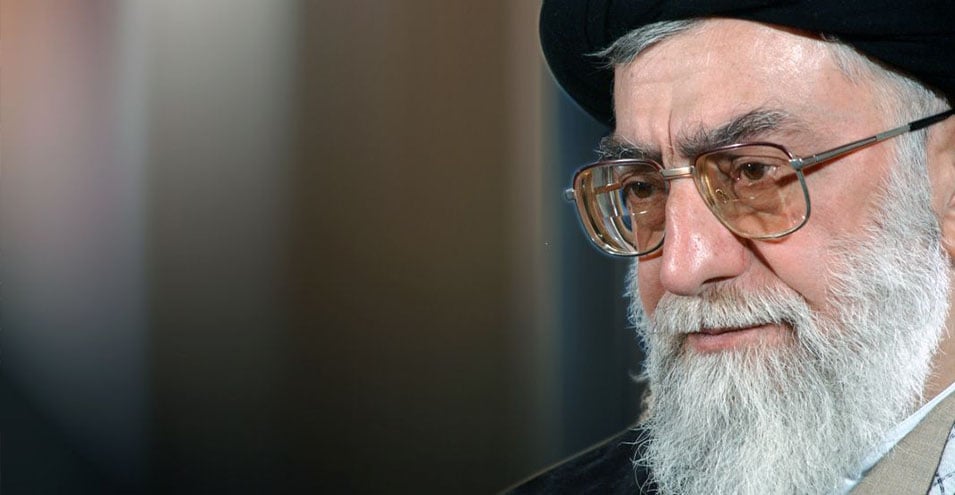
Over the past two weeks, Ayatollah Khamenei, the leader of the Islamic Republic of Iran, has made unprecedented criticism in his speeches of certain trends in the lifestyle of Iranian citizens, expressing his concerns about the consumption of luxury goods and brands, as well as leisure trips to cities such as Antalya in Turkey and the level of cosmetics consumption, and has asked officials of the country not to “open the field for the spread of foreign culture” in the country.
These remarks come at a time when, several months after the implementation of the nuclear deal and the lifting of monetary and financial sanctions by European and American countries, commercial delegations from Western and Asian countries have flocked to Tehran to conclude economic contracts. Such remarks can be considered a reaction to the enthusiasm of Hassan Rouhani’s administration for increased economic investments in Iran in the post-deal era. On the other hand, criticism of the most personal decisions of citizens in their daily lives, such as the choice of travel destination or the use of their favorite television programs, could trigger responses from government institutions to address such concerns and create a new wave of restrictions on civil and social freedoms.
Morning Prayer and Television Watching
The recent criticisms of the Islamic Republic’s leader regarding people’s lifestyle began last week during his weekly jurisprudence class session. Mr. Khamenei, criticizing the broadcast hours of Iran’s state television programs, said: “Television broadcasts until late at night and children and adults sit in front of this magic box.” Iran’s leader attributed people’s failure to wake up for morning prayers to late-night television programming and continued: “In some cities, shops open from nine or nine-thirty in the morning and that is wrong.”
However, Iran’s leader is criticizing late-night television watching while four months earlier, on December 19th of last year, Seyyed Asadollah Dehnadi, the head of Iran’s telecommunications company, announced that “every Iranian uses Telegram for more than two hours a day,” noting that this time is more than double the time people spend watching television.
Previously, cultural and security officials have repeatedly reported on the interest of Iranian citizens in foreign satellite networks. Ezzatollah Zarghami, the former head of Iran’s State Radio and Television Organization, said in June 2014 at the eighteenth festival of radio and television productions: “35 to 40 percent of Iranians use satellite.” Many young Iranians, using the phrase “melli television” instead of “national television,” point to the non-inclusive nature of state radio and television network content and express their protest against political, ideological, religious content and content aligned with guidelines approved by Iran’s leader.
Antalya, Travel to a City of Debauchery
Iran’s leader also mentioned Antalya, the tourist city of Turkey, in his jurisprudence class session, describing it as a place where “debauchery takes place and leads to invalid travel and neglect of prayer.” Mr. Khamenei said: “It would be good if cultural officials and legislators would take measures so that unlawful travels are at least not promoted.”
Antalya is one of the closest tourist destinations to Iran where Iranian citizens can travel without the limitations existing on Iran’s beaches and away from the supervision of coastal patrols of the law enforcement force, which has divided swimming areas into male and female sections, and can freely visit music concerts and enjoy drinks and foods that are prohibited in Iran. Of course, the Antalya in mind of the leader is just one of several cities that many people with sufficient financial resources choose as the destination for their leisure trips. However, other cities such as Istanbul, Yerevan, Baku and Dubai, which are destinations for many Iranian tourists due to easy visa issuance or entry permits, can be added to this list.
The newspaper “Javan,” affiliated with the Islamic Revolutionary Guard Corps, reported on Monday, May 3rd, that four million Iranians travel annually to Turkey and Thailand based on statements by Ayatollah Khamenei, and in support of the leader’s remarks, called on the government to prevent the holding of direct tours from Iran to “tourist destinations known for corruption.”
Brand and American Cars
Iran’s leader also, on the eve of the first of May, International Workers’ Day, in a Wednesday meeting on April 28th with a group of workers, considered support for domestic products and goods as one of the ways to solve problems of the working class and said: “They bring goods with foreign brand names. Unfortunately, there are newly rich people in the country who follow foreign brand names, as they themselves say, foreign brands. I very much dislike this word brand.”
In recent years, luxury shopping centers with high prices in affluent neighborhoods of Tehran and some other major Iranian cities have expanded significantly, and the interest of young Iranians in famous and expensive commercial goods from around the world has intensified. Many of these manufacturers or importers of these goods open their new branches in luxury shopping centers with the presence of film actors and famous sports personalities, making headlines. In addition, the promotion and sale of luxury and Western goods online and even through applications such as Instagram is quite prevalent.
Mr. Khamenei also criticized the import of American cars to Iran and called on officials to seriously stand against this. Iran’s leader finds the use of American cars inefficient due to their high fuel consumption.
However, despite heavy tariffs on cars such as Porsche, Lexus, Mercedes, and Maserati, the import of these cars to Tehran continues, and buyers of these cars, particularly in Iran’s capital, are willing to pay two to three times their original price in foreign countries.
On the other hand, domestic cars have not been able to compete with imported cars in maintaining quality and safety. Peugeot Pars, one of SAIPA’s products, was recognized as the most unsafe and crash-prone car of the year in the Spring of 2016.
The Leader’s View on Cosmetics Consumption
Iran’s Islamic Republic leader, whose recent remarks on the details of people’s lifestyle have sparked much reaction, also said in a meeting with workers: “If the import of cosmetics to our country is as much as they say, billions of dollars, that is bad.” Mr. Khamenei called for resistance against these trends.
Last year at such times, the deputy director of the Office of Cosmetic and Health Products of the Food and Drug Organization reported on the annual import of one billion dollars of cosmetics to Iran and said 25 to 30 percent of these products enter the country through smuggling.
Beyond this, following the nuclear agreement between Iran and world powers, many large commercial companies, including cosmetics manufacturers, are examining ways to enter the young Iranian consumer market. The French cosmetics and health products company “Sephora” announced in December of last year that it would open 7 branches in Iran in 2016. The research institute “Euromonitor” predicted that cosmetics sales in Iran will triple over the next five years. Iran is the world’s largest market for cosmetics products after Saudi Arabia, and some social observers have evaluated the type of dress and makeup of young people in Iran as a silent way of objecting to government intervention in determining the details of citizens’ personal lives and clothing choices.
Opposition to the Promotion of English Language in the Educational System
Iran’s Islamic Republic leader held another meeting on Monday, May 3rd, with teachers and new teachers from across Iran. Mr. Khamenei in this meeting, which was held on the occasion of commemorating Teachers’ Week in Iran, referring to what he called the “international domination system” said: “The domination system wants the next generation of countries to have its thoughts, culture, views, and tastes on global issues.” Iran’s leader said: “Unfortunately, in some cases, instead of promoting the Persian language, the English language is promoted, and now the situation has reached a point where English language instruction has been extended to kindergartens.” He considered this a sign of “promoting foreign culture in the country and among children, adolescents and young people” and stated that “insistence on the exclusive promotion of English is unhealthy.”
Iran’s leader has previously spoken on multiple occasions about his concerns regarding education and higher education in Iran.
It was in 1999 when Iran’s Islamic Republic leader, announcing that “teaching music at university is contrary to Islamic taste,” provoked many reactions in the artistic community.
Mr. Khamenei, in September 2009, in a meeting with a group of university professors, expressed concern that approximately 2 million students in Iran are studying in the field of human sciences and called for the content that Westerners have said and written in human sciences not to be transferred “exactly” to young people, but rather that the content of human sciences be aligned with Islamic principles.
Social Networks, From Jokes and Satire to Criticism and Questions
Mr. Khamenei’s remarks, which cover a wide range of details in the daily lives of citizens, especially Iran’s young generation, have had extensive repercussions among Persian-speaking social media users. Many users on Persian Twitter, by creating a hashtag “#gheyre_است_دیگر” (“#it’s_wrong_otherwise”) which refers to Mr. Khamenei’s remarks about the broadcasting hours of television programs, turned these statements into material for satire and jokes.
Some users, given the multiplicity of Iran’s leader’s criticisms in various fields, targeted the method of governing the country and asked how Iran’s leader, who for the past 35 years has always been either president or leader, is dissatisfied with everything? Many users also identified the “newly rich” criticized by Iran’s leader as the children of system officials. Younger Iranian users, by raising jokes of this kind that “unfortunately it has been seen that some people want to live, well that’s wrong,” protested government intervention in determining their private lifestyle. Some users also announced on Facebook and Twitter, referring to people’s opposition to government intervention in their personal lives, that from now on travel to Antalya, shopping from Western brands and learning English would be considered civil disobedience.
Over the past two decades, Iran’s leader’s criticism of social and cultural issues has always been accompanied by policies and decisions of government institutions that, to satisfy him, have adopted repressive and restrictive policies. Nevertheless, during this time, the lifestyle promoted by government figures and institutions has become so distant from people’s lifestyle that in many areas, the very idea that the methods proposed by government officials for people’s lives could enjoy much popularity faces serious questions.
Moreover, even with the imposition of strict limitations in recent elections, candidates who openly spoke of restricting people’s social and political freedoms or cooperated with government institutions in this regard actually faced far less support than candidates who defended such freedoms.
Source: International Campaign for Human Rights in Iran