France Warns Russia Against ‘Extortion’ in JCPOA Negotiations
The French government has warned Russia against resorting to “extortion” in negotiations to revive the JCPOA.
France’s warning is a response to statements made on March 5 by Russia’s Foreign Minister, who asked the United States to guarantee that Western sanctions against Moscow due to the war in Ukraine would not include Russian-Iranian economic relations.
The Iranian government has also stated that it will not allow other parties to the JCPOA negotiations to prevent this country from achieving its own benefits.
Hussein Amirabdollahian, Iran’s Foreign Minister, said his country “will not allow any foreign country to question the interests of the Islamic Republic of Iran.” Iran’s Foreign Ministry also stated in a statement that it is awaiting an explanation from Russia through “diplomatic channels.”
A senior Iranian official told Reuters on Sunday that Russia’s action is unconstructive.
A spokesperson for the French Presidency’s office told Reuters on Sunday evening: “All countries must deal with each of these issues separately. Otherwise it will be extortion and not diplomacy.”
This French presidential office official called on Russia not to forget the main objective of the JCPOA negotiations, which is Iran’s return to full compliance with all its commitments under the 2015 nuclear agreement with world powers.
A European diplomat said: “Russia really intends to pursue this matter and although the Iranians don’t say so publicly, they are dissatisfied with Russia’s approach.”
U.S. Secretary of State Antony Blinken also said on Sunday, while opposing the creation of any new obstacles in JCPOA negotiations, that Western and U.S. sanctions against Russia have no connection to Iran’s nuclear agreement.
In recent days, all countries participating in JCPOA revival negotiations have expressed optimism about the progress of talks, and Josep Borrell, the EU’s foreign policy chief, said on Friday: “There is a possibility of reaching a final agreement in the coming days.”
Western diplomats say all signatories of the JCPOA want to prevent a nuclear crisis. If Russia’s goal in seeking assurance from the United States is only related to the nuclear agreement with Iran, this request is debatable, but any other condition beyond that will be problematic.
Nevertheless, Western diplomats remind that there are still several key differences between Iran and the United States, one of which is the scope of lifting Washington’s sanctions against Iran.
Ali Shamkhani, Secretary of Iran’s Supreme National Security Council, indirectly asked the United States on Monday to make a political decision.
He said: “The priority of the Iranian negotiating team is to resolve remaining differences, which is considered a red line. Rapid achievement of a strong agreement requires taking new steps by all parties.”
Mikhail Ulyanov, the head of Russia’s negotiating delegation in JCPOA talks, said on Monday in response to reporters’ questions to clarify Moscow’s new position: “At present, we are not supposed to discuss this matter with the media.”
According to three diplomats, the negotiating delegations of European countries have returned to their capitals for consultations and believe that progress in the next steps depends on Iran and the United States.
Some experts believe that Moscow’s concern about the impact of Western sanctions on its relations with Iran stems from the recent agreement of the Ibrahim Raisi government with Moscow aimed at expanding strategic cooperation between the two countries.
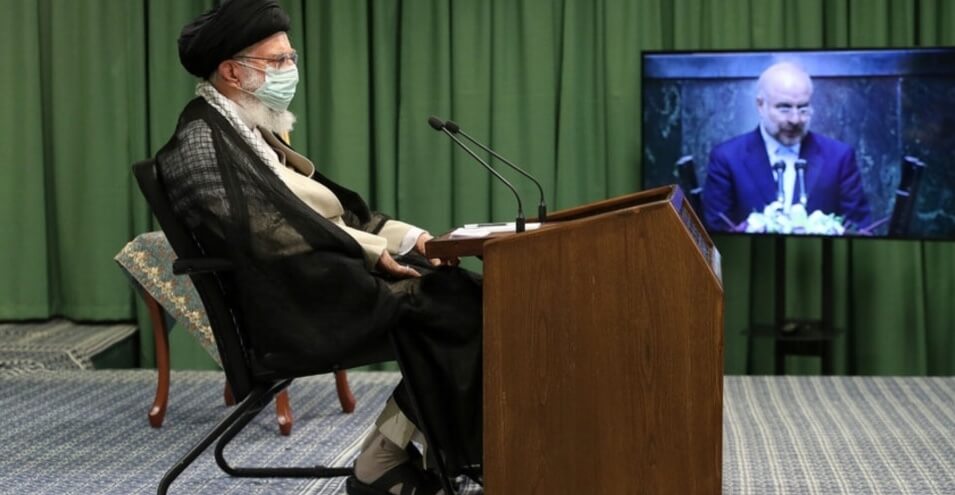
Ayatollah Khamenei, the leader and principal decision-maker in the Islamic Republic of Iran, has called for strengthening Iran’s relations with Russia and China due to distrust of the United States.
Source: Radio Farda