Self-immolation at Ministry of Communications and Minister’s Reference to Harsh Economic Conditions
A fiber optic cabinet manufacturer set himself on fire in protest over non-receipt of his claims from a company related to the internet network at this ministry. The Minister of Communications explained the incident by referring to “harsh economic conditions” in place.
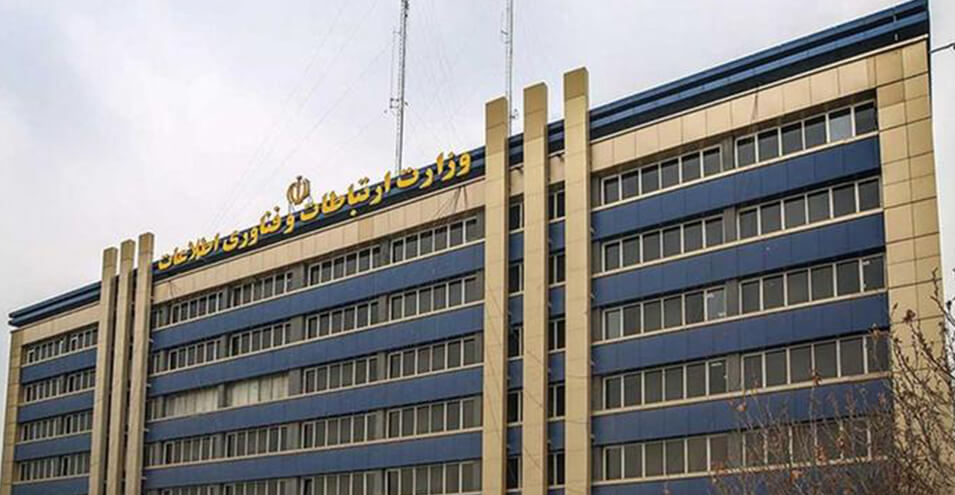
On Tuesday, 4 Tir (June 25), the Public Relations Office of the Ministry of Communications announced a self-immolation by an individual at the ministry. In a statement from this institution, it is stated that the self-immolating person was a contractor for one of the companies contracted with the ICT sector who, following non-receipt of his claims from the said company, went to the central building of the Ministry of Communications with a gallon of gasoline and “while cursing and damaging a glass desk and office furniture at the ministry entrance, by pouring gasoline on himself and the surrounding environment, intended to commit self-immolation”.
According to the statement, the ministry’s security personnel and law enforcement units intervened, and while immediately extinguishing the fire, they detained the individual and handed him over to law enforcement authorities.
Shortly after, Mohammad Javad Azari Jahromi, the Minister of Communications, issued a statement providing further explanation about the economic pressure resulting from the dispute between the self-immolating individual and explained that the self-immolator was a manufacturer of fiber optic home cabinets whom one of the “private internet companies” had failed to honor its contract with him.
The Minister of Communications then reported on arbitration between this individual and the internet company, which ultimately confirmed a breach of contract by the internet company. He further wrote: “Frankly, this manufacturer did not have the capacity to bear this loss; he had genuinely entered the production sector, and failure to observe basic legal principles and unfamiliarity with commercial negotiations in his contract and relying only on verbal negotiations also indicated this point.”
Azari Jahromi concluded his statement by reporting “coordination for the release of the self-immolating individual” and wrote: “I have instructed one of the ministry’s managers to first coordinate with law enforcement to lift his detention; second, in light of what has occurred, request from the internet company to act in accordance with the opinion issued by the arbitrator to resolve this dispute.”
The Minister of Communications’ statement ultimately linked the entire incident to the existing harsh economic conditions: “Economic conditions are difficult and we must all support one another. I hope this dispute between the two companies is resolved quickly.”
Chain Debts
Azari Jahromi did not name the two companies involved in this dispute, and the relationship of the “private internet company” with the government is unclear. However, beyond the “breach of contract by the private internet company,” the minister’s reference to “harsh economic conditions” may point to the issue that alongside corruption and structural economic problems in Iran, the pressure of sanctions has also been severely felt.
In recent months, the high debt of the government to contractors in the private and public sectors has been cited as one of the causes of economic stagnation and financial constraints on companies. According to the provisions of the Production Development Package by the Ministry of Economy for year 98, a major portion of the production financing system can be traced through the government’s share in the economy via general budget and allocation of development credits and financing of contractors’ claims and development projects and schemes. However, under current conditions, due to the intensification of oil sanctions and their effects on reducing the government’s foreign currency resources combined with the inability to impose additional tax burdens on the production sector, the government’s financing system and consequently production financing has faced constraints and bottlenecks.
The considerable volume of government debt to banks, contractors, and manufacturing enterprises (more than 320 trillion tomans) has, besides its negative impact on banks’ lending capacity, resulted in the blocking of a significant portion of creditors’ financial resources.
The bankruptcy of a number of companies or their inability to pay their financial obligations to employees or other companies have been consequences of these conditions that themselves have led to increased unemployment and poverty in society. The increase in self-immolations has also been cited as a consequence of these conditions.
Source: DW