Increase in Migration of Iran’s Healthcare Workers; Health Ministry: We Lack at Least 100,000 Nurses
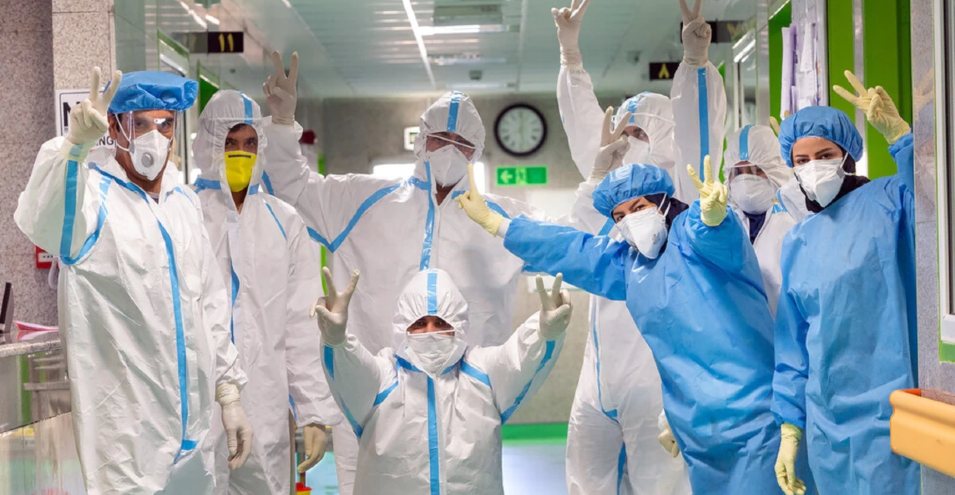
Iran’s Deputy Health Minister says the country’s pharmaceutical and medical system faces a shortage of at least 100,000 nurses.
Abbas Abadi, Deputy for Nursing at Iran’s Health Ministry, referring to efforts made in previous years to recruit nursing staff, says that given the “shortage of at least 100,000 nursing personnel” in the country, such recruitment efforts are merely “a palliative.”
Officials at the Islamic Republic’s Health Ministry have repeatedly stated that concurrent with the continuation of various waves of coronavirus disease and the increasing migration of medical and healthcare staff, the country faces a significant shortage of nurses.
The Secretary General of Iran’s House of Nursing said in Esfand 1400 (March 2022), referring to the increasing trend of nurse migration and the non-replacement of these personnel, that “this year we had departures but no arrivals; meaning that despite some personnel leaving due to retirement, migration, and job resignation, no hiring took place.”
Sharifi-Moghaddam acknowledged that this shortage of nurses has reduced the level of service provided to patients. He said: “A shortage of nursing personnel increases pressure on existing staff; currently nurses are putting in all their effort to work, but people are still not receiving half the care they should.”
Many nurses are dissatisfied with working conditions in Iran. Low salaries and lack of job security have driven many nurses toward migration, while many countries have facilitated immigration and hiring conditions for nurses concurrent with the pandemic.
This issue has not escaped the attention of those involved in the matter.
The Head of the Nursing System Organization, in Azar 1400 (December 2021), in response to the wave of migration of elites and specialists—a matter that Islamic Republic officials previously denied or concealed—said “countries around the world are looking for our nurses.”
This is while the newspaper Dunya-ye Eqtesad in Shahrivar 1400 (September 2021) published a report on this matter, quoting the Secretary of the Supreme Council of Nursing System, stating that nurse departures “are estimated at 500 people per month.”
Disproportionate compensation conditions and lack of job security have been a constant concern for this group.
Nurses in various Iranian cities have repeatedly protested in recent years against low salary levels, 89-day contracts, and unsuitable professional conditions, calling it “state exploitation.”
The spread and prevalence of coronavirus in the past two years has also exacerbated the problems of Iran’s healthcare workforce, to the extent that several protest gatherings were held by them over the past year to express their professional demands. This is while the pandemic has also inflicted severe blows on Iran’s healthcare system.
According to a report from Shahrivar 1400 (September 2021) in the newspaper “Dunya-ye Eqtesad” published in Tehran, “during the two years since coronavirus spread in Iran, approximately 80,000 nurses have contracted COVID, and more than 110 of them have lost their lives.”
All of this comes as officials hope to find a way out of this crisis.
Abbas Abadi, in his Tuesday remarks to nurses at Gonjaian Hospital in Dezful, expressed hope that he can overcome these problems. He said that “with the help of the Deputy for Development and the Administrative and Employment Organization, the Islamic Consultative Assembly and the Nursing System Organization, in the current year, in addition to recruiting nurses active in the coronavirus crisis, we will recruit a significant number of nursing personnel and bring the nurse-to-bed ratio closer to standard.”
Iran’s Deputy Health Minister, implicitly acknowledging the reality of nurses’ poor living conditions, referred to measures taken in the field of “ensuring nurses’ livelihoods” and promised that “we hope the law on pricing nursing services will, while helping implement justice in payments, reduce nurses’ complaints in this area to some extent.”
Nurse personnel shortages have created double pressure on the nursing workforce, to the extent that a spokesperson for the Health and Treatment Commission of the Islamic Consultative Assembly said last year that nurses in the country are forced to work “150 hours of mandatory overtime” to compensate for this shortage.
Source: Voice of America