Shadow of Repression Over Iran: Citizens’ Account of Fear, Executions, and Hope for Fresh Protests
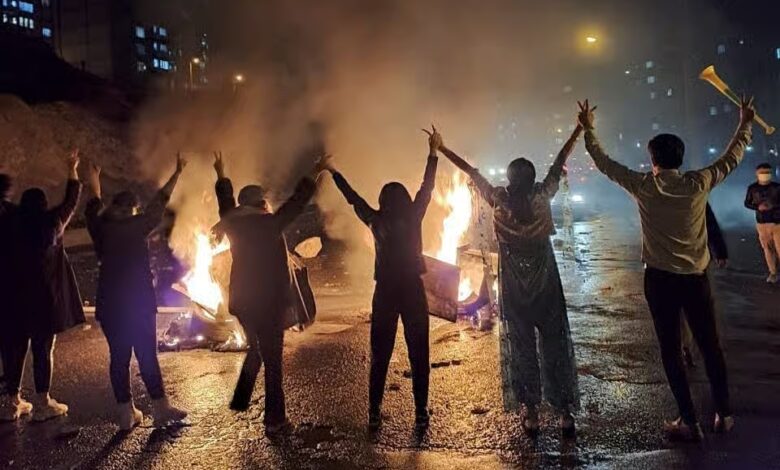
Six months after the nationwide protests of December, several Iranian citizens in an interview with the Daily Mail have spoken of the continued severe security environment, rising executions, expansion of security checkpoints, and economic pressures. These individuals, whose identities have been changed for security reasons, say that fear has become part of everyday life, but at the same time many of the protesters believe that public discontent continues to rise and future protests could be more widespread than before.
Six months after the nationwide protests of December, a fresh report from the Daily Mail presents a picture of everyday life in Iran in which many opponents of the Islamic Republic speak of continued arrests, executions, the widespread presence of security forces, and increased economic pressures.
This report was published simultaneously with the multi-day funeral ceremony of “Ali Khamenei,” the former leader of the Islamic Republic—a ceremony that, according to some of those interviewed, is an attempt to display government power at a time when public discontent continues.
“Aveen,” a teacher around 30 years old, says on this matter: “People have reached a point where they no longer fear death as they did before. Many believe that if they are killed in protests, they might lose their lives anyway in these conditions.” She also predicts that future protests will be more widespread than the December protests, because people who previously did not participate in demonstrations now have more motivation to do so.
“Sara,” a sports trainer from northern Iran, also says: “People have not forgotten the killing of protesters, and many families are still waiting for a day when those responsible for this massacre are held accountable.” She compares the current situation to an “open-air prison” and adds that in some small towns, families know well those who played a role in suppressing the protests. According to her, the installation of government slogans at the entrances of cemeteries where victims of the protests are buried has added to the families’ suffering.
“Arman,” a Tehran resident who lost a relative and a friend in the protests, says: “Families of those killed are now more willing to participate in protests.” He also claims that one of his acquaintances who was on military leave was shot and killed by security forces merely for playing music (this claim cannot be independently verified).
“Kamran,” a citizen around 40 years old from Tehran, describes the security environment as follows: “Every time I hear the sound of a door at home, I am ready to destroy my phone so that my messages do not fall into the hands of security forces.” He also claims that military vehicles, heavy weapons, and armed patrols are still present throughout the city and nights see government slogans broadcast from vehicle loudspeakers. Some of his claims, including the use of foreign paramilitary forces for patrols, have not been confirmed by independent sources to date.
“Mina,” another Tehran resident, also says: “Fear has become part of our everyday life; at work, on the street, on the bus, and even inside the house.” She lists the continuous increase in the prices of medicine, food, utility bills, and other living expenses as one of the people’s most important concerns and adds: “Every execution, every arrest, and every security checkpoint is a message to force people into silence.”
In another section of this report, someone who was previously detained says that security officials had copies of his posts published on social media during interrogation; posts that, according to him, showed support for Prince Reza Pahlavi. He says that although his phone contained only ordinary messages, he was released after some time, but many others have not found such an opportunity.
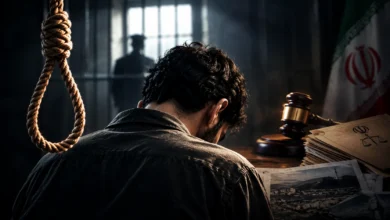
Meanwhile, “Mahmoud Amiri-Moghaddam,” director of the Iran Human Rights Organization, says: “To maintain power, the government relies above all on repression and instilling fear, and executions are considered the most important tool of intimidation.” According to this organization, at least 101 people have been executed in Iran in the past month alone, and since the beginning of the year, 360 cases of execution have been recorded, although these figures have not been confirmed by official sources of the Islamic Republic.
The aforementioned report points out that despite official propaganda, many Iranians still hope for change in the future of the country. “Aveen” also says in her interview: “The people of Iran have reached a boiling point; change is on the way, it is just a matter of time.”
Overall, the aforementioned report shows that despite widespread repression, a sense of discontent remains among sections of Iranian society. Some of those interviewed believe that future protests, if they begin, could exceed the scope and popular participation of the December protests; although the timing and manner of their occurrence remain unclear.