Strait of Hormuz Dispute; Cracks in Islamic Republic’s Approach to US Confrontation Become More Apparent
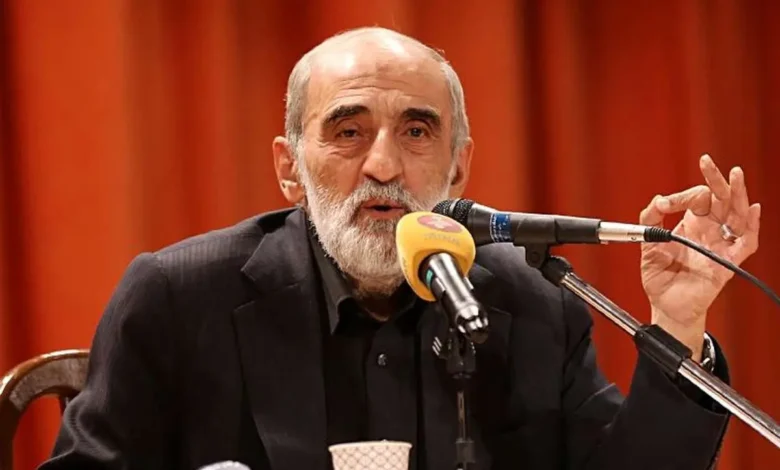
Sharp criticism by Hossein Shariatmadari of the positions held by Iran’s Deputy Foreign Minister regarding the Strait of Hormuz, coinciding with statements by the US Vice President about internal divisions within the government and a Reuters report on Tehran’s threats’ role in changing Washington’s calculations, points to deepening divisions within the Islamic Republic’s structure.
Disagreement among figures close to the Islamic Republic’s ruling establishment over how to manage the crisis with America and the Strait of Hormuz issue has once again returned to the headlines. Meanwhile, American officials are speaking of serious rifts in the Islamic Republic’s decision-making structure, and a recent Reuters report has revealed the role of Tehran’s threats and the concerns of regional countries in preventing the expansion of American military attacks.
Hossein Shariatmadari, editor-in-chief of Kayhan newspaper, sharply criticized the remarks made by Kazem Gharibabadi, Legal and International Affairs Deputy at Iran’s Foreign Ministry, regarding an understanding with Oman and the status of the Strait of Hormuz. He argued that facilitating a passage for ships through Iranian territorial waters effectively means losing one of the Islamic Republic’s most important leverage points against America and its allies.
Shariatmadari, referring to Gharibabadi’s statements, found contradictions between different parts of his remarks and raised the question of how one can emphasize on one hand that the understanding with Oman does not mean opening the Strait of Hormuz, while on the other hand speaking of a significant portion of shipping routes passing through Iranian waters. He described this situation as “opening a passage” and “paving the way for the enemy to escape,” arguing that the Islamic Republic should not set aside one of its most important strategic tools.
This internal disagreement coincides with remarks by J.D. Vance, the US Vice President. Vance had stated: “The power structure in the Islamic Republic is ‘fragmented,’ and while one part of the ruling establishment seeks to reduce tensions and end confrontations, another group continues to insist on continuing the standoff.” He added that these very divisions have complicated and prolonged any negotiation process with Tehran.
The US Vice President also emphasized that Washington is attempting to manage this situation by simultaneously employing military, economic, and diplomatic tools and reach an outcome that serves US interests. According to him, resolving this process will not happen quickly and requires time.
Meanwhile, Reuters news agency, citing five informed sources, reported that following threats by US President Donald Trump, the Islamic Republic had conveyed a message to regional countries that any broader attack would be met with a direct response against energy infrastructure and American positions in the region. According to this report, officials from Saudi Arabia, Qatar, Turkey, and Pakistan also called for preventing the escalation of confrontation and a return by the parties to the path of diplomacy.
Abbas Araghchi, the Islamic Republic’s Foreign Minister, had also conveyed these messages in consultations with regional officials. Reuters sources believe that this set of warnings, combined with Arab governments’ concerns about the expansion of war in the Persian Gulf, played an effective role in Washington’s decision to refrain from broader attacks and continue the path of negotiations.
Overall, the simultaneity of these three events (unprecedented criticism by media close to the Islamic Republic’s leader of the diplomatic apparatus, assessment by American officials of the government’s internal rifts, and the publication of Reuters’ report on the role of Tehran’s threats in regional equations) demonstrates that the Islamic Republic continues to face the fundamental question of whether to continue the strategy of confrontation or pursue the path of diplomacy to reduce tensions—a question whose answer remains a point of contention across different levels of power.