Claims of Iran’s Caspian Sea Share Transfer and Secret Islamic Republic Deal Spark Controversy Again
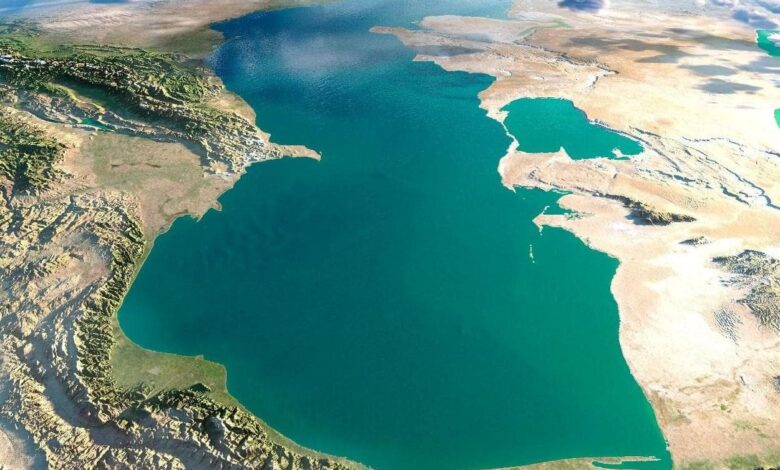
The publication of a statement by the Ama Party regarding the possibility of approving an agreement that critics say would reduce Iran’s share of the Caspian Sea to less than 13 percent has once again brought the controversial Caspian Sea file into the center of public attention; a claim that has not been officially confirmed with legal documents to date, but has intensified criticism of the Islamic Republic’s performance in Caspian negotiations.
The publication of a statement by the Ama Party regarding what has been described as “the Islamic Republic’s efforts to reduce Iran’s historical share of the Caspian Sea and its secret approval in parliament” has once again turned the debate over how to manage the Caspian Sea legal file into one of the hot topics in Iran’s political sphere.
The statement claims that the Islamic Republic is ceding part of Iran’s rights in the Caspian Sea to maintain Russian support, and that the Iranian people will never recognize such an agreement. The party also cited analyses by Murad Vasi, a journalist and political analyst, claiming that the government intends to reduce Iran’s share to less than 13 percent.
However, a review of existing legal documents shows that to date there is no official document or published treaty proving that the Islamic Republic has “sold” the Caspian Sea to Russia or transferred ownership of part of it. This claim has not been confirmed to date by any international legal authority or official treaty text. In contrast, what is the subject of dispute and widespread criticism by experts and opponents of the Islamic Republic is the manner of managing negotiations and the concessions that, in their view, have weakened Iran’s legal position.
The root of this dispute goes back to the Convention on the Legal Status of the Caspian Sea, which was signed in 2018 among five littoral states. This convention did not specify a particular share for any of the countries and transferred the issue of determining seafloor and subsoil boundaries to future bilateral and multilateral negotiations. This is what has caused critics of the Islamic Republic to warn about the decline of Iran’s bargaining power and the possibility of limiting the country’s share in the future.
One of the most controversial issues is the claim of reducing Iran’s share to around 11 to 13 percent. Some legal scholars and analysts believe the negotiation process could in practice lead Iran to such a share, while the Islamic Republic for years emphasized a 20 percent share. In response, various governments of the Islamic Republic have always stressed that no final agreement on determining countries’ shares has been signed yet.
Meanwhile, another common claim circulating in Iran’s political sphere is that Iran owned 50 percent of the Caspian Sea before the revolution. However, many international law researchers believe that the 1921 and 1940 treaties between Iran and the Soviet Union did not explicitly determine 50 percent ownership and focused more on shipping and shared use of the sea. With the collapse of the Soviet Union and the increase of littoral states from two to five, the Caspian Sea’s legal regime entered a completely new phase.
Despite these legal considerations, opponents of the Islamic Republic believe the main criticism still stands: that over the past four decades, the government has repeatedly placed national interests in secondary priority in its relations with Russia and other regional allies. They argue that even if the claim of “selling the Caspian Sea” is not legally provable, the Islamic Republic’s performance in Caspian negotiations has been such that it has weakened Iran’s position compared to the past and created considerable ambiguity about the fate of the country’s energy resources and maritime rights.
Experts also emphasize that until the final text of agreements on demarcating the Caspian seabed and subsoil is published, one cannot speak with certainty about Iran’s final share. However, the lack of transparency in the negotiation process and limited public information remains one of the most important reasons for the continued mistrust and the spread of speculation about the future of Iran’s interests in the Caspian Sea.