Russian Ambassador to Iranian Media: Use the Term ‘Special Military Operation’ for Russia’s Actions in Ukraine
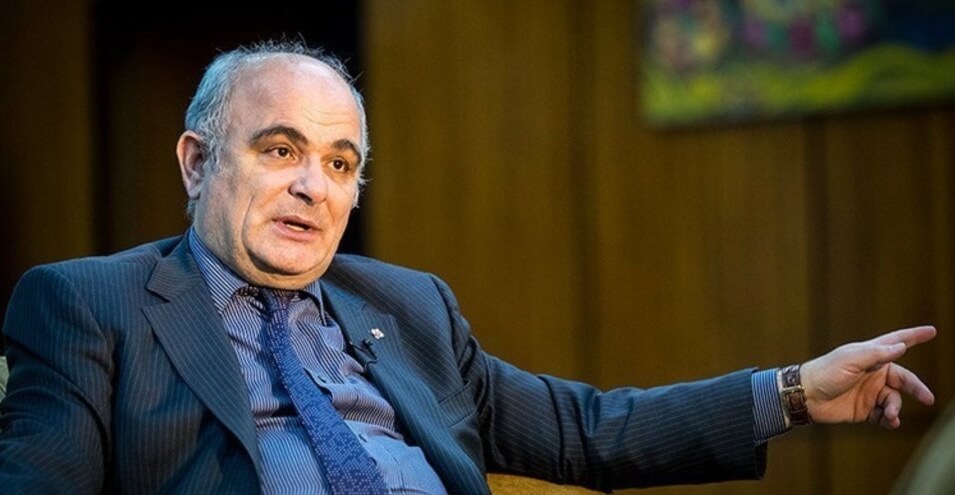
Russia’s ambassador to Iran has asked domestic Iranian media to refrain from using the phrase “military invasion” regarding Russia’s actions in Ukraine and instead use the term “special military operation.”
Lovon Jagaryan said on Wednesday, March 9, during a limited press conference, in response to a question about how long Moscow’s military invasion of Ukraine would continue: “We will continue this operation until we achieve our goals in Ukraine.”
In recent days, in addition to Russia’s military invasion of Ukraine, which has been followed by widespread protests on social networks, a gathering in front of the Ukrainian embassy in Tehran, and chants of “Death to Putin and Putin’s supporters,” Russia’s approach to nuclear talks has also faced harsh criticism.
Russia’s ambassador to Iran, while denying allegations about Moscow’s efforts to sabotage the JCPOA revival talks, stressed: “We want the JCPOA to be concluded, but our interests are also important to us.”
Jagaryan, noting that Russia played a “significant role” in the 2015 nuclear agreement known as the JCPOA, accused Western powers of seeking to create a rift and division between Tehran and Moscow.
When asked why Iranian officials were not informed about Russia’s request for written guarantees from the United States, he said: “We are in contact with Iranian counterparts about this matter, but I cannot provide details, and only high-ranking officials in Tehran and negotiators in Vienna are aware.”
France has called Russia’s recent request regarding the JCPOA “extortion” of the nuclear talks, and the United States has also said the Russian request is “irrelevant.”
Russia’s foreign minister said on March 5 that the United States should provide written guarantees that new sanctions imposed against Moscow due to its invasion of Ukraine will not negatively affect Iran-Russia trade relations after the JCPOA is revived.
He said: “We want guarantees that these [Ukrainian] sanctions in no way affect our economic and commercial relations [with Iran] that are stipulated under the JCPOA.”
In this regard, Lovon Jagaryan, in response to reports about Russia’s guarantee request for the JCPOA, said: “We ask the Iranian people not to listen to statements from foreign radios like Radio Farda.”
The Russian ambassador’s criticism of Radio Farda has a precedent. Last June, Lovon Jagaryan, in response to the publication of several analytical notes on Radio Farda, accused the outlet of “trying to damage the friendly relationship between Iran and Russia.”
Following Russia’s invasion of Ukrainian territory over the past week, a wave of sanctions has been directed at Moscow, to the point that according to statistics, this is the most extensive sanctions regime in history that has ever been used against a country.
Over the past 10 days, these sanctions have severely caused the value of Russia’s national currency, the ruble, to decline, and many foreign companies have exited the country’s market.
Russia’s ambassador to Tehran, in justifying Moscow’s military invasion of Ukrainian territory, accused the United States of producing chemical weapons in Ukraine for years.
He claimed that Moscow would soon reveal details of this matter.
Source: Radio Farda