Ministry of Power: Eight Million Rural Population Facing Water Stress
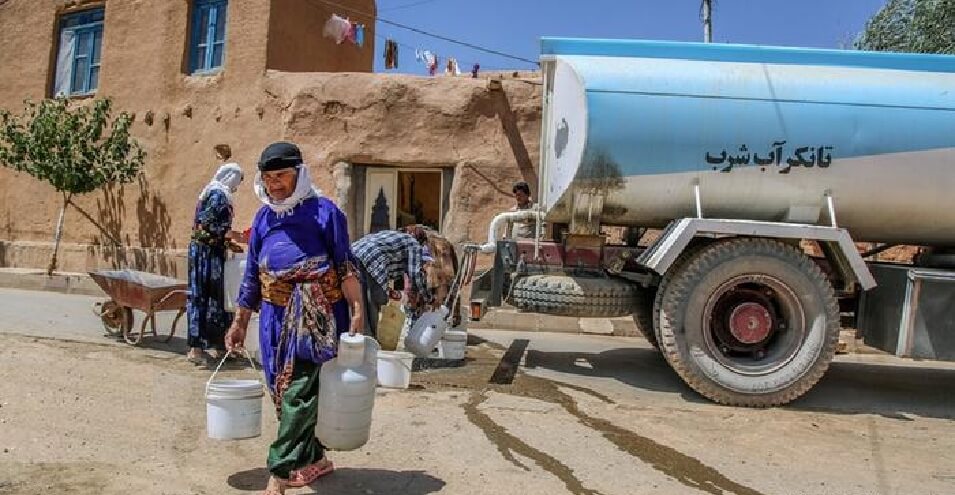
Maysam Jafarzadeh, head of the Water Supply Jihad Center at the Ministry of Power, announced that more than eight million rural residents in thousands of Iranian villages are struggling with water stress. He said the Raisi government now intends to resolve this “sacred water supply mission” with a “jihadi spirit.”
Maysam Jafarzadeh, head of the Water Supply Jihad Center at the Ministry of Power, announced on Sunday, February 18 (February 7) during a ceremony launching Ministry of Power projects held in the presence of Ibrahim Raisi, Iran’s president, the commencement of water supply operations to 7,138 villages.
He claimed that “the thirteenth government will not act like previous governments and will urgently resolve the water stress in thousands of villages.”
Jafarzadeh emphasized that this urgent program will be implemented over 30 months with a budget estimate of 19 trillion tomans through contracts with the “Imam Hassan” command base.
This official stated that currently more than eight million people from Iran’s rural population in a total of 28,000 villages are facing water stress.
The head of the Water Supply Jihad Center at the Ministry of Power offered no explanation as to why water stress affecting millions of Iranians in rural areas was not resolved under previous Islamic Republic governments. However, he spoke of a “special mission” and “jihadi spirit” in the “sacred water supply mission” and promised that the drinking water and sanitation problems of millions of rural residents “will be resolved.”
The head of the Water Supply Jihad Center at the Ministry of Power also announced the establishment of a “Water Supply Jihad Council” consisting of “water sector experts and specialists, water supply philanthropists, national relief organizations and humanitarian agencies, and jihadi groups.”
Thousands of villages, according to officials’ admission, lack piped water, and residents’ water needs are met by water tankers transporting water to these villages.
The problem of water and drought in Iran has a history spanning several decades. This crisis has become alarming in recent years, and since the new president took office, the water shortage crisis has only become the leading headline in the country’s news.
Last November, those protesting the government’s water supply policies took to the streets in Isfahan and Shahrekord. The city of Isfahan witnessed continuous and widespread protests by farmers and other social groups over the drying up of the Zayandeh Rud for several days. These protests turned violent with the intervention of security forces and were suppressed.
Source: DW