Seminary Students’ Bold Push to Take Over Schools
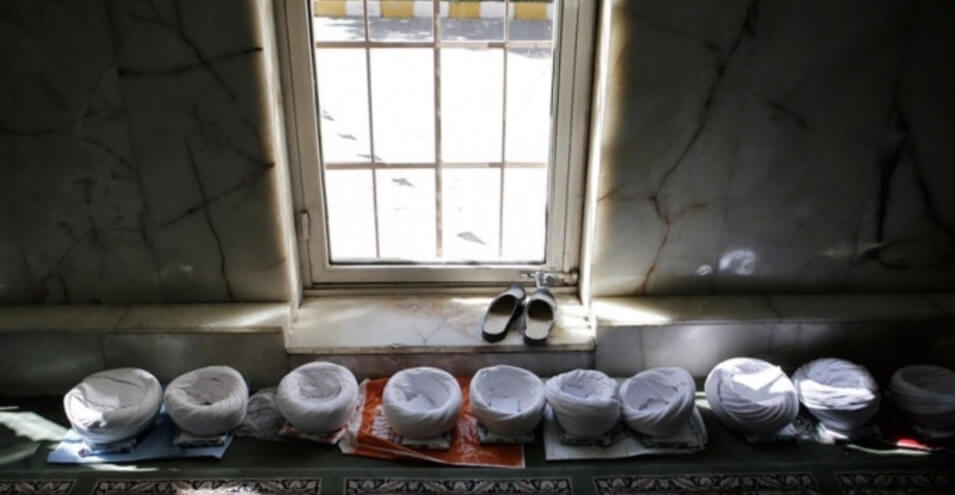
One of the Islamic Republic’s most important ongoing programs is the control of schools by theological seminaries; a program that includes hiring and deploying thousands of seminary students to schools across the country, revising textbooks, increasing the share of seminary students in teaching in place of teachers, and even launching “preschools” under seminary supervision.
Based on cooperation between the Ministry of Education and theological seminaries and a resolution passed by the Islamic Consultative Assembly in 1996, “25,000 male and female seminary students” are to be hired in the country’s education system. The ministry formally announced in April of last year that the purpose of implementing this decision is to “Islamicize schools.”
Seminary officials also argue, citing a resolution from the Supreme Council of the Cultural Revolution, that “10 percent of all hires in education must be from among seminary students.”
The path for hiring seminary students in schools has been specifically paved through Article 28 of the Farhangian University statute. This article, aimed at “compensating for teacher shortages,” states that seminary graduates holding discharge certificates can be hired into the education system by only passing an exam. According to this article, levels two and three of the seminary are classified as equivalent to bachelor’s and master’s degrees.
In just the last academic year, 440 seminary students were hired as teachers, but the seminary formally stated it is not “satisfied” with this recruitment level.
“Seminary-Soldiers”; Faster and Easier
Of course, formal hiring is not the only way for seminary students to enter schools; an easier path is completing military service in schools.
On June 7 of last year, the Ministry of Education issued Circular No. 710/12 to provinces, emphasizing that seminary students could complete their military service in schools throughout the country, “as in previous years.” Physical fitness, an active code in the Seminary Management Center, and wearing clerical attire were among the stated requirements for these “seminary-soldiers.”
According to official statistics, in the current academic year, “two thousand seminary-soldiers” have entered schools.
The influx of thousands of seminary students into schools through various Iranian institutions is being pursued intensely. For example, 29 members of parliament in December of last year, by presenting a plan, not only called for expediting and facilitating the presence of seminary-soldiers in schools but also requested that the full salaries and benefits of these students during these two years be paid by the Ministry of Education.
This all occurs while the ministry itself faces severe budget shortfalls, and Iranian teachers periodically gather and protest in objection to livelihood problems and insufficient salaries.
Seminary Plans and Programs for Schools
Examining the news and activities of theological seminaries in recent years shows that seminary students have clearly decided to enter schools in the role of teachers. To this end, a separate center was established within the seminaries: the “Teacher Training Center of Theological Seminaries,” which was approved on March 11, 2019, to organize all matters related to students entering schools.
One of these matters is defining new fields of study in the seminary aimed at schools. According to the secretary of the coordination headquarters of theological seminaries and education, about 400 new fields have been defined in theological seminaries, mainly in the field of education and training, with over 200 of these fields now active. Officials of this headquarters have repeatedly and explicitly stated that “education is the closest field for seminary students’ activities.”
We are talking about “thousands of students.” In the last academic year, opportunities were provided for “more than 12,000 seminary students” to take the education employment exam, and it was officially announced that the possibility of employing “approximately 3,000 clergy” for teaching in education schools has been provided, with this number to increase in subsequent years. This occurs while, according to official statistics from last academic year, at least 4,500 “formal teachers” in education hold diplomas from theological seminaries.
The seminary’s push for schools also includes smaller plans to create conditions for maximum and broader presence of clergy in schools. Among these is the “Boom Plan.” According to this plan, two hours of the weekly schedule are given to the school principal, and seminary officials say that in several provinces, the “Boom Plan” is used for topics such as “clergy influence in schools.”
Seminary students have for years been sent to schools through plans such as “Islamic Education Week.”
Alongside all these plans, numerous training courses are held by clergy under the pretext of “answering religious doubts,” “promoting resistance economy,” “promoting a culture of sacrifice and martyrdom,” “commanding the right and forbidding the wrong,” “velayat-acceptance,” and “promoting religious discourse” in schools.
Students are not seminary officials’ only target; some seminary plans are even for parents. Seminary officials say that in the 2019-2020 academic year alone, approximately 20,000 short-term training courses were held for student guardians on topics of “hijab and Islamic lifestyle.” In all these courses, seminary students are present as “preachers.”
The seminary’s main and oldest plan, however, is called “Amin,” through which seminary students, mainly under the pretext of teaching “educational lessons,” entered schools across the country.
For this purpose, the necessary capacity had to be provided for so many students in the country’s educational structure. In this regard, it was officially announced in September 2019 that employment exams for “brother and sister seminary students” in education increased from three fields to eight fields. History teaching, philosophy, Persian literature, and social sciences were among the new fields introduced for seminary students. Previously, students were mainly recruited into education in fields such as Arabic language, Quran, and educational sciences.
But this is not the end of the story, because the seminary also wants guarantees. In September 2021, a course called “Preparation for Seminary Student Employment Exam in Education” was held to ease seminary officials’ concerns about “successful student participation in this exam.”
A New Shop Opened!
There may be no need to explain what an enormous operation with massive budgets has been established alongside all these plans and programs; new centers that are sprouting up like mushrooms across the country and require billions of tomans in funding. For example, seminary officials say they have planned and launched a research center for special education cooperating between seminaries and schools, think-tank boards, multiple magazines to define “revolutionary-standard teachers and students” and numerous theoretical chairs; a new spread has been laid out.
Recently, the director of the Seminary Preacher-Teacher Training Center stated in December 2021 that appropriate groundwork has been provided in recent years for students’ presence in schools, and currently “various seminary deputies” are busy with further preparations.
In numerous centers established with the goal of student presence in schools, many small and large projects have been defined. Seminary officials announced in September of last year the establishment of “12 major mega-projects” and “several new research groups” in the Teacher-Preacher Training Center of Qom Seminary and said that “fifty researchers” are to be hired for these projects. Publishing magazines “Revolutionary-Standard Teacher Training” and “Education and Elevated Training” are other activities in such shops.
According to seminary officials, in the 2019-2020 academic year, “more than 8,000 meetings” were held across the country about the necessity of student presence in schools. They also promised during the recent summer that “soon five specialized fields for teacher-student training will be launched.”
Part of this shop relates to cyberspace. The director of practical education and propaganda of Isfahan Seminary announced in October of last year the formation of “a team for producing content for cyberspace appropriate for students,” saying that this team, as a supporter of teacher-preachers, “produces clips, podcasts, and such products.”
Clearer than all of this, the director of the Teacher-Preacher Training Center of Theological Seminaries dropped formalities in June 2021 and asked the Islamic Consultative Assembly and the government to specifically “allocate a separate budget line for this center.”
It has been years since this shop’s unofficial opening. For example, in 2015, under a plan called “Mobin,” nearly two billion tomans were spent so that some high school principals could learn about prayer instruction. The dollar exchange rate that year was below 4,000 tomans.
Of course, the seminary is also pursuing a kind of “reverse engineering” in all these plans and shops; that is, attracting students to theological seminaries. According to one responsible official, numerous programs are held each year for “meetings of students with scholars and learned seminary officials,” and most of these students “are in grades 9 and 12 and on the threshold of choosing a field.”
Few Opportunities and Many Students!
The seminary’s extensive program for the country’s education system is directly implemented under the supervision of the Islamic Republic’s leader, with Alireza Afsahi, the head of theological seminaries in the country, as the mediator. Afsahi occasionally presents statistics of his successes. For example, he recently announced in Semnan the recruitment of 4,500 students into education and said that “60 percent of them are female students.” Afsahi asked these new student-teachers to “open new horizons.”
In terms of organization and implementation, plans for students’ presence in schools are carried out by the Leader’s representative in provinces, Friday prayer leaders, provincial education directors, theological seminary officials, the Organization of Endowments, and the Organization of Islamic Propaganda.
Meanwhile, media under Khamenei’s supervision also regularly beats this drum. For example, Kayhan newspaper in the December 1, 2021 issue specifically called for “a brother or sister seminary student” to be present in each school and for this to become “law.”
The seminary’s plan to capture schools is so extensive that the seminary has even considered establishing preschools. The secretary of the cooperation headquarters of theological seminaries and education announced in November 2020 the launching of “preschools affiliated with seminaries” whose “management and programs are organized by theological seminaries according to the framework, standards, and regulations of the education ministry.”
What seminary officials emphasize is the “faster” presence of students in schools. The director of female theological seminaries said in July of last year that “time is limited and students must be prepared faster.” He added that “with a one-year course or at most a two-year course, students can be prepared for presence in education”; although some other clergy believe the student is inherently a teacher and does not even need these one or two-year courses.
Source: Radio Farda