Investigative Report on Rising Suicide Statistics Due to Economic Hardship in Iran; From the Collapse of the Meaning of Hope and Future to Claims of Eradicating Absolute Poverty in Two Weeks
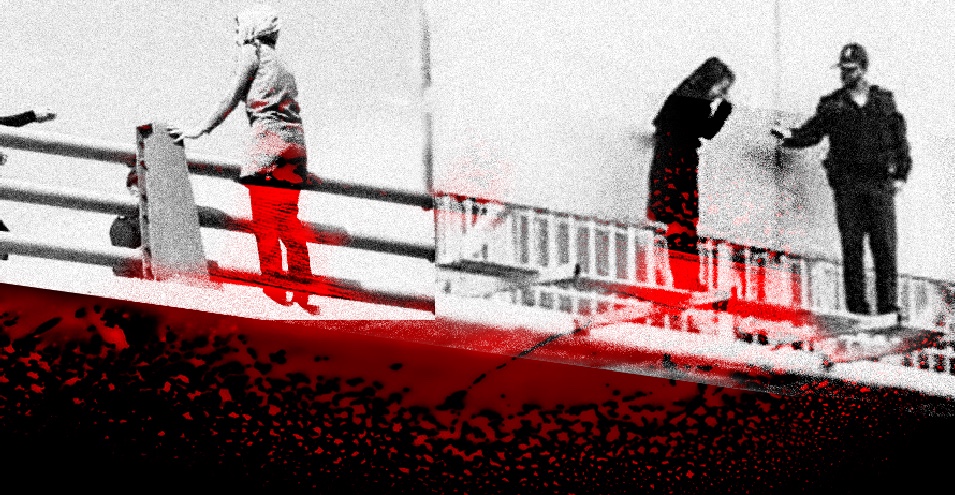
The consequences of discrimination and inequality among different strata and groups in Iranian society take various forms. Undoubtedly, being forced into suicide is the most bitter form of consequences of discrimination; people whom the pressure of discrimination, poverty, and inequality compel to mark the endpoint of their lives on the page of existence themselves.
In the past year, many reports have been published about the suicides of students, workers, teachers, and other segments of society. Citizens who specifically resorted to suicide due to severe economic conditions and economic discrimination. Bitter yet candid narratives of Iran’s current situation, revealing hidden dimensions of deep inequality flowing through different social layers. The psychological and mental consequences arising from economic pressure on different segments of society are manifesting their bitter forms more than before, while the authorities of governance, and foremost among them the head of the executive power, Ibrahim Raisi, through their positions and policymaking and approaches, cause the narrative of “despair” to prevail among various segments of society and eliminate the meaning of “future” in the eyes of many Iranians. The bitter path of “despair” that might lead to the suicide of discriminated individuals is connected with circumstances whose originators are undoubtedly the executive authorities and political decision-makers of the country. Therefore, revisiting cases of suicide among workers, students, and teachers in recent years, which have specifically been due to economic hardships, can serve as a way to understand the bitter and shared consequences arising from oppression perpetrated by power on different groups in society. A path that, at the same time, also highlights and emphasizes the necessity and importance of linking the demands of discriminated and unequal strata.
The Hardships of Being a Student-Worker
Spinas Hotel Tehran is a five-star hotel in Iran’s capital. A hotel with numerous and modern facilities. Host to many prominent people; from athletes to government officials and authorities. A tall building equipped with a helicopter landing pad on its roof to fully maintain the appearance of an international hotel. However, on February 13, 2018, the name Spinas Hotel Tehran was not mentioned in the news because of the presence of prominent guests or the landing of a helicopter with one of the officials on the hotel’s roof. The news was brief and painful; Moein Ahmadi, a 2017-entry aerospace engineering student at Khajeh Nasir al-Din al-Tusi University, committed suicide after hours of continuous work at Spinas Hotel Tehran.
Undoubtedly, in recent years, economic and financial discrimination has been a significant reason for suicide among students. Therefore, attention to the news of Moein Ahmadi’s suicide, an aerospace engineering student at Khajeh Nasir al-Din al-Tusi University, due to work pressure at Spinas Hotel Tehran, makes attention to an important issue necessary: the difficult conditions of student-workers’ lives in Iran. An issue through which one can address the rights of two important groups in society—workers and students—and consequently, the connections between these two groups.
Moein Ahmadi’s bitter decision to end his life may be the mental knot of many students who, to earn a living and even help their families, are forced to endure difficult and unequal working conditions. Although there are no precise statistics on students who have attempted suicide due to economic difficulties and the forced endurance of poor working conditions, many narratives are heard about increased economic pressures and, consequently, psychological crises for students, especially during the coronavirus pandemic, which indicate the seriousness of the connection between economic discrimination and suicide attempts among students.
Hidden Hardships in the Lives of Underprivileged Students
Many studies in recent years have shown that the tendency toward suicide among students has increased much more than before. The Student Affairs Organization published a program in December 2018 titled “Comprehensive Program for Prevention and Intervention in Suicide in University Environments,” which stated that approximately 17 percent of students think about suicide. This report announced that according to statistics from the Medical Examiner’s Organization, 3.66 per 100,000 students in 2017 lost their lives due to suicide. In the mentioned report, it was stated that for every suicide, there may be 10 to 20 attempted suicides, and the complete risk of suicide following one attempt could increase by up to 32 percent.
One student living in Tehran who spent three years of her studies in student dormitories, referring to the issue of suicide among students, told the Human Rights Campaign in Iran: “The problem is that dealing with the issue of suicide among students, especially in student dormitories, is still defined in terms of students’ psychological, mental, and personal issues, while the existing reality is something else.”
According to this Tehran student, “student life” no longer holds its previous meaning: “In the past, an important part of student life was defined outside the university environment, but today that part of student life has given way to hardship and effort to earn money.”
Mohammad, whose final year of study coincided with the closure of student dormitories due to corona and who was forced to live in a hostel, says: “Many underprivileged students coming from small cities to Tehran basically don’t have much financial backing from their families and must quickly look for work to cover education and living expenses. But that’s only part of the story, because sometimes the arrival of students, especially boys, in Tehran from families’ perspective is not just an educational migration, but there’s also an expectation of earning income from students. This in a way increases the pressure on students to find work in the capital.”
In recent years, the cost of university education for lower-income segments of society and underprivileged individuals has become very heavy and burdensome. Costs that in non-profit universities are far greater. For this reason, many students must accept doing many jobs that are not at all suitable for the student class. This is while they fundamentally face specific forms of discrimination in work because of being “students”; most of them cannot have long-term and full-time work and are forced into “contract-free” work, and many are employed in informal occupations. In this sense, labor laws do not cover many of the conditions of working students.
On Thursday, December 11, 2020, news of the death of Ashkan Fathi, a student from Tehran University’s Faculty of Social Sciences, was published in the media. He had gone to Bushehr for work, and while returning from work to his home, he drowned in the river during Bushehr’s flooding and died.
This student lived in one of the most deprived areas of Behbahan and was studying in the daytime program of the Communications Sciences branch at Tehran University. Some of his classmates wrote that “he was forced to work to buy a mobile phone.” The narrative of Ashkan Fathi’s bitter death is another form of the consequences of discrimination and inequality, which can be examined precisely at the point connecting the crises of the large class of students and workers.
Farzaneh, a former student at the University of Art in Tehran who, after the outbreak of corona and losing her part-time job at a clothing store, was forced to drop out of university, tells the Human Rights Campaign in Iran: “For girls like me who come from cities to Tehran and find jobs with a thousand difficulties and nurture dreams of building a life, the conditions are far more difficult and complicated. Many, after the closure of dormitories and inability to cover living expenses in Tehran, were forced to return to their cities and abandon their studies.” According to this former student, “for many female students coming from cities to Tehran, the important issue from the very beginning is the struggle to achieve independence. Independence that many of their families don’t easily agree with. That means we have to fight in two directions.”
The problems and hardships in the lives of underprivileged students have increased their psychological vulnerability. The closure of dormitories has either forced them to live in hostels or obliged them to rent homes with high costs.
In dominant government discourse and perhaps in the view of many segments of society, the economic pressure exerted on underprivileged students and its bitter consequences, such as suicide, are not particularly highlighted. In a sense, the discrimination inflicted on students forced into labor is only seen when such tragic events occur.
Worker Suicides
“I have been suffering in this deteriorated place for eleven years, all with low wages and long delays, and each month our wages should be deposited later and later. Throughout these eleven years, they kept telling us this building will be completed, another building will be completed, building six will be completed, and by year’s end it will be done, and it only got worse, not better. When we have layoffs, they don’t give us overtime. The wage we received seven years ago, we still receive now. Our received wage is two million eight hundred thousand tomans, even lower! With this wage, how can I cover house expenses, overdue installments, and debts?”
These were parts of the last message that Bahram Ebrahimimeher, 31 years old, married, father of a three-year-old child, and a driver for Marvdasht municipality, sent to his colleagues on Telegram; shortly before he hanged himself in front of the surveillance cameras of the municipality building. In part of his message, he wrote that he had been repeatedly threatened with dismissal from work by the responsible parties in the Marvdasht municipality because of his protests against wage delays.
Bahram Ebrahimimeher’s suicide, a Marvdasht municipality driver at his workplace, reveals the dimensions of this painful act more than anywhere else—to trampled workers’ rights and their protests against the manner of dealing with their affairs by employers. In a sense, the means of expressing protest for many workers facing diminished wages becomes so blocked that ending their own lives in the same place that was their “workplace” for years becomes the last protest sign, a sign that might be completed at the cost of the protester’s life.
Arrears in wages, problems with health insurance, temporary contracts, and job dismissals and similar matters have been keywords in the narrative of workers’ suicides in recent years. All matters that have exacerbated economic hardships.
Suicide Next to the Well of Wealth
In June 2020, Omran Roshanimeqdams, a worker at the Yazdavaran oil field in Hoveyzeh county, committed suicide due to financial problems and failure to receive monthly wages. This worker had hanged himself next to one of the oil wells in this oil field. The bitter narrative of the oil field worker’s suicide in Hoveyzeh is, in a sense, a clear metaphor for the economic situation of a large group of people and wealth management in Iran. Omran Roshanimeqdams’s colleagues announced at that time that he had hanged himself due to financial problems and failure to receive monthly wages. One of Omran Roshanimeqdams’s colleagues had said, “His financial situation had become so bad that he didn’t even have money to bring food to work, but the company paid no attention to this.”
Perhaps one of the most newsworthy suicides among workers was related to the last month of 2017, when Ali Neghdi, a worker at Haftappeh Agro-Industrial Company, due to poverty resulting from unpaid wages, threw himself into the “water canal” of this industrial complex and died. In the report of Ali Neghdi’s suicide at Haftappeh, it was stated that he had entered the work premises hours before attempting suicide and, in front of his colleagues, reported the futile pursuit of his claims and said, “I’m tired of this situation and want to commit suicide so that perhaps the company officials will think about my colleagues’ claims of many years.”
One of Ali Neghdi’s colleagues, noting that Mr. Neghdi had approximately 27 years of work experience at the Haftappeh sugarcane complex, said: “We didn’t believe Mr. Neghdi would act on his words, but suddenly we faced his body in the agricultural canal. Ali was about 50 years old. For years, the factory managers have not deposited our retirement costs into the social security account despite the government’s decision, and we seasonal workers remain in limbo.”
At that time (April 2018), a labor activist and member of the Haftappeh Workers’ Union said: “In one case of workers attempting suicide, involving a worker with his daughter and son, approximately ten, twelve years old, in front of the management building, he attempted to set himself and his children on fire. He wanted to burn himself and his children in front of the management building with gasoline, but fortunately, the workers managed to prevent his attempt.”
Suicide in Silence and Darkness
Apart from cases where workers have attempted suicide at their workplace or in front of company or relevant office buildings, many other cases of suicide among laid-off workers or those under economic pressure resulting from delayed wage payments have also been reported, where workers chose a place other than the factory to end their lives.
On Saturday, December 12, 2020, the Telegram channel of the Haftappeh Company Workers’ Union reported that Reza Al-Kathir, a laid-off worker from the greenhouse section of this company, due to economic hardships and financial problems, hanged himself at his father’s house and unfortunately died.
A labor activist in narrating Al-Kathir’s life wrote: “Al-Kathir had repeatedly mentioned that he had disabled brothers and sisters and was the breadwinner of the family; nevertheless, he had been working in the company for the past month when suddenly, by the sudden decision of factory officials, he was dismissed from work and replaced by another person, and his repeated attempts to return to work yielded no results.”
In the absence of precise statistics and given the silence surrounding many workers’ suicide attempts in various parts of Iran, it is difficult to obtain an exact figure for the number of suicide cases among workers due to economic reasons and poverty. Nevertheless, the number of worker suicides has manifested almost in all recent years. Cases that have occurred both in government institutions such as municipalities and in factories belonging to the private sector.
One former steel worker from Ahvaz, regarding the reasons for the increase in suicides among workers, told the Human Rights Campaign: “In today’s Iran, losing a job means the end of life. No savings and no support. For many others too, delays in wage payments have become so exhausting that there’s little difference from an unemployed worker; they’re just forced to do the work so that even that isn’t taken from them.”
According to this former Ahvaz steel factory worker, “economic pressures and widespread poverty among workers have not only led to an increase in the number of suicides, but have also had a significant impact on violent behaviors in these areas, even leading to cases such as murder or severe conflict.”
The dimensions of discrimination against the working community and the underprivileged, as repeatedly expressed in workers’ protests, are among the most important reasons that drive members of the working community to end their lives.
These same dimensions of discrimination have a direct impact and equally bitter consequences on the rising number of suicides among other segments of society. Some time ago, Mohammad Habibi, spokesman for the Teachers’ Professional Association of the country, announced on Twitter that Mostafa Ranjibarani, a biology teacher in Minab county, resorted to suicide due to inability to bear economic pressure.
Habibi wrote: “These chain suicides among teachers and workers due to economic hardships and suicides of students, school children, and adolescents due to social pressures are really a form of government-sanctioned killing and should be a warning sign for everyone.”
The Extinguishing of “Hope” Symbols
Although the government has always tried to show that the main priority of executive authorities has been “eliminating discrimination and poverty,” the reality in Iran tells a completely different story. Recently, the head of the thirteenth government, Ibrahim Raisi, said that he would eradicate “absolute poverty” in Iran in just two weeks. According to Ibrahim Raisi’s claim, by the end of 2021, absolute poverty in Iran would no longer exist. Iran’s Ministry of Labor announced in August 2021 that one-third of Iran’s population lives in absolute poverty. The unrealistic approach of officials and the continuous repetition of general statements and inefficiency in eliminating poverty in Iran increasingly fuel the “despair” of this large segment of society that is forced to live in “absolute poverty.” Despair of what is called “the future.”
On the other hand, the prevalence of suicide among segments of society that are, in a sense, manifestations of the “future” of society, causes the concept of “despair” to appear in a different way in society’s grand narrative. The act of suicide by children unable to provide for their education and teachers who represent the path of children’s “future” is the bitterest form of the collapse of the meaning of future and hope among many citizens who, more and more each day, witness and feel the chains of discrimination, inequality, and oppression perpetrated by the government.
Source: Human Rights Campaign Iran