Iran: US Must Issue Political Statement Committing to JCPOA
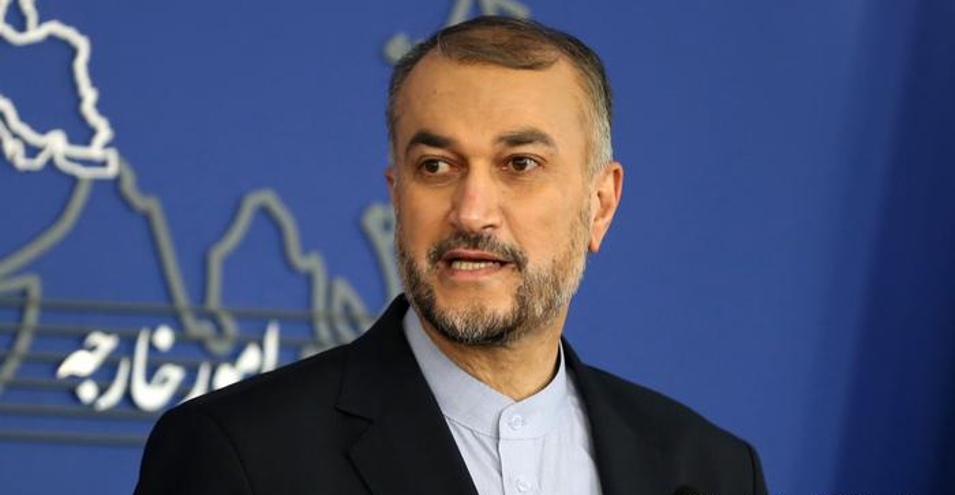
Iran’s Foreign Minister stated that Iranian public opinion cannot accept the words of a government president as a guarantee, and the US Congress must issue a political statement regarding Washington’s commitments to the JCPOA and return to the nuclear agreement.
Hossein Amir-Abdollahian, Iran’s Foreign Minister, clarified in an interview with the “Financial Times” that Iran seeks the lifting of all sanctions imposed during the Trump administration, and the US Congress must issue a “political statement” regarding Washington’s commitments to the JCPOA and return to the nuclear agreement.
Iran’s Foreign Minister emphasized in this conversation that Washington has been unable to respond to Iran’s request for guarantees that no party can withdraw from the nuclear agreement.
Amir-Abdollahian said in another part of this interview: “Public opinion in Iran cannot accept the words of a government president as a guarantee, let alone America, which has a history of withdrawing from the JCPOA”.
According to Iran’s Foreign Minister, senior Iranian negotiators have proposed to Western parties that “at minimum their parliaments or parliamentary heads, including the US Congress, issue a political statement in the form of declaring their commitments to this agreement and return to implementing the JCPOA”.
Amir-Abdollahian referred to the lifting of “sanctions” and stated: “Iran wants these negotiations to lead to the complete lifting of sanctions”. He continued by saying that the Biden administration is only willing to remove economic sanctions that were “imposed” on Iran during the Trump administration, calling this issue “a challenge”.
Iran’s Foreign Minister also said regarding direct negotiations with America: “If we do not have a clear and promising prospect for achieving a ‘good agreement,’ we are not ready to enter into direct negotiations with America.”.
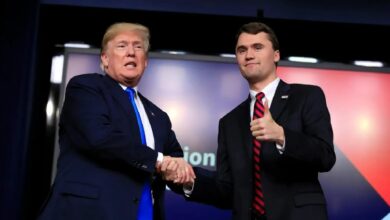
The United States reached a nuclear agreement with the Islamic Republic in 2015 during Barack Obama’s presidency. After him, Donald Trump described this agreement as “the worst deal in American history”. The US withdrew from the JCPOA in May 2018.
America’s return to the JCPOA has also faced criticism and opposition from several US officials, particularly in Congress. Some Republican senators have warned that if they return to the JCPOA, they will withdraw from this agreement.
According to American sources, the president does not have the right to deprive future presidents of their authority by providing guarantees for remaining in the JCPOA.
“Untrustworthy America and Ineffective Europe”
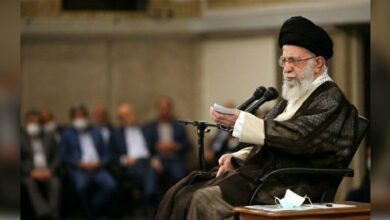
Meanwhile, on Wednesday, February 27 (February 16), Ali Shamkhani, Secretary of Iran’s Supreme National Security Council, rejected any “beyond-JCPOA” negotiations with Western countries.
He wrote on Twitter social network: “America and Europe failed the test of implementing their commitments in the JCPOA. Now the JCPOA has become an empty shell for Iran in the economic sphere and sanctions relief.”.
Shamkhani also said: “There will be no beyond-JCPOA negotiations with an untrustworthy America and an ineffective Europe.”.
The Secretary of Iran’s Supreme National Security Council did not clarify what he meant by “beyond-JCPOA” negotiations. However, some experts speculate that besides negotiations about the JCPOA, the West wants Iran to accept commitments in the areas of modifying or halting its missile program, changing regional policy, and respecting human rights.
Shamkhani’s comments came as he had written on Twitter on Monday (February 13): “Vienna negotiations have reached a stage where one can make statements about its outcome with certainty and without the need for speculation. America’s political decision to fulfill or refrain from accepting the requirements for forming a reliable and sustainable agreement based on principles accepted in the JCPOA can replace speculations.”.
Source: DW