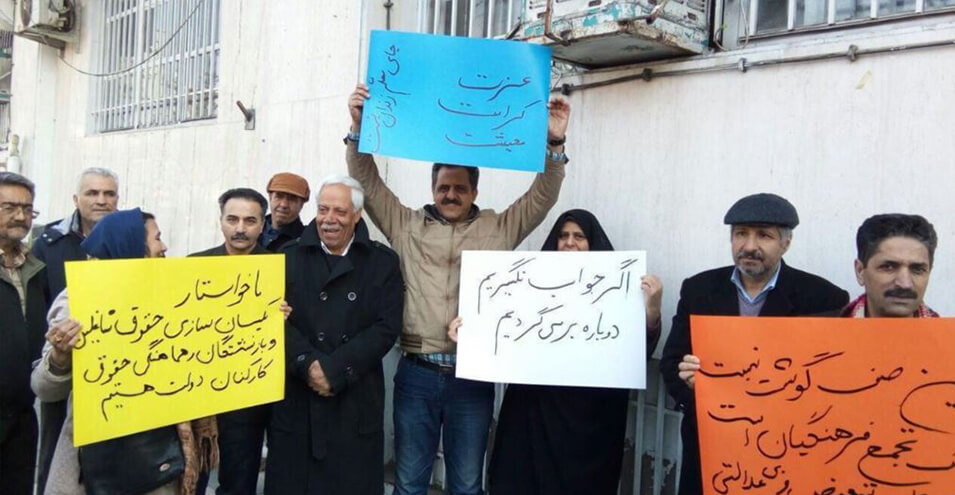
Sociologist Saeid Madani Barred from Leaving Country by IRGC Intelligence at Airport
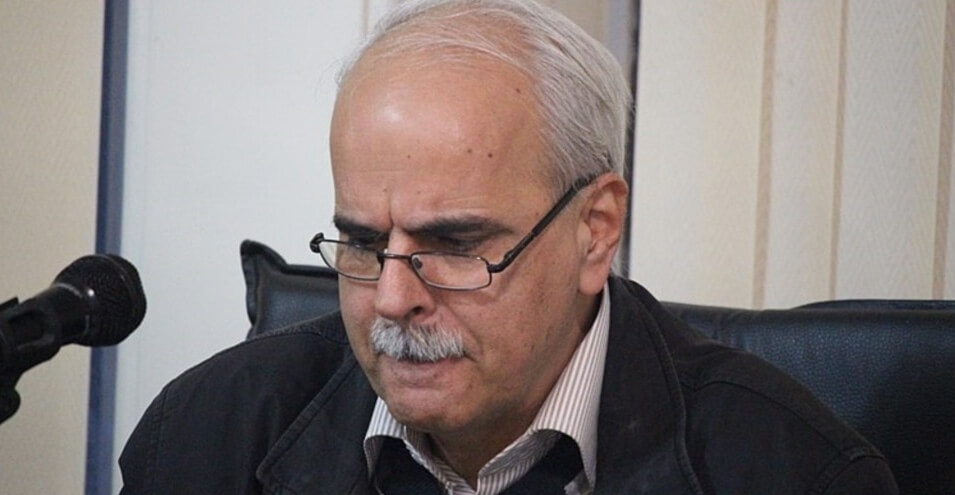
Saeid Madani, a sociologist who was traveling to the United States at the invitation of Yale University to pursue a research opportunity, was prevented from making the trip and barred from leaving the country following intervention by the IRGC intelligence organization at the airport.
Mr. Madani sent a letter to Gholam-Hossein Mohseni Ejehi, Iran’s Chief Judiciary, describing the incident that occurred on Tuesday, December 28th, stating that the actions of security forces contradict many principles of the International Covenant on Civil and Political Rights and Iranian law.
This action occurred at a time when Islamic Republic officials had repeatedly called on Iranians abroad to return to Iran in recent months, claiming they would guarantee that those individuals would not face judicial or intelligence proceedings and that no one would prevent their departure from the country.
In his letter, Mr. Madani stated that after receiving his boarding pass and checking his luggage, he approached the final gate at the airport but was taken to a police station under the pretext of verifying his American visa validity and was interrogated by officers from various security agencies.
The sociologist wrote in his letter that after answering questions from an IRGC intelligence officer about his positions, views, and activities, he was reminded that only a few minutes remained until his flight and that the conversation should be postponed to another time and place. However, the officer informed him that he was barred from leaving the country and could not travel.
Iran’s Chief Judiciary had repeatedly criticized the barring of individuals from leaving at airports immediately before their flights in recent months. Gholam-Hossein Mohseni Ejehi had stated in September: “First it should be determined which agencies are authorized to bar people from leaving and who and for how long should be barred, and it is harmful to inform people without any legal justification that they have been barred from leaving and for them to discover this at the airport.”
However, Saeid Madani’s letter indicates that the exit ban was imposed moments before his flight. Mr. Madani wrote that two days before his flight, Ministry of Intelligence officers had also interrogated him “and in conclusion, in response to my question about whether I was barred from leaving or whether there was any obstacle to pursuing the research opportunity at Yale University, they answered in the negative and emphasized that I could travel.”
This former professor at the University of Welfare and Rehabilitation Sciences then listed a series of “violations” by security forces in this incident, including “prevention by judicial authorities, including a representative of IRGC intelligence, of his lawful departure from the country without observing legal procedures and issuance of a travel ban without required formalities and issuance of an order in a competent court” and “verbal notification of the exit ban and failure to issue a written and official legal order to this date.”
He also emphasized that the security forces’ action “directly contradicts articles 9, 20, 30, and 33 of the Constitution, article 13 of the Universal Declaration of Human Rights, and paragraph two of article 12 of the International Covenant on Civil and Political Rights.”
Saeid Madani has conducted extensive research on social harms including addiction, violence against women, prostitution, and child abuse. Social movements are another area of his research. “Social Movements and Democratization,” “Violence Against Children in Iran,” “On Execution,” and “Addiction in Iran” are among this author’s books.
He had previously been arrested and convicted on political charges several times in 1994, 2000, 2001, and 2011, a matter that reveals aspects of the Iranian government’s treatment of writers and civil activists.
Source: Radio Farda