Fresh Clashes Between Iranian and Taliban Forces in Nimruz Border Area
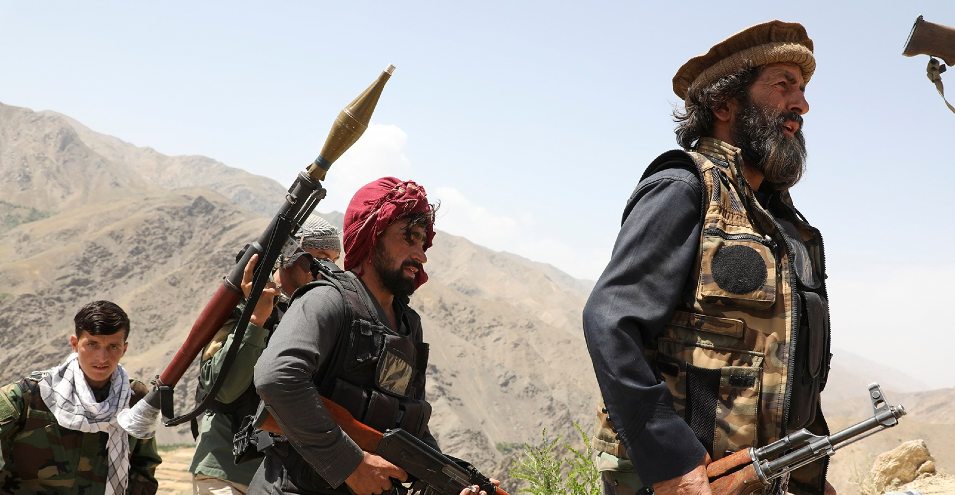
Afghan media reports indicate fresh clashes between Iranian and Afghan border forces in the Nimruz province border area. Forces from both sides clashed in this region again in December of this year as well.
Newsprint Ittilaat-e Rooz reported that the clash occurred on the evening of Monday, March 7, when “Iranians intended to clean” the “Sikh Sar” canal, but Taliban-affiliated forces prevented this action and stated that the canal belongs to Afghanistan.
According to the newspaper, heavy weapons were used in the clash, an Iranian bulldozer caught fire, and “at least four Iranian border guards were killed.” Taliban and Iranian officials have not confirmed such reports.
Afghan newspaper Hasht Sobh also published news of the clash and the killing of two Iranian border guards, but removed the report hours later.
Videos of the clash in an Afghan region have also been circulated on social media, but it is unclear exactly when these images were taken.
In mid-December of this year, limited clashes also occurred between Taliban forces and Islamic Republic of Iran border guard forces in Nimruz province, Afghanistan, with artillery fire being reported.
At that time, Tasnim news agency, affiliated with the Islamic Revolutionary Guards Corps, explained these events by writing: “In the Shaglak area near Nimruz province, a border misunderstanding led to clashes between Iranian border guard forces and the Taliban,” and “Taliban forces fired at Iranian forces, which were answered with return fire by Iranian forces.”
Although the Islamic Republic of Iran maintains good relations with the Taliban, the Iran-Afghanistan borders face tensions and crises due to drug smuggling, water issues, and people fleeing Taliban rule.
Part of these problems stem from the construction of the Zahedan-Helmand border wall between the two countries, which has resulted in two thousand hectares of agricultural land in Zahedan and Helmand being enclosed behind this wall, and farmers must use special transit cards to access their lands.
In the first clash, Islamic Republic officials reported that after farmers crossed the security wall, Taliban forces believed these individuals had crossed the border and opened fire on them.
Another crisis relates to Helmand water rights. Iran and Afghanistan have disagreed for years over Helmand River water rights and Lake Hamoun due to unprecedented drought in the region. The Helmand water rights agreement was signed in 1972 between Tehran and Kabul, but in the late 1990s, coinciding with decreased seasonal rainfall, the water level in Lake Hamoun, which is the primary source of Helmand River water, reached its minimum.
On January 28, some citizens from northern Sistan and Baluchestan province gathered in protest of not receiving Helmand water rights and the non-release of water from Kamal Khan Dam, opposite the Milk border terminal on the Iran-Afghanistan border, and this gathering led to limited clashes.
In late December of this year, reports were released about opening the gates of Kamal Khan Dam in Afghanistan toward Iran, but the Taliban rejected these reports.
At that time, Hossein Modares Khiabani, governor of Sistan and Baluchestan, said that by releasing water from Kamal Khan Dam, the semi-wells in the Sistan region, whose reserves have decreased to one-quarter due to drought, would be filled and the water problem in this region would be solved for 2022.
Reports from Afghanistan indicate that heavy rainfall in Afghanistan has completely filled the Kamal Khan Dam reservoir and water has overflowed from its walls.
This dam was constructed along the Helmand River and overflows into Lake Hamoun, which is shared between Iran and Afghanistan, and protesting citizens of Sistan and Baluchestan province are demanding water to be released from it.
Source: Radio Farda