Sixty-Fifth Court Session of Hamid Nouri; Witness: Government Intended to Claim ‘Political Prisoners’ Did Not Exist by Releasing Some Prisoners
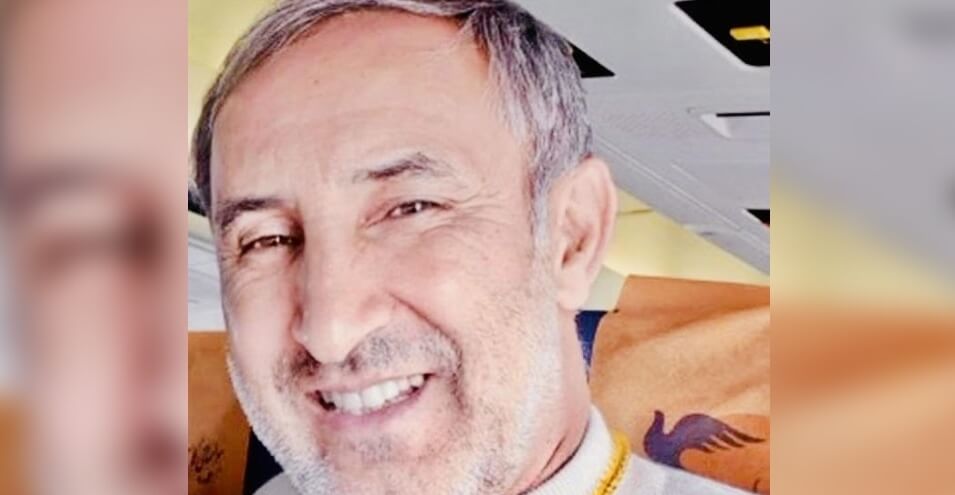
The sixty-fifth session of the trial of Hamid Nouri, accused of participating in the executions of summer 1988, was held on Monday, February 15, 2022, with the continuation of testimony by Jafar Yaghoobi remotely via video from his residence in the United States.
Jafar Yaghoobi testified in the previous session that in the fall of 1984 he was arrested in Tehran and one year later was sentenced to fifteen years in prison on charges of membership in the People’s Fedai Organization, opposition to the Islamic Republic, and using a pseudonym.
Jafar Yaghoobi had stated in his first testimony session on Friday of last week, February 12, 2022, that after the executions and in November 1988, “Judiciary Officer Abbasi” at the judiciary office of Gohardasht Prison told him that “well, you got through [the executions] by the skin of your teeth.”
Today, at the beginning of the second session, in response to the prosecutor’s question about what the accused meant by making such a remark, Yaghoobi said that given the severity of his sentence, “Mr. Abbasi” was unhappy about his survival. He said Abbasi (Nouri) believed that his execution was his right.
Jafar Yaghoobi formally confirmed Hamid Nouri’s identity to the court today with a direct gaze at Nouri, saying that he has the same appearance and way of sitting, and has only become slightly thinner and older. The witness also confirmed the identities of some of the executed prisoners listed in the court’s indictment, such as Abolqasim Soleimanzadeh, Mahmoud Alizadeh Azami, and Bijan Bazargan.
Daniel Markus, one of Nouri’s defense lawyers, again attempted, according to the strategy adopted by Nouri’s defense team, to highlight discrepancies in the witness’s statements, particularly regarding the dates of the events, by comparing Swedish police interrogations of the witness with his testimony in court.
Daniel Markus also, by raising questions about the time and manner in which the witness learned of Hamid Nouri’s arrest, again attempted to prove that this witness’s testimony too—according to him, like many other witnesses in this trial—is influenced by the accounts and memoirs of prisoners such as Iraj Mesdaghi and Mehdi Aslani, as well as the manner and time of the witness’s awareness of Hamid Nouri’s arrest. It should be noted that Iraj Mesdaghi, one of the prisoners who survived those executions, played a key role in Hamid Nouri’s arrest in Sweden. Iraj Mesdaghi is also one of the witnesses and complainants in this case.
Jafar Yaghoobi also, in response to the prosecutor’s question about why he was released ten and a half years earlier than when his sentence was to end in March 1988, answered that the Islamic Republic government had killed a large number of prisoners and by releasing the rest intended to propagandize that there were no political prisoners.
It should be noted that in his first testimony session, Jafar Yaghoobi said that on September 1st he stood before a death panel including Nuri and Eshragi. He claimed he was Muslim and after enduring 30 lashes in the prison amphitheater, agreed to pray.
Two memoirs by Jafar Yaghoobi titled “Let’s Water the Flowers” in English and the two-volume “The Unknown Borders of Death and Life” are listed among the written evidence documents of Nouri’s trial. The witness specifically identified Abbasi by the name “Hamid Nouri” in his book.
The next court session will be held on Tuesday, February 16, 2022, with the testimony of Seyyed Jalal al-Din Saidi in Stockholm.