Rouhani Advisor Responds to Discovery of “Infiltrators” in Population Control Sector
Rouhani’s advisor has attacked the Farsi news agency, which is affiliated with the Islamic Revolutionary Guards Corps, in response to a report about the arrest and summoning of “infiltrators” in the population control sector. According to Farsi, these “infiltrators” have created obstacles to “the system’s policies” in the field of population.
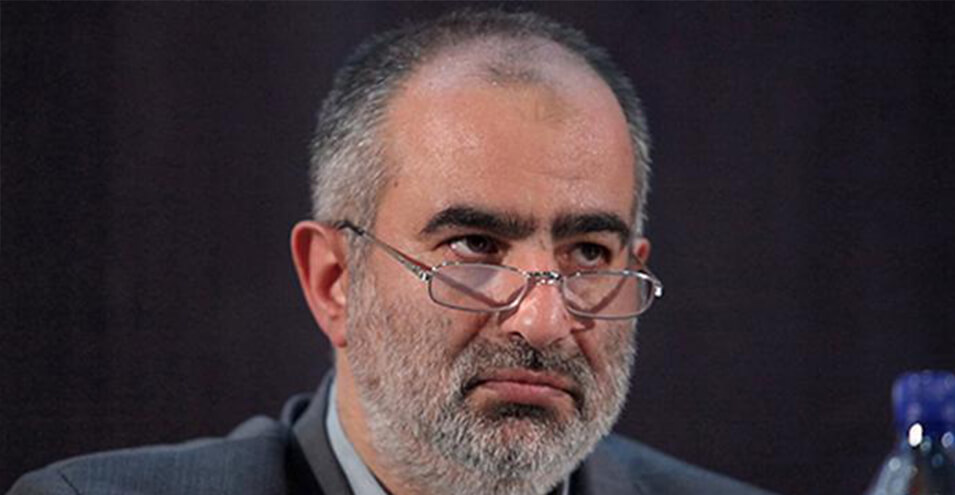
Hassan Alsoon, an advisor to the President of Iran, attacked the Farsi news agency, which is close to the Islamic Revolutionary Guards Corps, in response to a report about “arrests and summons of infiltrators in the population control sector,” and sarcastically called on Farsi to confine itself to “the same environmental sector.”
The Iranian President’s advisor wrote on Twitter: “We request that Farsi, which like a cyber police watches everything, allow others to have the honor of securing demography. For you, the environmental sector for now is enough.”
Hassan Alsoon’s sarcasm was directed at security accusations, including “espionage for foreigners,” against several environmental activists in Iran. Last November (2017), seven environmental activists were arrested in Iran, and the number of those arrested in this field subsequently increased. Houman Jokkar, Sepideh Kashani, Niloofar Bayani, Amir Hossein Khaleghi, Sam Rajabi, Taher Ghadirian, Abdolreza Koohpayeh, and Morad Tahbaz are eight environmental activists who are in prison. These individuals were arrested by the IRGC Intelligence Organization.
These activists have been accused of using environmental projects as a cover to collect “classified strategic information.” Subsequently, the charges against some of these individuals changed from “espionage” to “corruption on earth.” Kavous Seyed-Emami was also among those arrested and died under suspicious circumstances in prison on February 8th. The Rouhani government has rejected accusations of “espionage” against environmental activists.
Now a report by Farsi news agency on Tuesday, November 27th, indicates the possible beginning of a new security operation. The news agency wrote: “It has been heard that one of the country’s security institutions, in cooperation with the judicial system, has arrested and summoned a number of infiltrating elements in the population control sector.”
“Infiltration into State Institutions”
According to this news agency affiliated with the IRGC, “these individuals, through their network activities, under the guise of scientific activities, have infiltrated various state institutions and created obstacles to the proper implementation of the system’s general population policies.”
Farsi news agency identified the arrested person as “M.B” and wrote that he “has been working for a long time as a researcher and also has dual nationality.” According to this news agency, “some individuals have also been summoned several times.”
According to Farsi: “These individuals, by infiltrating some institutions such as the Ministry of Science, the Ministry of Health, the Research Center of the Majlis, the Planning and Budget Organization, the Statistical Center, the Strategic Research Center of the Presidency, and others, have acted to prevent the proper implementation of the system’s general policies.”
Ali Khamenei, the Leader of the Islamic Republic of Iran, in 2013, contrary to previous population control policies in Iran, called for implementing programs to increase the population to 150 million people and issued his directive to the three branches of government under the title “General Population Policies.” Following the announcement of a population growth policy by the Leader, Hassan Rouhani, the President of Iran, also issued a four-article guideline to government ministries, the Ministry of Health and Medical Education, and the Ministry of Labor to clarify the general policy of population increase. Facilitating population growth was among the provisions of this guideline.
The Farsi news agency’s report on “obstacle-creation” by arrested or summoned individuals against “the proper implementation of the system’s general population policies” in the population control sector refers to this policy announced by Khamenei.
In addition to the Iranian President’s advisor, Fayezoellah Arb-Sorkhi, a reformist political activist, has also reacted to the Farsi report and wrote on Twitter: “After the arrest of environmental activists, now our eyes are on the arrest of population control activists.”
“Coordinated Activity to Implement Kissinger’s Recommendation”
One day before Farsi’s report on the arrest and summoning of “infiltrators in the population control sector,” Kayhan newspaper wrote in a report titled “The Tsunami of Aging Iranians, the Kissinger Version on the Majlis Table”: “For about two years, a coordinated team, consisting of several members of the Islamic Consultative Assembly (members of the Women’s Faction of the Majlis), several social activists in Imam Ali’s congregation, along with a person who has been trained in Britain for social policy-making, with the support of international institutions like UNICEF and enormous spending for holding conferences, meetings, making films and massive media productions, have been active around the axis of ‘legal prohibition of marriage at young ages.'”
According to this government newspaper, 44 years ago Henry Kissinger, the then U.S. Secretary of State, prepared a document, one of whose points was “the challenge of increasing the population of the Islamic world for Israel’s security.” Kayhan wrote that according to Kissinger, the population growth of countries competing with America, especially Muslims, is a threat to the United States that should be prevented. The newspaper also evaluated the plan to “increase the marriage age” in Iran as a plan in line with Kissinger’s recommendations and wrote: “If the consequence of implementing such recommended plans is the same as what is now manifesting itself in the form of ‘the tsunami of aging Iranians,’ future generations will never forgive those enamored by the glossy policies of international institutions.”
Threats Against Opponents of Child Marriage
Simultaneously with the publication of the news about “arrests and summons of infiltrators in the population control sector” by Farsi news agency, reports have also emerged of threats against representatives supporting the increase in “minimum marriage age.” Fateme Hosseini, one of these representatives, wrote on Twitter: “Dozens of text messages to members of parliament again; this time to counter a plan being pursued in parliament to prevent child marriage! These days, the organized messaging machine containing lies, slander, and threats has been turned on again.”
Concurrent with the efforts of some members of parliament and the support of civil activists to prevent child marriage in Iran, some extremist currents strongly attack the plan to “increase the marriage age” and consider this plan contrary to “religious principles.”
Source: DW