Dramatic Increase in Budget for Islamic Revolutionary Guard Corps and State Media in 1401 Budget Bill
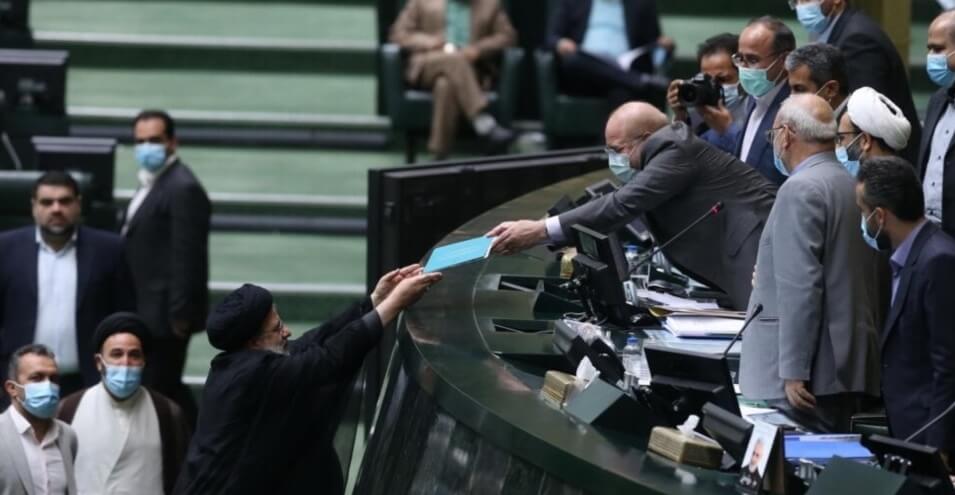
According to the 1401 budget bill submitted by the government to parliament on Sunday, December 21, in addition to the removal of the 4,200 toman exchange rate, other provisions have been included, including a dramatic increase in the budget for the Islamic Revolutionary Guard Corps and state media, a 10 percent increase in government employee salaries, and the imposition of taxes on certain vehicles and properties.
The budget for the Islamic Revolutionary Guard Corps, which last year increased by 58 percent from 24,335 billion tomans to 38,564 billion tomans, has according to the 1401 budget bill file reached 93 thousand billion tomans, representing an increase of more than 2.4 times.
The dramatic increase in the budget for the State Radio and Television Organization, which is supervised by the Supreme Leader of the Islamic Republic, is another notable aspect of the 1401 budget bill.
According to this bill, the budget allocated to the State Radio and Television Organization is 5,289 billion tomans. The organization’s budget in the current year was 3,384 billion tomans, showing a 56 percent increase for the next year.
In this budget, the government also envisioned the sale of 1.2 million barrels of oil at a price of $60, which is $10 higher than the current year’s budget, while the current budget assumed daily exports of approximately 2.3 million barrels.
Based on the 1401 budget bill, which is the first budget bill of the Ibrahim Raisi administration, for the first time all vehicles valued above one billion tomans and residential properties and villas valued above 10 billion tomans will be subject to property tax.
This comes as some experts, considering the high inflation rate during the past year, refer to this tax as an “inflation tax” caused by the government’s economic policies.
According to a report by Iran’s Statistics Center, the annual inflation rate in November was 44.4 percent, which after 14 months of continuous growth has shown a slight decline in the past two months. However, despite this level of inflation, the annual increase in government employee salaries in this bill is estimated to average 10 percent.
The “Program to Strengthen Defense Capabilities and Strategic Defense Research” is another notable aspect of the Ibrahim Raisi administration’s first budget, to which 4.5 billion euros has been allocated. This program also includes part of research and implementation activities in the military field.
After Donald Trump, the former U.S. President, withdrew from the JCPOA in 2018 and reimposed oil and banking sanctions against Iran, Iran’s oil revenues declined sharply and Iran’s economic growth has been negative in recent years.
According to the parliament’s internal regulations, representatives have 10 days to submit their proposals to specialized committees, and committees have 15 days to review the proposals. Finally, the commission to reconcile the 1401 budget bill will have fifteen days to review the bill, and if necessary, this deadline can be extended for another 15 days.
On Sunday, Mehrad Abad, a member of the board of representatives of the Tehran Chamber of Commerce, in an interview with ILNA news agency regarding the prediction of 26 billion euros of finance in the 1401 budget bill, considered it “optimistic.”
He concluded that “the government has based its calculations on lifting sanctions” and added that “with the current FATF situation, sanctions, and the overall current conditions, it does not seem that even one rial of this predicted finance will be realized. Unless good reforms are made in the field of currency policies, attracting foreign investment, and also decision-making regarding FATF and joining international conventions, the most important of which is the World Trade Organization.”
According to Mehrad Abad, “In this matter, everything depends on foreign relations. In the best case, JCPOA negotiations proceed at a faster pace, but even then such a figure will not be realized, because if the negotiations are successful, we must go through other stages such as issuing permission for foreign companies to enter the country. Today, even those who are ostensibly our friends do not invest in Iran because of fear of sanctions.”
Source: Radio Farda