From File Fabrication to State Execution; Abbas Darysh, Convicted November 2019 Protester in Mahshahr, Sentenced to Death
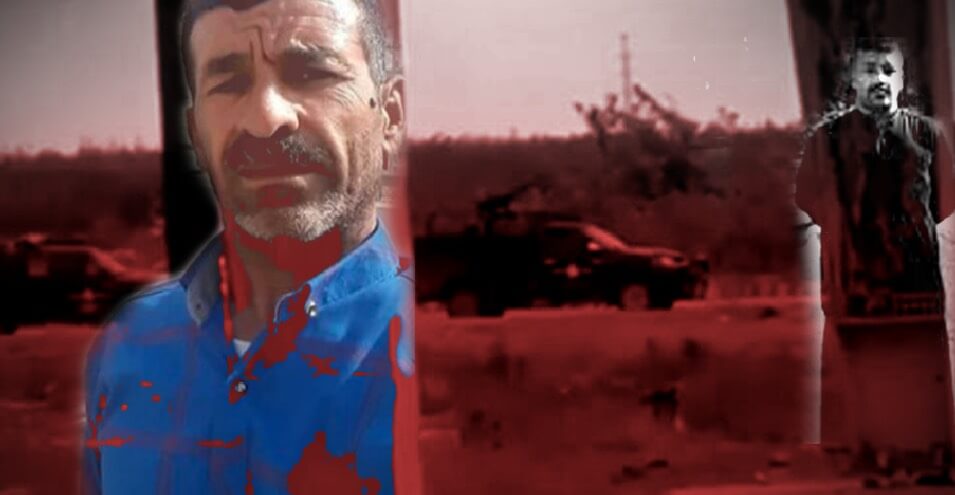
The death sentence of one of the detainees from the November 2019 protests has once again revealed a new chapter in the dimensions of suppression, violence, and discrimination by the authorities against the bloody November 2019 protesters.
According to Mahshahr prison officials, Abbas Darysh, one of the detainees from the November 2019 protests in the city, has been sentenced to death on charges of “enmity against the state, disrupting public order, and participation in the killing of one of the special forces officers.” His brother, Mohsen Darysh, has also been sentenced to life imprisonment. A familiar narrative in dealing with detained protesters that raises many questions and ambiguities: Why is there no transparency in cases similar to the Darysh brothers’ file? Why do pre-designed security scenarios become the basis for court verdicts without any deficiency? How does the government mask the faces of defenseless protesters as criminals and exploit human rights-violating methods such as forced confessions to impose their narrative? The numerous similarities in the Darysh brothers’ case and the Afghary brothers’ case increasingly demonstrate what methods and approaches the government uses when dealing with cases related to public protests. Methods based on file fabrication by security institutions that are predetermined and systematic. It appears that Iranian officials are insisting on facilitating repeated file fabrications against protesters and opponents and issuing harsh sentences, employing a consistent policy for this purpose: inverting reality.
Creating Ground for Imposing a Reversed Narrative about Protesters
On Sunday, December 14, news of Abbas Darysh’s “verbal” death sentence announcement spread, concerning one of the detainees from the November 2019 protests in Mahshahr city, Khuzestan province. As the Hrana news agency reported citing an informed source, “Four months ago, prison officials informed Abbas Darysh’s family that he had been sentenced to death.” Mr. Darysh was arrested during the November 2019 protests in Mahshahr along with his brother Mohsen Darysh. Abbas Darysh, through an opaque and ambiguous process, was accused of “enmity against the state, disrupting public order, and participation in the killing of one of the special forces officers” and was ultimately sentenced to death, while Mohsen Darysh was sentenced to life imprisonment by the court on charges of participation in the killing of this officer.
According to a source close to the Darysh brothers’ family, all information about the case of these two prisoners in Mahshahr was communicated to the family only “verbally” by judicial officials, and despite the family’s follow-up and efforts, no official administrative documents have reached them. This is while, according to a source close to Abbas Darysh’s family, “Mr. Darysh’s wife suffered a stroke due to the pressure following her husband’s death sentence and subsequent pursuit of the matter and lost her life four months ago. The children of this family now live with their grandmother.”
The opaque and illegal arrest and trial process of the Darysh brothers, like many other similar cases, has included matters such as the family and lawyer being unaware of the detainees’ status, which actually increases concerns about the fate of the Darysh brothers. On the other hand, the government’s and judicial system’s use of human rights-violating tactics such as torture and forced confessions in the Darysh brothers’ case intensifies this concern that a pre-designed scenario has been prepared for these protesters that, given the judicial system’s track record in similar cases, will have an unjust, inhumane, and human rights-violating conclusion.
Based on the narrative of security officials and media outlets close to the government, the Darysh brothers were involved in the killing of Reza Seyadi, one of the special forces officers called Nopo, during the November 2019 protests. The Darysh brothers were arrested during protests in the city of Mahshahr. There are many ambiguities about the charge regarding the Darysh brothers’ role in the killing of the police officer, and security and judicial officials, instead of attempting to clarify and address the raised ambiguities, have added to the concerns about the fate of this case through silence and non-cooperation with lawyers and family members.
This narrative and groundwork by security and judicial officials for creating a criminal image of protesting citizens was seen in a prominent case, the Afghary brothers’ case, with all the methods and tricks employed by security and judicial officials, and it now appears that the same narrative and groundwork is being repeated for the Darysh brothers.
Following the news of Abbas Darysh’s death sentence announcement, Said Afghary posted a tweet pointing to the similarity between the Darysh brothers’ and Afghary brothers’ cases. A similarity that at a macro level supports the notion that a systematic and organized process is underway for advancing and narrating the so-called security cases, constantly adding pages to the book of discrimination regardless of law and obvious human and legal standards.
Ambiguities Regarding Claims of Shooting at Officers
The Darysh brothers were arrested in a city that witnessed one of the most brutal and violent forms of suppressing protesters in November 2019, and according to some accounts, more than 100 protesters were killed by government forces in this city. A place where the government made great efforts in the months following the November 2019 protests to impose its narrative about the suppression of Mahshahr residents on public opinion.
In December 2019, only a few months after the bloody protests in Mahshahr, Iranian state television aired a video attributed to detained suspects regarding shooting at Reza Seyadi, a special forces officer. In this video, individuals whose faces are unclear narrate a version of the killing of a police officer during the protests and the bloody suppression of Mahshahr. A narrative in which “two brothers” participated in targeting officers. On the other hand, media outlets close to the government published images from the moment of Reza Seyadi’s death during this period.
As is evident in reviewing this video and some evidence of the suppression and extensive clashes between officers and protesters in Mahshahr, serious ambiguities have arisen regarding the charge of killing a police officer. For example, the voice heard in the video attributed to the moment of the police officer’s death, in which someone speaks in Arabic, indicates that the authorities’ claim about armed protesters is unfounded, or there has never been a precise reference to how this police officer was killed in any source, whether in interviews with Reza Seyadi’s family or otherwise.
Farzad Seifi-Karan, a journalist, in a series of tweets, while emphasizing the voices present in the video claimed by media outlets close to the government, also highlights contradictions and ambiguities in the government’s narrative in several other cases. For example, an investigation based on existing videos of the suppression of protesters in Mahshahr and the movement path of military forces and the escape route of protesters shows serious contradictions in the narrative of shooting at officers.
On the other hand, some accounts suggest that “the Darysh family was told to obtain satisfaction from the victim’s family by paying blood money. This is while if someone commits murder in a clash with an officer, the case does not have a private status, and a death sentence will be issued on charges of enmity against the state. That is, even the court knows that he is innocent.”
Undoubtedly, there are many questions about the details of the Darysh brothers’ case; however, the policy of silence adopted by judicial officials and the illegal pursuit of administrative and legal procedures in the case has caused concerns about the fate of the Darysh brothers to constantly increase.
The policies and pre-designed scenarios for dealing with detainees from public protests in recent years show that the judicial system has become, more than ever, part of the scenario of security and intelligence officials, having no practical authority in cases such as the Afghary brothers or the Darysh brothers.
Source: Iran Human Rights Campaign