Raisi Demands Identification of ‘Interference Actors’ in Currency Market
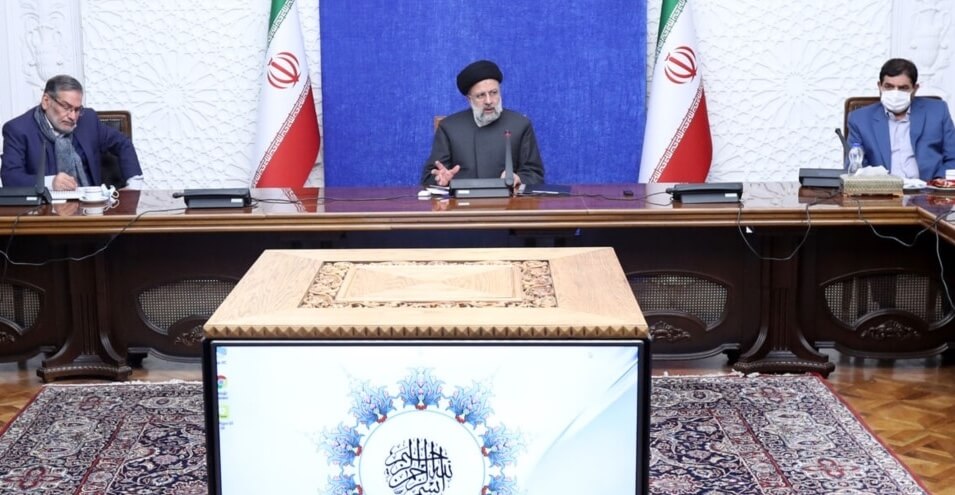
Ibrahim Raisi ordered competent authorities to identify “interfering factors” in the currency market, just hours after claiming that some groups are working “around the clock” to disrupt the foreign exchange market.
According to Iran’s government media outlet, the presidential order was issued Tuesday night, December 7th, during a meeting of the government’s economic coordination headquarters, with “the revelation of interventions and profit-seeking conspiracies to destabilize the currency market stability.”
The report stated without providing details that at the government’s economic coordination headquarters meeting, “reports from competent bodies on the state of the currency market were presented and factors affecting abnormal fluctuations in exchange rates, particularly in recent days,” were reviewed.
Mr. Raisi said after presenting this report: “Competent authorities, simultaneously with oversight and control of the market, must seriously fulfill their responsibilities by precisely identifying interfering and destabilizing factors in the currency market.”
This news comes one day after Ibrahim Raisi, speaking at a student gathering at Sharif University of Technology on Student Day, referred to “some groups” who, based on “accurate information” he claimed, work “around the clock” to “raise the exchange rate and tie negotiations to the economy in order to impose their demands on the nation.”
When responding to a student’s question about why he doesn’t identify these people, he said without evidence or proof that these individuals are operating “inside and some outside the country and in cyberspace,” and “intelligence agencies are following up on the matter.”
It appears that with Raisi’s order to competent authorities to identify “disruption” factors in the currency market, the Islamic Republic will once again resort to a security approach to control the currency and coin market in Iran.
Previous security measures by the judiciary in recent years, including widespread arrests and death sentences for individuals labeled “coin sultans,” managed to create relative stability in Iran’s currency market for a while, but after some time the market experienced volatility again.
In 2018, following protests over currency fluctuations in Iran and market closures, Sadegh Larijani, then head of the judiciary, also threatened protesters and those he called “disruptors” in the currency market.
He had said: “Listen carefully, take the cotton out of your ears and open your eyes, disruption of the country’s economic system has very severe punishments, and if it constitutes corruption on earth, it carries a death sentence.”
Hassan Rouhani, Iran’s former president, also attributed currency fluctuations to “fearmongering” and “frightening and worrying the people,” and asked prosecutors to deal with “fearmongering.”
The exchange rate of the US dollar against the Iranian rial on Monday, December 6th, rose for the third consecutive day and increased to 31,040 tomans.
The dollar rate has been on an upward trend since the end of the seventh round of nuclear negotiations between Iran and remaining parties to the JCPOA on December 3rd, and over the past three days it has increased a total of “six percent.”
The increase in the dollar rate and rising inflation in the first hundred days of Raisi’s government comes as his most important campaign promise in this year’s presidential election was to improve people’s living standards and reduce inflation to single digits.
Source: Radio Farda