Environmental Experts: Mismanagement and Wrong Decisions Have Aggravated Iran’s Water Shortage Crisis
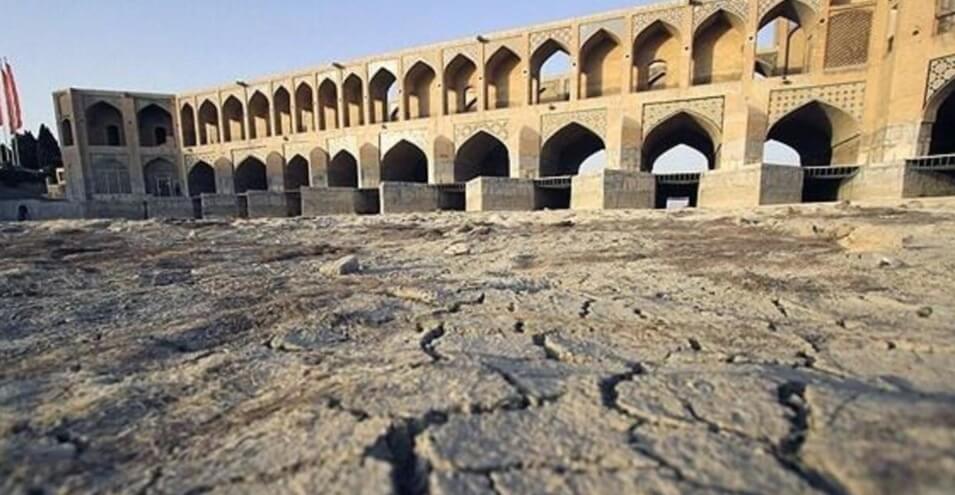
Isfahan protests, which began about three weeks ago, initially started by Isfahan farmers and gradually expanded among various social groups and sectors.
However, the water shortage crisis is not limited to Isfahan, and other parts of Iran are facing the same problem, with protests continuing. For instance, in Khuzestan, farmers in Bawy district of Ahvaz started their protests on Saturday against the cutting off of water to agricultural lands and the reduction of Karun River water rights.
Hundreds of farmers in Bawy district of Ahvaz, with 17,000 hectares of agricultural land, have gathered several times in recent months in this district and have asked local authorities to immediately provide water for the month of Azar, which according to them is the most critical month for crop growth in the Khuzestan plain.
Hamed Hamidbawy, head of the Bawy Agricultural Syndicate, said about this: “If water does not arrive, we fear a catastrophe will occur in this region.”
Naser Obeyat, an environmental activist in Khuzestan, also says: “The lack of public protest has caused the Energy Ministry not to open the dam gates for farmers. These treatments caused many farmers in this region to hold gatherings.”
Ismail Kahram, an environmental expert, said in an interview with the Persian service of Voice of America: “We have made wrong decisions for years, more than fifty years, about the water of Khuzestan, about the water of Isfahan, about the water of Chaharmahal and Bakhtiari, and Yazd. In the blink of an eye and in the short term, we cannot resolve these issues.”
Mr. Kahram added that farmers need water only for autumn planting, “meaning they say that our autumn planting depends on the water you provide so we can do our autumn planting, once we harvest, we no longer need water, extra water.” But on the other hand, there is no more water left.
According to experts, improper watershed management and the Islamic Republic’s food self-sufficiency policy, as well as unplanned population growth, have aggravated Iran’s long-standing water crisis challenge.
They say that today the era of consuming the policy of “putting off today’s problems until tomorrow” in Iran has come to an end, and if a fundamental solution is not considered, Iran must be prepared to face catastrophic crises.
Source: Voice of America