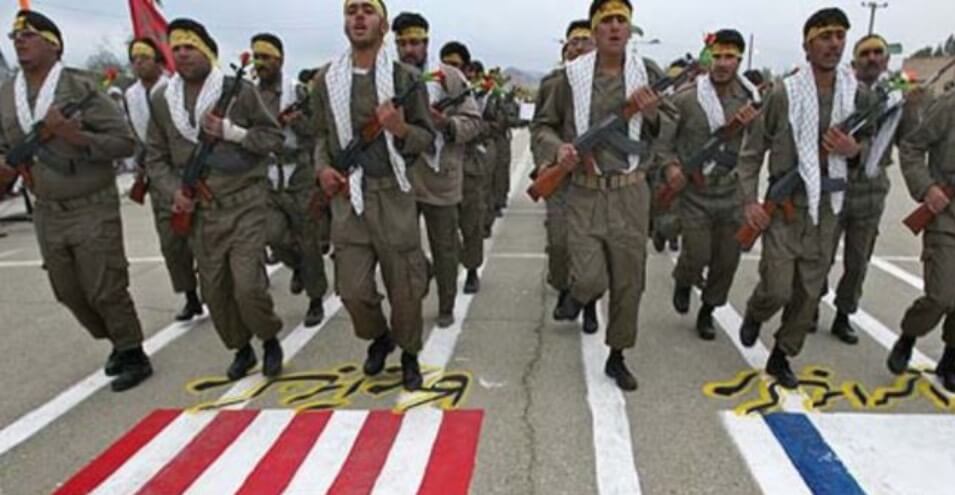
Will Iran-Israel Naval War Go Public?
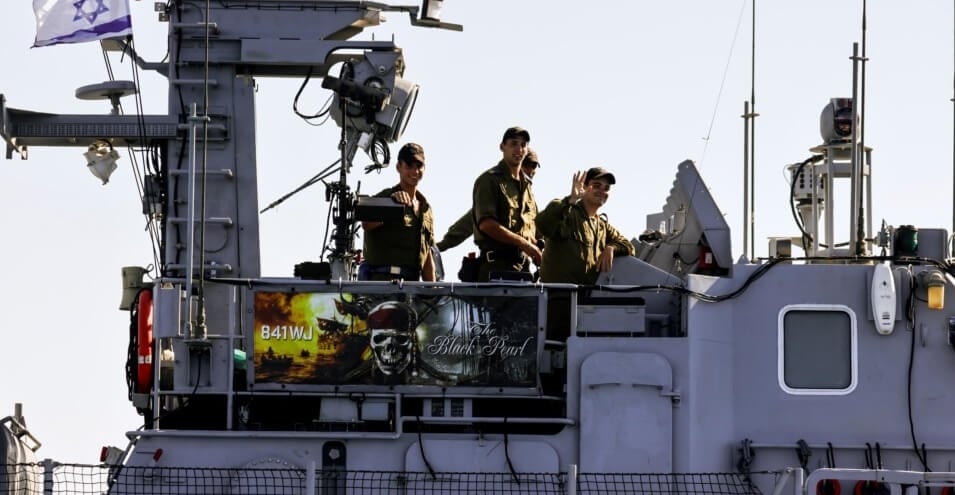
For years, a shadow war between Iran and Israel has been ongoing with varying intensity in different spheres.
The naval dimension of this conflict began in May 2019, when an Iranian oil tanker in the Red Sea called the “Happiness 1,” carrying more than one million barrels of oil, came to a halt on Thursday, May 2, due to a suspicious hole appearing in its engine room followed by water ingress. Due to emergency conditions, the tanker was transferred to the port of Jeddah in Saudi Arabia, the nearest safe port.
Since then, according to The New York Times, Israel has been responsible for sabotage on at least 10 ships belonging to Iran. Ships that mostly carried fuel, military items, or other goods destined for Syria and Lebanese Hezbollah.
Israel never admitted to these attacks, but in March this year, Benjamin Netanyahu, then Israeli Prime Minister, in response to a question about how Israel would react to an Iranian attack on an Israeli vessel, said: “Throughout the region” we will attack Iran.
In response, the Islamic Republic has been held responsible for attacks on at least five Israeli ships. Moreover, Israel and several Western and Arab countries hold the Islamic Republic responsible for attacks on ships belonging to other nations including Japan, Saudi Arabia, Norway, and the United Arab Emirates.
Similarly, the Islamic Republic, like Israel, denies any involvement in attacks on ships and tankers, and holds Israel responsible for a series of sabotage and explosions at Iranian nuclear and military centers, and the assassination of five nuclear scientists, including the assassination of Mohsen Fakhrizadeh.
Iran and Israel have used similar tactics and weapons in carrying out attacks attributed to them.
According to reports, Iran has used limpet mines, drones, and missiles against Israeli ships, and Israel has employed the same weapons. Both countries have attempted to ensure that attacks result in minimal human casualties on ships and that the level of attack does not result in ship sinking.
Attacks Attributed to Iran and Israel
One of the successful attacks attributed to Israel was against the oil tanker “Sabiti,” belonging to Iran’s National Tanker Company fleet, which occurred on Friday, October 11, 2019, at 60 miles off the port of Jeddah in the Red Sea. In this attack carried out with two missiles, two holes appeared above the waterline on the tanker’s hull, measuring half a meter and one and a half meters in diameter, causing an oil leak into the sea. This leak was subsequently contained.
On Saturday, May 11, 2020, a cyber attack disabled special computers controlling maritime traffic at the Rajaiee Port Complex in Bandar Abbas, severely disrupting activities at the port terminal. All computers coordinating the movement of ships, trucks, and cargo transportation failed, creating chaos and traffic on waterways and roads leading to these facilities. From Iran’s perspective, Israel was behind this attack.
On March 9, 2021, the “Helios Ray,” a ship owned by Israel and sailing under the Panamanian flag from the port of Dammam in Saudi Arabia bound for Singapore, came under attack in the Gulf of Oman with two holes created above the waterline on both sides of the ship. Benjamin Netanyahu, then Israeli Prime Minister, held Iran responsible for this attack.
On March 30, 2021, a container ship named “Iran Shahr Kord” en route to the port of Latakia in Syria came under attack in international waters, 92 kilometers off Israel’s shores in the Mediterranean Sea, when an explosive object struck the ship, resulting in damage to part of its hull and a minor fire at the explosion site that was subsequently extinguished. Iran deemed this attack an example of “maritime piracy” and identified Israel as the perpetrator.
Five days later, on April 5, 2021, an Israeli container ship called “Lori,” sailing under the Panamanian flag from Dar es Salaam in Tanzania bound for India, came under missile attack. The damage was minor, and an Israeli official held the Islamic Revolutionary Guard Corps responsible for the attack.
Twelve days later, on April 17, 2021, an Iranian ship called “Saviz,” belonging to the Islamic Republic’s shipping lines and under the command of the Revolutionary Guard Corps, was damaged by a limpet mine. This ship has been anchored in international waters at the strategically important Bab al-Mandab Strait for several years, monitoring ship traffic and gathering intelligence while supporting Iranian commandos, who are sent as armed guards to escort Iranian transit ships. Following this attack, Israel’s Kan network reported in its news program that the perpetrator of the attack was intent on sending a “special message” to the Islamic Republic.
One week later, on April 24, 2021, an Israeli ship called “Hyperion Ray,” sailing under the Panamanian flag, near the shores of Fujairah in the Gulf of Oman, was targeted by a missile or drone. This attack, which occurred two days after sabotage at Natanz facilities, caused minimal damage. Israeli state television pointed the finger of blame at Iran.
On July 3, 2021, the container ship “Tyndall” under the Liberian flag, sailing from the port of Jeddah in the Red Sea bound for the port of Jebel Ali in the UAE in the Persian Gulf, was targeted by a missile or drone and sustained minor damage. This ship had been managed several months before the attack by “Zodiac Maritime,” a company belonging to an Israeli merchant named “Eyal Ofer,” but was later sold, and at the time of the attack, its owner was “Polar 5,” a company headquartered in London with no connection to Israel. Israeli officials said the Islamic Republic was behind this attack.
Nearly four weeks later, on July 29, 2021, the Japanese oil tanker “Mercer Street,” sailing from Tanzania bound for the United Arab Emirates, was targeted by armed drones in the Gulf of Oman, resulting in the deaths of a Romanian captain and a British security guard. The ship sailed under the Liberian flag and was managed by “Zodiac Maritime,” an Israeli shipping company. Initially, some Iranian state media outlets said the attack was in response to an Israeli airstrike on Dabaa in Syria, but later the Islamic Republic denied its involvement. American, British, and Israeli officials formally identified the Islamic Republic as the perpetrator of the attack.
One week after the “Mercer Street” attack, on August 15, 2021, CENTCOM, the U.S. Central Command, announced the results of its investigation, publishing images of explosion debris, stating that the drone used in the attack was manufactured in Iran.
Following this U.S. investigation, on September 3 this year, Israel also announced that the drone used to attack the “Mercer Street” ship had “taken off from Iranian territory with the approval of the leader.”
Israel’s Permanent Presence in the Red Sea
Recently, Admiral Eli Sharbet, former commander of the Israeli Navy, in an interview with the Associated Press, stated that Iranian maritime activities are at the top of Israel’s concerns, but the Israeli Navy is capable of launching attacks at any moment if necessary to protect the country’s economic and security interests.
He also raised other points in this discussion:
- The State of Israel will ensure freedom of navigation for itself throughout the world, and in implementing this, the distance factor from Israel is not relevant;
- The Israeli Navy has increasingly expanded its activities in the Red Sea by deploying frigates and submarines. In the past, this force’s presence in this sea was brief, but now its presence is permanent;
- Ships targeted by Iran in the Persian Gulf were connected to Israel but were owned and managed by commercial enterprises based outside Israel, and therefore such attacks require international responses.
In the same interview, the former commander of the Israeli Navy said his country has decided not to interfere with fuel transfers from Iran to Lebanon because, given Lebanon’s economic collapse, it sees no benefit in doing so.
He added that Israel is watchful regarding the sending of weapons to Hezbollah by sea and will intervene if it determines that a cargo is weaponry.
Missions of the Israeli Navy
The main missions and major threats facing the Israeli Navy include:
– Securing and defending Israeli territorial waters and the “exclusive economic zone” in the Mediterranean Sea and keeping the country’s maritime communication lines open. This zone’s boundary is determined with Cyprus but remains unclear and ambiguous with Lebanon. The length of Israel’s coastline in the Mediterranean Sea is 273 kilometers, and almost all of Israel’s imports are conducted by sea;
– Protecting Israel’s offshore gas platforms in the Mediterranean Sea, which supply three-quarters of the country’s electricity;
– Continuing the naval blockade of the Gaza Strip. According to Admiral Eli Sharbet, Hamas naval commandos and divers, despite their small numbers, are well-trained and experienced and represent a potential threat to the Israeli Navy;
– Preventing the transfer of weapons from the sea by Iran to Lebanese Hezbollah and Syria;
– Ensuring security and keeping maritime communication lines open in the Gulf of Aqaba and the Red Sea. Israel’s port of Eilat is located in the Gulf of Aqaba, and the length of Israel’s coastline in this gulf is approximately 12 kilometers.
Structure of the Israeli Navy
The Israeli Navy is the smallest of the three branches of the Israeli military. According to Yoel Gozansky, a senior researcher at the “Institute for National Security Studies” in Tel Aviv, the Israeli Navy is “small and efficient,” but excessive reliance on this force within Israel’s strategy regarding Iran is not advisable.
The largest surface units of this force are seven patrol corvettes (Korvet) of the “Sa’ar 5 and 6” types. Additionally, this force has eight missile-launching gunboats, five submarines (Dolphin-class, German-made), 45 patrol boats, and two supply ships. The Israeli Navy’s personnel capacity is 10,000 personnel.
Four Sa’ar 6-type corvettes, which are the newest surface units of this force and were built in Germany, are equipped with Israeli weapons such as Gabriel anti-ship missiles, the “Barak 8” air defense system, and a type of naval Iron Dome system for close defense. The operational range of the Sa’ar 6 corvette is approximately 4,500 kilometers.
Three Sa’ar 5 corvettes were American naval vessels transferred to Israel in 1994 and 1995. One of these ships, named “Hanit,” was targeted by a Chinese coast-to-sea missile “C-802” (known as Noor missile in Iran) in 2006. Four crew members of the ship were killed in this attack.
The maritime systems of this force are integrated into Israel’s air and missile defense networks to enhance coordination between ground and naval forces to counter air-based threats.
Israel’s Dolphin-class submarines have the capability to carry cruise missiles. The range of these missiles is at least 1,500 kilometers. Many believe these missiles are equipped with nuclear warheads and are designed for a “second strike.” In other words, these cruise missiles give Israel the capability to launch a retaliatory nuclear strike after an enemy nuclear attack and inflict catastrophic damage on the enemy.
Mutual Vulnerability, Measured and Limited Attacks
The Israeli Navy is a small coastal naval force and lacks the capability to extend and maintain a permanent presence in waters beyond the Red Sea, including the Gulf of Aden, the Gulf of Oman, and generally the northwestern Indian Ocean, to protect or escort ships belonging to Israel or managed by Israeli companies.
Given Israel’s agreements with the United Arab Emirates, Bahrain, and other Arab countries, known as the Abraham Accords, and the expansion of Israel’s economic relations with these countries, particularly the UAE, the transit of Israeli ships in the Gulf of Oman and the Persian Gulf will undoubtedly increase.
Therefore, one cannot ignore the vulnerability of Israeli ships to potential attacks by Iranian naval forces. The Islamic Republic, due to its lack of capacity to respond to Israel’s numerous aerial attacks in recent years against Iranian units and allied militias in Syria and border areas with Iraq, has largely remained silent. However, in the maritime sphere, it has the capacity to respond, has its hands free, and can inflict damage on Israeli ships.
Nevertheless, Israel can benefit from a recent American initiative aimed at improving maritime security in the region. Recently, the U.S. Fifth Fleet formed a combat force called “Combat Force 59” to ensure the security of maritime communication lines in the Gulf of Oman and surrounding waters and prevent potential attacks on ships and tankers.
This force is expected to operate in three dimensions: surface, subsurface, and aerial, using drones, remotely operated unmanned surface vehicles, and remotely operated unmanned underwater vehicles.
Earlier, in September 2019, the United States, due to the increase in attacks on ships and tankers in the region, formed an organization called the “International Maritime Security Structure” with the participation of eight countries, including Britain, Saudi Arabia, the UAE, and Australia, aimed at securing communication lines in the Persian Gulf, the Gulf of Oman, the Gulf of Aden, and the southern Red Sea.
The Islamic Republic, given its broad support for Lebanese Hezbollah and the Assad regime, has three routes to support and provide logistical needs for them. Land and air communication lines are highly vulnerable, and Israel’s numerous aerial attacks have repeatedly demonstrated this. Therefore, the maritime route, considering the volume and weight of goods that can be transported by ship, is more practical and better compared to other communication lines. However, Iranian ships and tankers in the Red Sea and east of the Mediterranean, as Israel has previously demonstrated, are vulnerable.
In this regard, Shaul Chorev, retired admiral of the Israeli Navy, has said: “Attacking Iranian tankers neither prevents this country from enrichment nor reduces its aid to Hezbollah and other proxy groups… A naval war would also impose significant costs on us, especially in the Persian Gulf and the Arabian Sea, which is beyond the operational range of the Israeli Navy and its capability to protect Israeli ships in this region.”
For this reason, both countries have so far attempted to exercise moderation in their attacks and ensure that the level of attacks does not result in irreparable damage to ships and tankers or cause an environmental disaster due to oil leaks.
An Open War?
The continuation of maritime confrontations between Iran and Israel could, knowingly or unknowingly, or as a result of misassessments, emerge from the shadows and turn into an open conflict and full-scale war.
This shadow war is rooted in a broad web of differences and animosity between the Islamic Republic and the United States, as well as with Israel, which is linked to acute issues, including the Islamic Republic’s nuclear and missile programs and its “destabilizing and subversive” activities in the region.
Israel sees the revival of the JCPOA or reaching another agreement as beneficial to Iran and the P5+1 countries, and seeks complete termination of Iran’s nuclear program, control of this country’s missile programs, and a change in the Islamic Republic’s behavior in the region, and as senior Israeli officials have repeatedly warned, this country will, if necessary, unilaterally resort to military operations against Iran.
It appears that the Biden administration does not want this potential Israeli action and is trying to prevent this country from military attacks and generally does not want to be involved in another war in the Middle East. However, if war between Iran and Israel becomes public, Washington will very likely feel obligated to support Israel under the “U.S.-Israel Strategic Partnership Agreement” of 2014, the result of which would be an all-out war.
Such a war, if it occurs, will engulf all countries in the region and create nothing short of a catastrophe.
Source: Radio Farda