“They torture me without laying a hand on me”; Investigative report on one of the injured from the November 2019 crackdown
Two years after the widespread public protests in November 2019 in Iran, the Islamic Republic’s government has still not answered any questions about the severity of the crackdown against people in over 200 Iranian cities.
Protests during which many Iranians who took to the streets in response to the sudden increase in gasoline prices were killed by bullets from security and police forces, many were arrested, and a large number were wounded in various parts of the country. In a sense, the government’s crackdown was imposed on people in three forms: killing, wounding, and detention. Although various statistics have been announced about the number of those killed and to some extent those detained, no accurate and specific statistics have ever been announced about the “wounded” and “victims” of these protests. Nevertheless, countless accounts of severe violence by security, military, and police authorities against people and repeated use of firearms against them in many predominantly poor and peripheral cities of the country indicate the large number of victims and wounded from the November 2019 protests. Victims who are still suffering from various physical and psychological pressures; from the difficulty of paying treatment costs to other hardships such as social exclusion, unemployment, and inability to find work.
Revisiting the injustices inflicted on the victims and wounded of the November protests can reveal important and crucial aspects about the nature of the government’s treatment and certainly the dimensions of the protests, and alongside the loud cry for justice from the families of the killed, be the voice of the victims of November 2019.
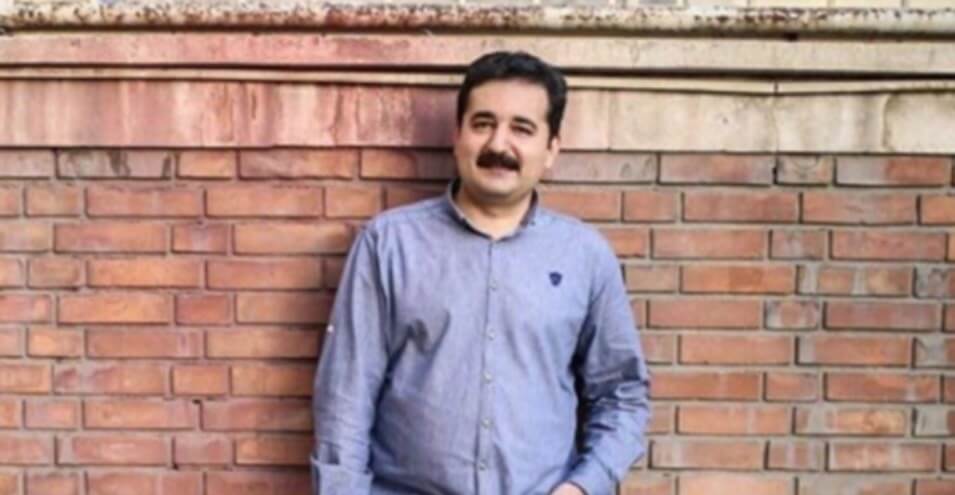
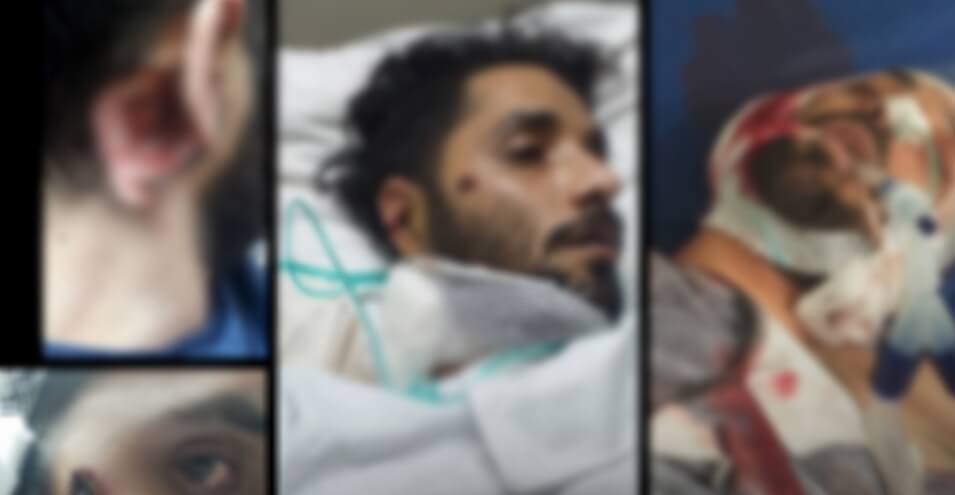
The following investigative report is based on a conversation with Mehiar Ebrahimi, one of the protesters and victims of the November 2019 protests, as well as some documents that have been provided to the Human Rights Campaign in Iran. Mehiar Ebrahimi’s face was severely damaged during the first phase protests of Andisheh Township in Tehran Province as a result of a direct bullet shot by officers, problems that still haunt his life. The details of the events leading to his injury and the subsequent issues, as told by Mehiar Ebrahimi, are in fact a documented account from a living witness to the November 2019 protests who still experiences the pain of the government’s severe crackdown in every corner of his life.
The beginning of protests in Phase One of Andisheh Township
On Saturday, November 16, 2019, less than one day after the sudden announcement of an increase in gasoline prices in Iran, the streets of “Phase One of Andisheh Township,” like many other small cities in the country, witnessed the beginning of widespread public protests and to some extent clashes between people and security, military, and police forces.
Andisheh Township, located 20 kilometers from the metropolis of Tehran and 7 kilometers southeast of Karaj, has 6 residential phases, with Phase One being the poorest section of this new city due to the lack of equipped medical centers, traditional urban planning systems, and the absence of green spaces and adequate living facilities. It is in this area where the main public protests in this region took shape and, of course, soon turned violent.
In Andisheh Township, “Phase One” is the southernmost section of Andisheh Township and has three main streets parallel to each other. Of course, these three streets are longitudinal streets, and there are many transverse streets in this phase that are divided into western and eastern sections. The map of the area and the scattered or close proximity of houses and apartments in these areas show that the formation of demonstrations and people joining together, given the small size of the main Phase One area of Andisheh Township, happens very quickly.
Mehiar Ebrahimi, a 30-year-old single young man with a technical diploma degree and working in technical and construction work, left his house at 10 a.m. on November 16 after a call for protest demonstrations in Phase One of the township, and shortly after joined a group of demonstrators who, according to him, were in a very peaceful space, far from any violence or vandalism, and many of them had even brought their children to the streets. As Mehiar Ebrahimi says, “After the crowd had been moving on the main street for a while, people from the surrounding alleys joined the demonstrations and were moving toward Twelfth Square when they had scarves on their faces and suddenly there was more commotion and the chants changed. Even these people were inciting those who were looking at the demonstrations from their house windows and had nothing to do with them to come out of their houses.”
According to Mehiar Ebrahimi, the crowd moved toward Twelfth Square and then reached near the Basij base. The Basij base is next to East Shahid Street. That is, one of the busy areas of Phase One of Andisheh Township. As Mehiar Ebrahimi recounts, the atmosphere suddenly becomes crowded and tense after reaching the Basij base. Including the fact that these unknown individuals who covered their faces with scarves broke the window of a “sandwich shop” near the Basij base and vandalized it.
In Mehiar Ebrahimi’s account, there is a description of the severity of violence by unknown individuals and provocative behaviors such as attempts to set fire to flags related to Imam Hussein’s mourning rituals, which shows that the behavior of these individuals in creating violence and inciting people was calculated. Mehiar Ebrahimi emphasizes that on that day, ordinary people did nothing special and only these individuals vandalized the shop. Around 1 p.m., people, including Mehiar Ebrahimi, disperse and go to their homes.
In news media and social networks, multiple reports of the beginning of protests in other Iranian cities are spread quickly, and at the same time, as sunset approaches on Saturday, serious disruption in the country’s internet network and ultimately the internet outage in most Iranian cities, makes it difficult for Mehiar Ebrahimi and many others in the township to follow news and events. Nevertheless, public protests in most Iranian cities, including Phase One of Andisheh Township, continued on Sunday, November 17, 2019.
Account of the injury
On Sunday, around 7 p.m., Mehiar Ebrahimi leaves his house and around 8 p.m. joins the demonstrators at Eighth Square. The demonstration, like the day before, moves toward the Basij base. According to Mehiar Ebrahimi, “exactly in the dead-end alley next to the Basij base on West Shahid Street (which is one of the three entrances to the Basij base in that alley), Basij forces and special guards with all equipment including batons, tear gas, and firearms (Kalashnikov) were stationed in the alley.”
The Basij base located in this busy area and narrow streets, in fact, is surrounded on all sides, and the two other entrances to this base, besides the one in the dead-end alley, face the main streets.
The arrival of the crowd of demonstrators to this area and the sight of the presence of armed Basij and police forces creates tension. Mehiar Ebrahimi says that in these circumstances, he decides to speak with the Basij base commander: “I went and spoke directly with the base commander and asked him to withdraw his forces into the base and said that the presence of these forces causes commotion, clashes, and tension… that night too, many families were on the streets.”
Nevertheless, the situation moves toward tension and conflict, and the crowd throws several stones at the armed Basij forces, which causes one of the forces stationed in the dead-end alley to fire a tear gas canister into the air. According to Mehiar Ebrahimi, “the sign of a butcher shop in that area that was still on despite the shop being closed, went off as a result of the officer’s tear gas fire, and after that, the intensity of shooting increased and in a span of 3 minutes more than 50 tear gas canisters were fired at the crowd causing it to disperse.”
After continuous shooting by forces stationed at the Basij base and its surroundings, people flee. Everyone looks for a place to take shelter, and Mehiar Ebrahimi also takes shelter behind a wall in an alley near the Basij base.
Mehiar Ebrahimi, describing the extremely violent atmosphere in the area and the continuous, constant, and direct firing of tear gas at the heads and bodies of people and the sound of intense shooting, says, “In this situation, a woman and a girl asked me to take them from East Shahid Street to West Shahid Street… The shooting was intense. When I took them there, on my way back to the same alley where I had taken shelter, a woman suddenly appeared in front of me and just as I started to say ‘ma’am, this is not a place for you’… my sentence wasn’t finished when shots were fired at me and I lost consciousness.”
Mehiar Ebrahimi’s detailed account of the public protests and how they turned violent has several important points; Mehiar Ebrahimi’s emphasis on the presence of people in the protests along with their families during both days he participated in these protests shows how spontaneous the formation of protests was by people and, contrary to the claims of Islamic Republic officials, no so-called “foreign” security or intelligence apparatus played a role in its formation. On the other hand, this account’s emphasis on violence being initiated by those who had no connection to the people and were more involved in vandalism during the protests is indicative of a constant method by those in power who aim to portray any public protest as “riots” and for this purpose employs various means.
On the other hand, the harsh and inhumane manner in which Basij and police officers dealt with protesting people is clearly evident in Mehiar Ebrahimi’s account of the protests; in Mehiar Ebrahimi’s account of the second day of protests and the escalation of clashes with people, he, like many others, is forced to take shelter from the officers’ fire, and encounters women “twice” during shooting and clashes who were in the path, and in fact, shots are fired right where he sees them. In a sense, one could say that the indiscriminate nature of the officers’ shooting could easily have caused serious injury or death to any passerby in that crowded area. Mehiar Ebrahimi’s reference to the existence of “sandwich shops” or “butcher shops” indicates that the population density in that area (near the Basij base) is high, and yet Mehiar Ebrahimi’s account of being shot shows that the Basij and suppressive armed forces, without any red lines, were firing at people (not even necessarily demonstrators).
As Mehiar Ebrahimi says, “I was not the first person to get shot… Two of the guys we knew from the congregation also got shot. One was killed and one was seriously injured.”
Transfer to clinic
After the military bullet shot from the Basij base hits Mehiar Ebrahimi’s face and he loses consciousness, several people first take him to the clinic in Phase Three of Andisheh Township and then to Noor Hospital and finally to Tamin Ejtemaei Hospital. During this time, his family learns of the incident and ultimately accidentally finds their son in the hospital’s recovery room in a serious condition.
According to Mehiar Ebrahimi, at this hospital, “four resuscitation operations” are performed on him, and it is finally determined that he needs to be transferred to Milad Hospital for treatment and hospitalization.
The question here is why does Mehiar Ebrahimi’s family find him in the hospital “by accident”? The answer to this question becomes largely clear through examining the documents and sheets from Tamin Ejtemaei Hospital.
Based on this account, Mehiar Ebrahimi’s father, unable to pay for his son’s transfer bill from Tamin Ejtemaei Hospital to Milad Hospital, is forced to leave his “driver’s license” as collateral at the hospital. Later, when Mehiar Ebrahimi goes to the hospital to retrieve his father’s license and sees the bill from Tamin Ejtemaei Hospital, he encounters a strange issue. In the hospital’s bill, Mehiar Ebrahimi’s information is recorded as follows: Name: “Mehya” – Father’s name: “None” – Gender: “Female” – Marital status: “Married.” His date of birth is also completely incorrectly recorded. Mehiar Ebrahimi says, “When I investigated the matter and said these were not my details… the responsible official at the hospital said, these are yours, they just gave us the information wrong. I said who gave it, he said I don’t know.”
Moreover, in the documents of Tamin Ejtemaei Hospital, including in the summary of Mehiar Ebrahimi’s file, it is falsely stated that he was transferred to “Shohada-ye Tajrish Hospital.” A place that Mehiar Ebrahimi says he has never been to in his life.
Mehiar Ebrahimi, noting that he repeatedly explained to the responsible hospital official that his family found him at the hospital by accident and had no trace of him, says, “In fact, nowhere was anyone registered under the name Mehiar Ebrahimi so they could find me that way.”
From Mehiar Ebrahimi’s account and of course the government’s history of actions such as “forced disappearance,” it seems that security forces had planned such a scenario for Mehiar Ebrahimi as well, like many other protesters. According to Mehiar Ebrahimi, this concern still accompanies him and his family two years later.
Incomplete treatment process
Mehiar Ebrahimi’s serious condition and doctors’ diagnosis force the family, despite high costs (Mehiar’s father leaves his license as collateral at Tamin Ejtemaei Hospital because he cannot afford the ambulance cost), to transfer their son to Milad Hospital. Mehiar is hospitalized in the “ICU” section of Milad Hospital for eight days. After that, with relative improvement, he is transferred to the general ward, but as soon as he learns about the conditions of hospitalization at Milad Hospital and the very high treatment costs there, and aware of his family’s inability to cover these heavy expenses, he tells the hospital authorities to prepare his discharge conditions. A matter that faces opposition from Milad Hospital’s medical staff and ultimately forces Mehiar to go on a “hunger strike” to achieve his goal of being discharged from the hospital.
Although Mehiar struggles with severe damage to the “jaw,” “eye,” and “left ear” as well as “teeth” and “facial nerve,” after four days he is discharged from Milad Hospital, but in the summary of Mehiar Ebrahimi’s file at Milad Hospital (which is one of the main documents describing his medical condition), there is a point that has serious and heavy impact on the treatment process and certainly other aspects of his life: repeated emphasis on bullet impact throughout the medical file.
This matter becomes even more important when we remember that this emphasis in such reports provides no background or explanation for why the bullet struck and the position of the individuals. According to Mehiar Ebrahimi, “Specialist and super-specialist doctors at Fatema-Zahra Hospital, whenever they understood that the issue of being shot was raised in my file, would make excuses and try to refer my medical file to another doctor.” A situation that caused Mehiar Ebrahimi’s injured eye condition to worsen day by day.
Loss of hearing in the left ear, worsening of the eyelid and eye condition, loss of half the facial nerve, and worsening of jaw and teeth damage are tangible consequences of incomplete treatment of injuries from the direct shot of armed officers who were never prosecuted for their actions.
Although government officials have made many claims at various times about investigating and compensating the victims of the November protests, in all the two years that have passed, no official from any government institution has followed up on Mehiar Ebrahimi’s situation to help with treatment and compensation.
Many instances can be found in Mehiar Ebrahimi’s account based on which finding him for responsible officials to help with treatment and compensation was not difficult; holding protests in the busiest parts of the city and near the Basij base that overlooked the streets from several angles and certainly had CCTV cameras that recorded the events, and Mehiar Ebrahimi’s multiple transfers to different hospitals and clinics and the repeated mention of being shot in these transfers, seem sufficient evidence that finding someone like Mehiar Ebrahimi or any of the injured from the protests in Phase One of Andisheh Township was not and is not a difficult task for officials claiming to compensate the victims of the November protests.
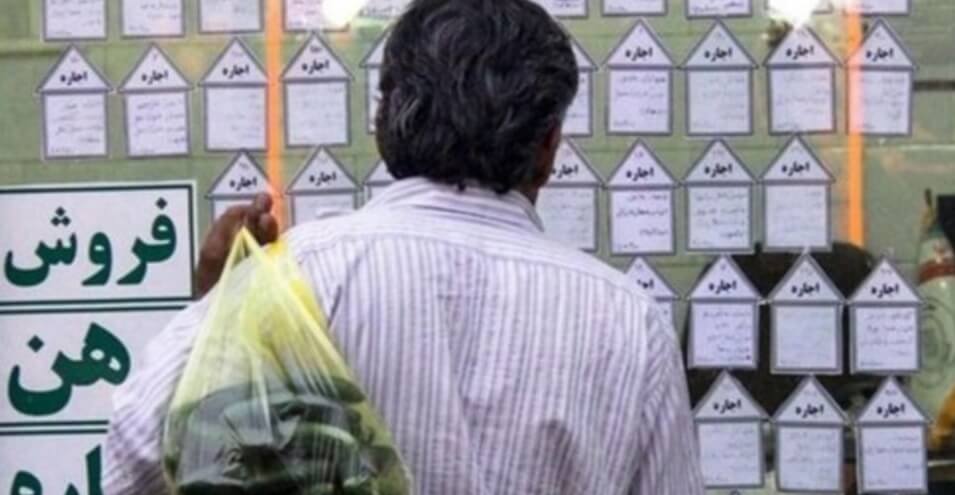
On the other hand, there is no doubt that it is clear to security and police authorities and related officials how limited the financial resources of most protesters in small, peripheral, and poor cities are for high medical costs. With a simple internet search, one can understand that the “Phase One of Andisheh Township” area has the “cheapest” houses to rent precisely because it lacks medical facilities, and most residents are from the very low-income segments of society.
Paying attention to this point shows how the government multiplies the anger and sorrow of the victims and their families from multiple angles. In a sense, the occurrence of such events not only affects the life of the injured individual but also directly affects the lives of all those around him.
The hidden sufferings of being shot by a government officer
After nearly two years since November 2019 and Mehiar Ebrahimi’s injury from a bullet fired by an officer, a gun whose user was never identified as to why he targeted Ebrahimi’s face on the night of November 17, the pains and sufferings of that bullet still accompany Mehiar Ebrahimi. Pains that not only torment his body but have also caused heavy psychological and mental pressures for him; withdrawal of many friends and relatives from him, inability to “contribute to household expenses” for the family and becoming indebted due to treatment costs, and constant worry about the possibility of danger coming to them, and most importantly, his gradual social exclusion due to inability to find work.
Mehiar Ebrahimi says, “During all this time, wherever I went to look for work, as soon as they read my medical file and saw the story of being shot, and then I told them the story, they said it’s not possible and there’s no work.” According to Mehiar Ebrahimi, he was not even given “home-based work”; a situation that has made him like a prisoner confined to his house.
The sum of such conditions is, in fact, a continuous account of injustices inflicted by the government on people who, simply by coming to the streets and joining public protests about severe economic hardships, are forced to pay the price for years. It is obvious that enduring such pressures for individuals like Mehiar Ebrahimi who came to the streets on the verge of building their future and with hope for better times, only to be harmed in the most cruel way possible, is a difficult task, and its psychological and mental consequences may remain with them and their families for many years to come.
Gradual social exclusion, continuous fear in life, and daily worsening economic conditions have transformed the current situation for many of the November 2019 victims into a prolonged torture. Or as Mehiar Ebrahimi says, “They torture me without laying a hand on me.”
Source: Human Rights Campaign in Iran