UN: Afghanistan’s Economic Collapse Will Intensify Famine Caused by Drought
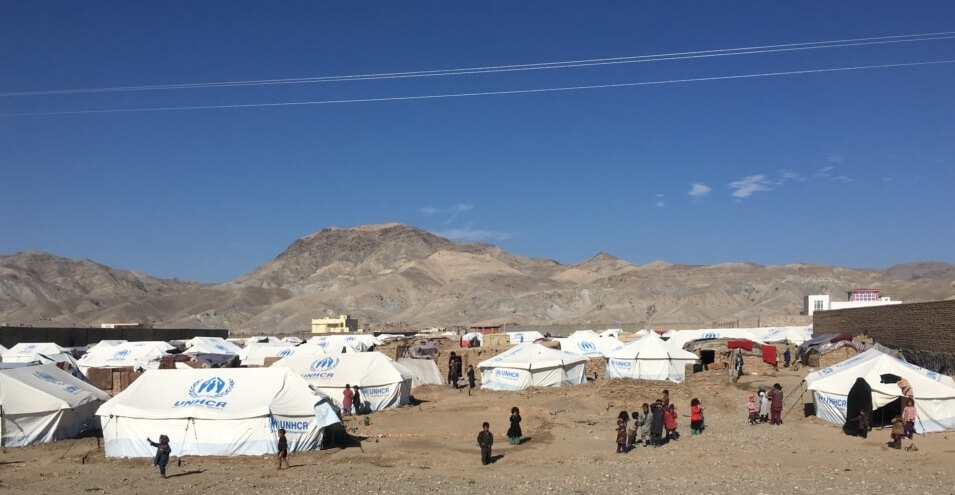
International relief agencies say that due to severe drought this year, many Afghans have faced serious difficulties in securing food supplies, but now following the Taliban’s takeover of the government and the weakening of the country’s economy, millions of people will be at risk of famine.
According to Reuters news agency, Mary Ellen McGroarty, head of the World Food Programme in Afghanistan, said on Thursday, September 11: “Under current conditions, there is no national safety net, and the food crisis has been exacerbated by the deteriorating economic situation in the country since the Taliban seized power.”
The World Food Programme in Afghanistan has released videos showing severe food shortages in various parts of the country. In one of these videos, you can see a long queue of people in front of the organization’s center in the city of Mazar-i-Sharif gathered to receive a bag of flour.
According to the organization, this summer saw the second severe drought in the past four years, which destroyed much of the country’s agricultural production and caused food prices to increase sharply.
The World Food Programme warns that due to drought, military conflict, and the coronavirus crisis, millions of Afghans will soon face famine and hunger. The organization has requested $200 million in emergency assistance and says its food reserves will be depleted in October as winter approaches.
Mary Ellen McGroarty said: “The situation we are witnessing today is truly horrifying. It could become a humanitarian catastrophe.”
Another UN agency official who has worked in Afghanistan said: “The Taliban depends on the UN to meet the needs of the people. They know well that they cannot provide food for the people.”
Ms. McGroarty added: “Government employee salaries have not been paid, the value of Afghanistan’s national currency has collapsed, and since the Taliban took power, banks have allowed people to withdraw only $200 per week from their savings.”
According to her, the World Food Programme continues its operations throughout Afghanistan and over the past two weeks has been able to distribute aid to 200,000 people by importing food from Pakistan and Uzbekistan. She expressed hope that the resumption of flights at Kabul airport will accelerate the delivery of humanitarian aid to Afghanistan.
According to UN statistics, more than 550,000 people have been displaced this year due to drought and war, adding to the existing population of two million refugees.
About half of children under five suffer from malnutrition, and approximately 14 million people—one-third of Afghanistan’s population—face some degree of food shortage or food insecurity.
Assessments by the World Food Programme show that food purchases and consumption have declined in 15 districts over the past month, and the districts of Ghazni, Khost, and Paktia in the eastern part of the country have been more affected by food shortages and high prices than other areas.
The World Food Programme says that although a mass migration from Afghanistan has not yet occurred, food shortages, increased insecurity, and deteriorating economic conditions in the country could trigger large-scale migration.
Officials of the International Committee of the Red Cross in Asia have also warned about the displacement of more people and increased internal migration in Afghanistan.
According to them, if urgent measures are not taken to address the problems of the people, particularly in nutrition, health, and security, the situation in many parts of Afghanistan could become a serious humanitarian crisis.
Source: Radio Farda