Coronavirus Takes Life of Ahmad Zargari, Judge Accused of Human Rights Violations
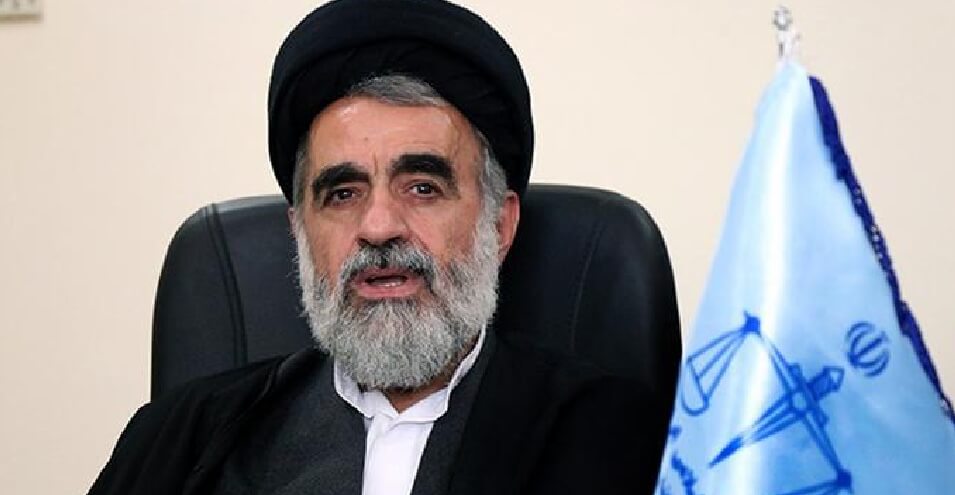
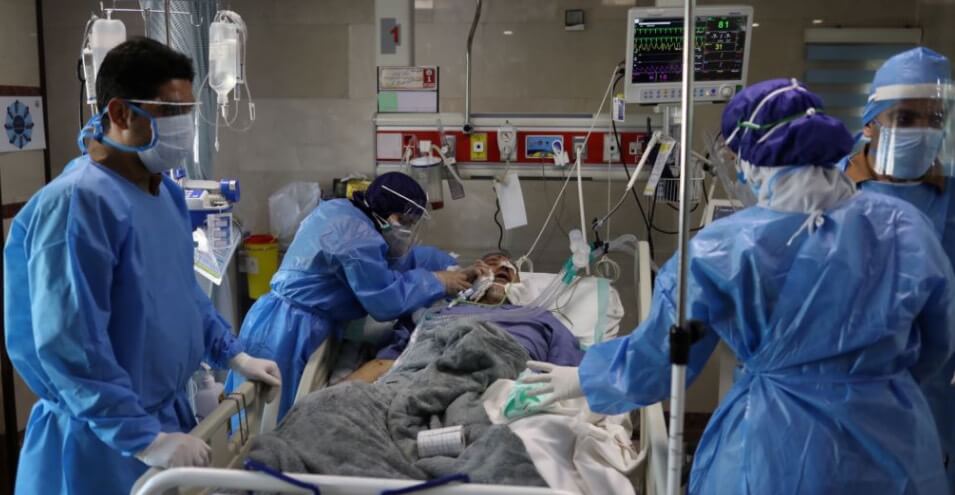
Ahmad Zargari, head of the Central Islamic Revolutionary Court in Tehran, died at Khatam al-Anbia Hospital in Tehran due to COVID-19. After the revolution, he held numerous judicial positions.
Zargari was born in the mid-1950s in Semnan. He was a student of Beheshti and Qadusi at Haghani School in Qom and, like other seminarians at this school, began working in the prosecutor’s office and Islamic Revolutionary Court of Tehran from April 1979. On May 10, 1979, by order of Khomeini, he became the Islamic judge at the Anti-Narcotics Headquarters in Tehran.
In September 1981, after his arrest, he was transferred to the political detention ward of Pol-e Rumi Courthouse. Through the cell window, I could see prisoners accused of addiction and drug trafficking being beaten with heavy lashes in the courtyard in front of our cell under Zargari’s orders, as he was the Islamic judge overseeing immoral acts and drug courts, while they screamed.
After Ali Razini took office as head of the Central Islamic Revolutionary Prosecution in February 1985, Zargari became a prosecutor and took on the position of deputy for immoral acts and narcotics at the Central Islamic Revolutionary Prosecution. During Morteza Eshraqi’s tenure as head of the Central Islamic Revolutionary Prosecution, Zargari continued to manage this deputy position.
Being close to Ahmad Khomeini, he also worked simultaneously in Khomeini’s office. Describing his closeness to Khomeini, he says: “One morning in the winter of 1988, which everyone remembers for its severe cold, especially the snow that fell in Shemiran, the Imam called. I rushed to his presence in a state of anxiety. I saw that his room was completely cold. The Imam opened the door and had only an undershirt on.”
Seyyed Hassan Khomeini was among the first to offer condolences on his death and wrote: “That late honorable person lived throughout his life by striving in the way of his ideology and thought and with love for the Imam’s path and principles (may God’s peace be upon him).”
Hashemi Rafsanjani, in his memoirs of May 31, 2006, wrote about Ahmad Zargari, who was known for his cruelty and harshness, that as a prosecutor in the fight against narcotics, he was “dissatisfied with the Supreme Judicial Council’s decision not to execute unarmed drug smugglers and was seeking help.”
Ahmad Zargari was among those individuals whom Mohammad Yazdi, the head of the judiciary in 1992, dismissed from his position as a prosecutor in the fight against narcotics. From 1991 to 1993, he was also the deputy secretary of the National Anti-Narcotics Headquarters.
After his dismissal from this position, in 1994 he was appointed as the secretary of the Headquarters for Commanding Good and Forbidding Evil by Ahmad Jannati and remained in this position until 2018. One of his most significant accomplishments in this position was his effort to pass the Law for the Protection of Those Who Command Good and Forbid Evil. With the passage of this law, “those who forbid evil” could easily interfere with people and especially women and receive legal protection. He also served for years as secretary of the “People’s Headquarters for Prevention and Social Protection” under the judiciary.
From 2010 onwards, Zargari was the representative of Sadegh Larijani and later Seyyed Ibrahim Raisi at the Headquarters for Fighting Goods Smuggling.
For years, he served as the head of Branch 36 of the Islamic Revolutionary Court of Appeals in Tehran and one after another confirmed the oppressive verdicts of Sheikh Mohammad Mesbah Yazdi (Nasserists) and Mohammad Hassan Zarei Dehnavai (Judge Hadad). His name came to the forefront after the 2009 protests in his position as head of Branch 36.
Before reaching the position of head of the Islamic Revolutionary Court of Tehran on November 12, 2020, in addition to heading Branch 36 of the Court of Appeals, he headed the second branch of the Special Court for investigating crimes of “economic disruption and corruption.”
On July 20, 2021, the hearing of charges against defendants in the Rostami Safa case was held under his presidency. This was the last case he heard. The prosecutor’s representative, while reading the indictment, said: This case is one of the largest banking cases in the country, and its defendants are among the country’s super-debtors. The Rostami Safa group, using corruption, had received millions of euros, rials, dollars, and yen. Zargari was tasked with hearing the case of the defendants in the 60-million-euro currency disruption case, hearing the case of smuggled vehicles, hearing the case of former Saipa officials, Ahmad Araghchi, and many other cases in which regime officials were involved, so that the secrets of the cases would not leak out of the circle of insiders.
The European Union, on April 13, 2011, sanctioned Ahmad Zargari and 31 other Islamic regime officials for participation in human rights violations.
Zargari’s Family
Seyyed Mahmoud, Ahmad Zargari’s younger brother, who was an employee of the Reconstruction Jihad, was killed in December 1983 during the occupation of Majnoon Island after spending three months on the front. Mohammad Hassan Akhtari, the husband of Zargari’s sister, who in 1979 was the Islamic judge of the military court, Friday prayer leader of Semnan, and former regime ambassador to Syria and secretary-general of the World Assembly of Ahl al-Bayt, directed numerous terrorist operations through Hezbollah Lebanon and other “jihadi” groups during the 1980s and 1990s. He succeeded Ali Akbar Mohtashemi in Syria and is currently responsible for international affairs at Khamenei’s office.
Hasan Yoneisi, the son of Ali Yoneisi, the minister of intelligence in Mohammad Khatami’s government, who was arrested in 2009 and sentenced to one year in prison, is also Ahmad Zargari’s son-in-law. Ali Yoneisi, like Ahmad Zargari, was a graduate of Haghani School, and the two families became acquainted and had relations for this reason. Hasan Yoneisi studied law with his father’s connections and is currently a member of the Bar Association.
The 1988 Massacre and Zargari
Davoud Zargari, a close relative of Seyyed Ahmad Zargari, was hanged in Evin Prison in 1988 by order of the death committee chosen by Khomeini. Since Ahmad Zargari was the deputy of Morteza Eshraqi, who was the head of the “group” deputy, and Nouri had had a close relationship with Zargari since 1979, unlike other executed prisoners, they gave Davoud the opportunity, perhaps after recognizing the regime’s brutality, to back down from his positions and accept the death committee’s conditions for avoiding execution. These conditions started with “writing a letter of repudiation” and in some cases also included “making a video interview” and “intelligence cooperation.” Many prisoners, despite writing a “letter of repudiation,” were executed in the summer of 1988. Davoud, who had escaped the massacre wave in Evin, was brought before the death committee again in September and was hanged because he refused to accept the committee’s conditions. Seyyed Reza Zargari, Davoud’s brother, was also imprisoned in Evin and Semnan prisons during the 1980s.
Footnote:
Mohammadhassan Mofid, son of Ayatollah Hossein Mofid, who was the head of the Supreme Court from 2004 to 2009, survived because the death committee members were acquainted with his father. But his cousin Hadi Bigvand, who had a different surname, was executed in Evin.
Source: DW