Corona in Iran: Increase in Red Zones and Unclear Vaccination Status
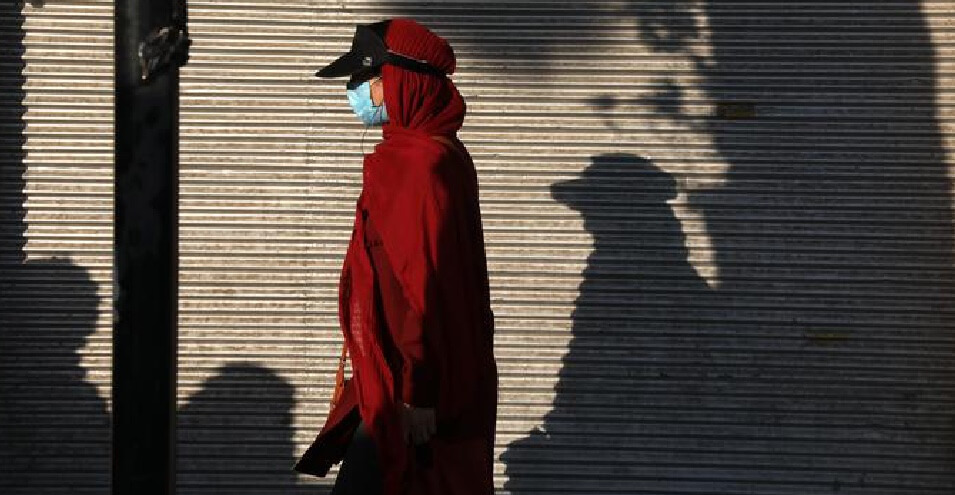
Iran’s Ministry of Health’s public relations announced on Wednesday that 213 people died from COVID-19 in the past 24 hours. During a 24-hour period until July 20, more than 27,000 new cases were identified, of which 2,755 people were hospitalized.
The Ministry of Health of the Islamic Republic published the new color-coding for coronavirus in the country on its news channel. Accordingly, 232 cities are in red status, 117 cities in orange status, and 99 cities in yellow status.
Meanwhile, the situation of coronavirus in Hormozgan Province has been reported as severe. Ali Raoufi, spokesman for the provincial headquarters for combating coronavirus in Hormozgan, said that hospital beds in the province are saturated and most areas are in red status.
He added that the plan for traffic restrictions in accordance with the coronavirus combat center’s guidelines is being implemented in this region. Raoufi explained that the movement of any non-local license plates and between cities and villages of Hormozgan Province is prohibited.
The spokesman for the coronavirus combat headquarters in Hormozgan emphasized that the regulations on night curfews are also being enforced in the province, and movement is prohibited from 10 p.m. to 3 a.m. According to this official, travel to Hormozgan islands is also prohibited.
However, Raoufi stated that vaccination of people over 18 years old in the province, except for Kish and Qeshm islands, is being carried out, and Hormozgan Province is ahead of the country’s level in vaccination based on age priority.
Vaccination Status
While criticism of the coronavirus vaccination situation in the country is increasing, Saeed Namaki, the Minister of Health of the Islamic Republic, said that “the responsibility for vaccine imports does not lie with the Ministry of Health.”
He said on Tuesday in Lorestan Province: “In which country is the Minister of Health responsible for bringing vaccines […] the Ministry of Health is responsible for administering the vaccines.”
Nameki, while referring to “overcoming four severe waves of coronavirus,” emphasized: “In these difficult times and economic constraints and tensions, this solidarity and consensus between us and the armed forces and people and public institutions has enabled us to overcome four waves in such a way that not even one patient was left outside hospital doors.”
According to him, the country’s vaccination has exceeded 400,000 people, which he said is “a new record and a matter of pride.” Namaki added: “Our plan was to be able to vaccinate people over 65 years old and patients with difficult-to-treat diseases by the end of the government, which constitute 85 percent of COVID deaths. Today I announce that by the end of Mordad we will vaccinate the entire population 60 years and above.”
Vaccine Imports from Japan and China
Meanwhile, Kianoush Jahanpour, spokesman for the Food and Drug Organization, announced in a Twitter message that new vaccine shipments from China and Japan are on the way.
In his tweet, he wrote: “With the efforts of the Ministry of Foreign Affairs and diplomatic apparatus, in the coming days, vaccine shipments with authorization for use in Iran will be sent from Japan and China to Iran.” He added that coronavirus vaccine imports will continue.
This is while the production line of the Russian Sputnik V vaccine has also been controversial. Recently, Alireza Raisi, spokesman for the coronavirus headquarters, said that the production line that Russia provided to the Islamic Republic is actually ineffective. Following these statements, Kazem Jalali, ambassador of the Islamic Republic to Russia, claimed that these statements from the Ministry of Health official have been “distorted.”
Source: DW