Head of Flood Assessment Committee: Disaster in Iran is ‘Deeper Than Power Cuts and Water Rationing’
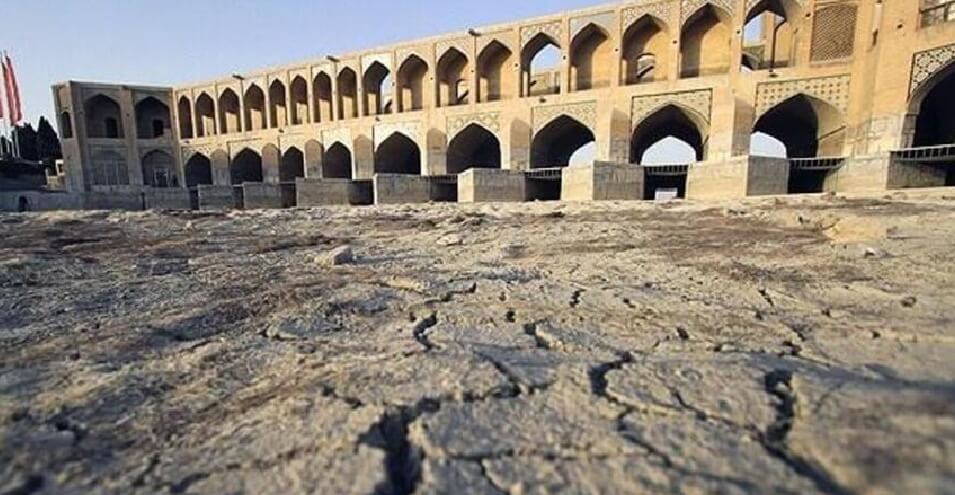
An expert in Iran, emphasizing that all renewable water resources in the country have been exhausted, considers this a very profound disaster and says that this alone is sufficient to prove the bankruptcy of water and the country’s movement toward decline and extinction.
Mostafa Fadaeifard, head of the flood assessment committee of Iran’s National Committee of Large Dams, explains in an interview with ILNA that the “disaster” becomes more apparent when “in addition to the consequences resulting from power cuts and drinking water rationing in cities, the ability to supply water needed for industries and agriculture is not provided, and the livelihood consequences for a large population also occur.”
- Mostafa Fadaeifard: Uncontrolled extraction from underground aquifers has caused land subsidence
According to this water expert, despite the increase in the number of wells drilled in the past decade, no more water has been extracted, because “there is no more water to extract from the wells. In other words, the pump has hit the bottom of the pot.”
Mr. Fadaeifard describes the occurrence of floods in East Azerbaijan and Zanjan simultaneously with water and electricity shortages and rationing in other provinces as “an unprecedented phenomenon” and considers “human activities” to be influential “in accelerating climate change.”
According to Mr. Fadaeifard, Iran has gone from approximately 50,000 wells in 1978 to more than 700,000 wells in 2016, and the reason for the reduced growth in well drilling after 2016 is that “there is no more water to extract from the wells” and “the pump has hit the bottom of the pot,” which “in a word means the extraction of all renewable water resources in the country.”
Mr. Fadaeifard attributes a “10 percent decrease in precipitation” compared to a “40 to 50 percent decrease in runoff” to the reason for “severe hydrological drought” and explains that “the potential of the country’s watersheds in absorbing runoff has greatly diminished,” and for this reason, precipitation levels that previously did not cause floods now cause “destructive floods” in recent years.
According to this water expert, “reduction of vegetation and forest cover, rangeland degradation, agricultural expansion, irrational urban development, lack of flood attachment in city development plans… and irrational extraction of sand and gravel from riverbeds” cause “increased vulnerability,” but the most important and influential factor is “uncontrolled extraction from underground water resources, which has also led to the expansion of the land subsidence phenomenon.”
- Koussar Nik-Ahang: Iran’s Water Crisis Could Even Lead to Physical Violence
In this regard, Koussar Nik-Ahang, journalist and water issues analyst, told Voice of America that the bankruptcy and water crisis in Iran is serious and could even lead to physical violence.
According to Mr. Nik-Ahang, the Islamic Republic has handled the water problem very poorly over the past few decades, and we now see the results of this performance “more clearly.”
This journalist emphasized: “The reduction of water resources due to unjustified consumption in the agricultural sector has led to the current bankrupt situation.”
Voice of America also reported, citing news from Iran, that the continuation of rationing and power cuts in Iran has caused judicial and security authorities to enter the matter.
The Inspection Organization and the Office of the Prosecutor General have been tasked by the head of the judiciary to investigate the cause of power cuts, and the Interior Minister has also said that if no action is taken, the crisis will continue.
Source: Voice of America