Escaping the Fate of ‘Geppetto’; American Fisherman Went ‘Inside a Whale’s Mouth’ and Returned Alive
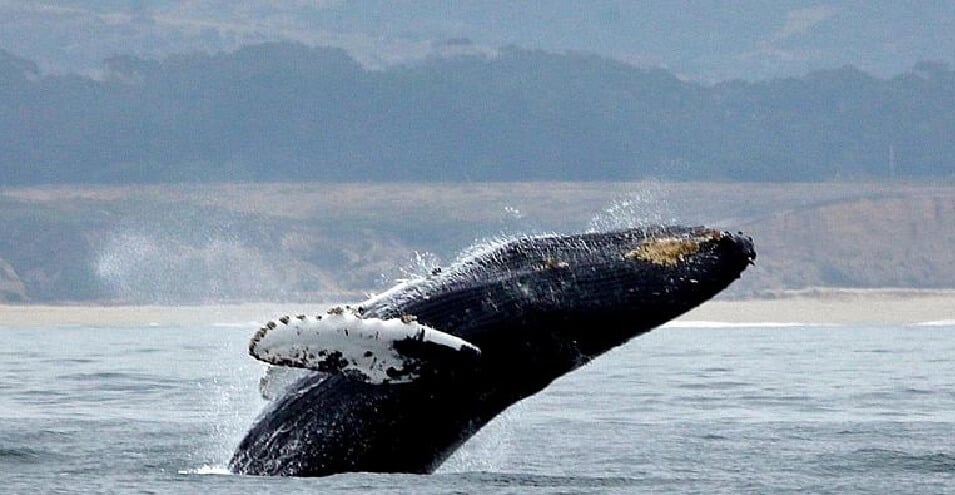
An American fisherman says he was inside the mouth of a humpback whale for 30 to 40 seconds on Friday, but ultimately the massive animal chose to spit him out rather than swallow him.
Michael Packard, an American man who makes his living fishing for lobster in Massachusetts, recounted the incident on his Facebook page. Scientists who research humpback whales have found Michael Packard’s account to be “credible” and “reliable.” According to reports, he was hospitalized briefly after the incident on Friday.
The fisherman from Provincetown, located 200 kilometers east of Boston, wrote on his Facebook page: “I had gone into the water [ocean] to search for lobster when suddenly a humpback whale tried to swallow me. I spent 30 to 40 seconds inside its closed mouth. Eventually it went back to the surface and spat me out. My entire body is bruised but I have no broken bones. I am grateful to the Provincetown rescue workers for their help and medical care.”
A man who accompanied Michael Packard during the sea fishing on Friday also said he witnessed his ejection from the humpback whale’s mouth. He contacted the rescue workers and asked for their assistance in aiding Michael Packard.
Jooke Robbins, a biologist who researches whales, said about the incident: “It’s possible the fisherman was in the wrong place at the wrong time.” According to him, whales jump with open mouths while searching for food and rapidly swallow fish and water. However, according to Jooke Robbins, although the mouths of whales are very wide, their throats are narrow and therefore they cannot swallow large animals.
Michael Packard’s account of Friday’s incident is reminiscent of the fate of the character “Geppetto” in “Pinocchio Tales” by Carlo Collodi, the nineteenth-century Italian author. “Geppetto” in one part of this story emerges from inside a sea creature.
Humpback whales, sometimes also called finback whales, have body lengths between 9 to 15 meters. These mammals often weigh up to 30 tons.
Source: Euronews