Rouhani Confirms Israeli Theft of Nuclear Documents

Unprecedented revelations at the government’s final meeting. Jahangiri said Israel was sending agents into Iranian oil tankers. Rouhani also acknowledged Israel’s action in seizing nuclear documents. The oil minister said oil revenues barely reached 100 billion.
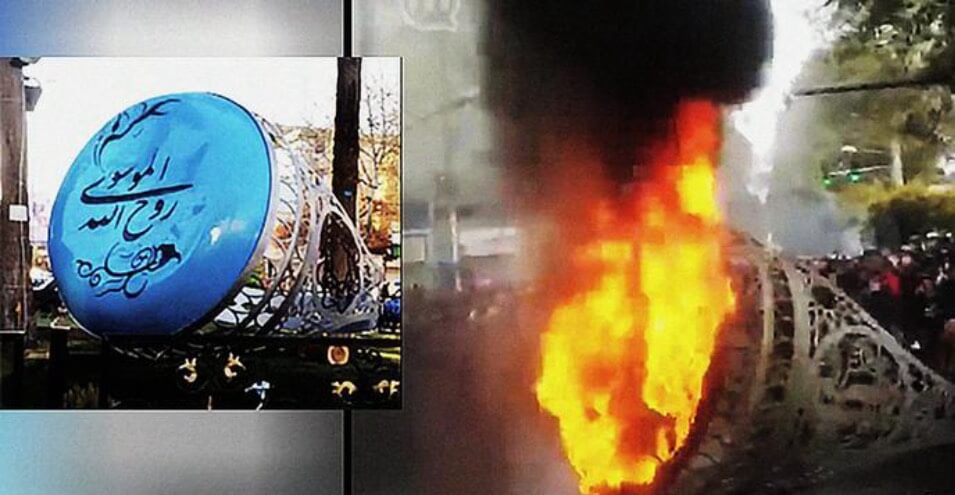
Hassan Rouhani, in his final address as president, acknowledged the seizure of Iran’s nuclear archive by Israel and attributed the December 2017 protests as the catalyst for this action: “In the twelfth administration they branded something hot, but they smelled the kebab… The December protests gave the first signal to the Zionists and regional reactionaries that the JCPOA could be broken. The Israelis took documents, false and true, and published them and told Trump that nothing remains of the JCPOA based on these documents.”
Rouhani described his administration as successful in the economic war, factional sabotage, and “crushing” pressures. He called the JCPOA the main achievement of his government and said: “We did not allow the tremors caused by ISIS conditions, regional insecurity, and our $30 oil to surrender us. We reached an agreement under those circumstances, but efforts were made to break the agreement.”
In 2018, when Benjamin Netanyahu, then Prime Minister of Israel, announced the removal of 55,000 atomic documents of Iran on 183 CDs and called a secret location in Turquoise Garden as the place where these documents were hidden, Islamic Republic officials categorically denied the issue and called his claim “a ridiculous show.”
Netanyahu a year later announced that he had informed Donald Trump at the Davos summit margin and before carrying out the mission of removing Iran’s nuclear documents about the plan.
In April 2021, after three years of categorical denials, Mohsen Rezaei, Secretary of the Expediency Discernment Council, became the first senior official to confirm the nuclear document seizure. After the killing of Mohsen Fakhrizadeh and following the attack on Natanz nuclear facilities, he emphasized that Iran had suffered extensive security contamination and said: “We had three security incidents in less than a year, two explosions and an assassination. Previously, all our nuclear secret documents were stolen, and before that several suspicious drones came and did things.”
Yossi Cohen, former Mossad chief, had said about two months earlier that 20 Israeli secret service agents who were not Jewish and not Israeli participated in the operation to steal Iran’s nuclear archive, all of whom are alive and some have left the country.
Israeli Agents in Iranian Oil Tankers
In the final meeting of Rouhani and senior government officials, Eshaq Jahangiri, First Vice President of Rouhani, also mentioned an unprecedented point in explaining the difficulties of oil sales and said: “Trump stopped and prevented a barrel of oil from being sold. They damaged 12 of our oil tankers. Israel was sending people inside our tankers and blowing them up. No one said how the oil money was being transferred.”
In the final days of 2020, the Wall Street Journal reported Israeli attacks on at least 12 Iranian oil tankers over the previous two years. The newspaper, citing statements from U.S. and regional officials, wrote that these tankers in the Red Sea were mainly carrying oil for Syria and the attacks were carried out with naval mines.
The Wall Street Journal quoted an expert in that report as saying that Tehran had preferred to remain silent in this regard; because if it made noise but could not show a reaction, it would be a sign of weakness.
Mark Dubowitz, executive director of the “Foundation for Defense of Democracies,” had said that Israel, through sabotage of the transit of Iranian oil tankers in the Red Sea, was conducting a campaign to prevent circumventing sanctions.
Eshaq Jahangiri said in the meeting of senior officials of the twelfth administration: “If the petrochemical, steel, and copper industries did not exist, the country’s currency would not have been secured either, and the enemy’s plan might have succeeded… Iranian banks, ships, and ports were under sanctions, but we imported 130 million tons of goods annually from world ports.”
Zanganeh, Oil Minister of Rouhani’s administration, also referring to the hardships of oil sales after America’s withdrawal from the JCPOA, said: “During this period we did not sell over 100 billion oil and what we sold was with difficulties. The aim was the collapse of the system. Bijan Zanganeh, the oil minister, also said: ‘During this period we did not sell over 100 billion oil and what we sold was with difficulties. During this period we did not have even one barrel exemption for crude oil and petrochemical products, etc. The goal was the collapse of the system.’
Rouhani, in part of his final address, said: “There are many things I cannot say now and maybe for years I cannot say what happened that no agreement was reached and what events occurred between July and December 2015. Most people are unaware of these events.”
He nevertheless emphasized that all members of the twelfth cabinet would be “in service and assistance” to the thirteenth administration.
Source: DW