Ministry of Intelligence: One of the Most Serious Violators of Citizens’ Rights
This time the Ministry of Intelligence started with overt populism. Its minister was a former representative of the system’s leader in the military, a four-term member of parliament, and according to him, a cultural affairs practitioner. He himself says that Hassan Rouhani told him that despite being aware of his background, because he is a force accepted by the system’s leader and trusted by the elected president of June 2013, Hassan Rouhani, he chose him.
Hassan Rouhani in a meeting where he informed Mahmoud Alavi of his appointment as intelligence minister told him to ask God for help. Alavi replied, “With what qualifications should I become intelligence minister?” Then Hassan Rouhani told Alavi, “You are the son of Fatima Zahra” (Mahmoud Alavi is a Sayed). “Ask your mother Zahra for help—would she abandon her son?” Then Alavi, upon hearing these words trembling and choking with emotion, tears gathering in his eyes, told Hassan Rouhani, “Now that you’ve mentioned my mother Fatima Zahra’s name, I agree.”(1)
And thus Sayed Mahmoud Alavi, trusted by the system’s leader and Hassan Rouhani’s intelligence minister, became the minister of intelligence of the Islamic Republic of Iran. With no intelligence background whatsoever, relying solely on his status as a Sayed.
The Ministry of Intelligence, from its inception to today, has been one of the primary oppressive institutions in the Islamic Republic. This ministry was established in August 1984, five years after the proliferation of security institutions in the newly established system. The 1979 revolutionaries had no fond memories of SAVAK. After the revolution, however, they concluded that the new system needed a security institution. Therefore, each revolutionary institution pursued its own security work. From the Prime Minister’s Intelligence to Revolutionary Committees or intelligence units of some revolutionary and judicial institutions, all were engaged in intelligence work.(2) So it was decided that all these should be consolidated into one specific institution under the government to at least be accountable, like the government and its president, to the members of parliament. The president was also supposed to appoint its minister so that the person who has a say in this legal structure could also have his opinion and the same vote governing the country’s intelligence and security apparatus. But what happened was the founder of the system and then the current leader’s influence on intelligence ministers, in their appointment and operation. As the late Ayatollah Montazeri said in his famous thirteen Rajab speech, the minister became a rubber stamp machine, and the intelligence ministry, which at least in the past three decades created disasters like the political killings of the 1990s, continued with its body to violate human rights. Although whatever it may be, direct responsibility for what is done by the Ministry of Intelligence rests with its minister and the prime minister, meaning the president who is in charge of affairs.
But a ministry whose minister was chosen merely for being a Sayed left a catastrophic record in its very first year. Although during the election campaign of the next term in 2017, Rouhani, whose intelligence ministry had a record full of human rights violations, criticized his rivals, saying they have known only execution and imprisonment for years!(3) Hassan Rouhani was certainly preaching to himself.
From inspecting the homes of opponents and critics to their arrest, pressure on religious minorities such as Bahá’ís and Sunnis, treatment of ethnic civil activists to the attack on prisoners in Ward 350 of Evin Prison in April 2014 along with prison guards and other security forces,(4) and the arrest and treatment of critics and journalists like Saba Azar Pak,(5) are only parts of the record of the Ministry of Intelligence, only in the first year of Hassan Rouhani’s first presidency. He who later came and himself claimed that others only knew execution and imprisonment and he was supposed to open doors with his key.
The second year of Rouhani’s government also saw the Ministry of Intelligence continue this process. Baktash Abtin, poet and member of the board of directors of the Iranian Writers Association, had to be interrogated by the Ministry of Intelligence for his poems.(6) Similarly, ethnic, religious, civil and political activists were subjected to harassment, arrest, interrogation, etc. by the Ministry of Intelligence. Whether they wanted their agents to be Christians, Bahá’ís or Sunnis. Even prisoners were punished for the Ministry of Intelligence’s revenge against their activist fathers. Zanyar Moradi wrote in August 2015: “I never thought I would spend my youth in prison because of the Ministry of Intelligence’s revenge against my father.”(7) He, Loghman Moradi and Ramin Hossein Panahi were executed in September 2018. In the government of prudence and hope and key, and with the vindictiveness of Hassan Rouhani’s government intelligence ministry, in year 97, five years of his life had passed.
This process continued in the third and fourth years of Rouhani’s first government. From lawyers such as Javid Houtan Kiyan(8) to political and civil activists in various fields were subjected to arrest and harassment by Rouhani’s intelligence ministry. But the catastrophe of the third year of Hassan Rouhani’s government was the execution of numerous Sunni prisoners held in Rajaei Shahr Prison, after whose executions the Ministry of Intelligence asked families to go to Karaj’s Legal Medicine. For the first time since the summer 1988 massacre, the Islamic Republic and its intelligence and security apparatus, in the early morning of August 3, 2016, executed more than twenty Sunni prisoners in this prison at one time.(9)
When Rouhani’s government reached its fourth year, the volume of the Ministry of Intelligence’s actions increased compared to previous years. A government that was supposed to heal the memory of the Green Movement’s suppressions became a full-fledged suppression instrument along with its intelligence ministry. A suppression that the president sarcastically mentioned during his second election campaign, telling his rivals that they have known only execution and imprisonment for 38 years and “the people don’t want house arrest.” Eight years of Rouhani’s government are coming to an end. House arrest remains. And Iran is the second execution country in the world, and Hassan Rouhani’s government intelligence ministry is one of the primary instruments of file-making and suppression.
Rouhani’s second four years, which coincided with major events of December 2017 and November 2019. And the Ministry of Intelligence, alongside the Revolutionary Guards and police and other suppression institutions, in its lineup was the same intelligence ministry that had known only execution and imprisonment since its inception. Although regarding the arrested of November 2019, it was behind their sentence reduction and had told the members of the Islamic Republic parliament that “most of the arrested were unemployed or had low-income jobs and were poorly educated.”(10)
Overall, Hassan Rouhani’s government intelligence ministry, throughout these eight years, has been a violator of Iranian citizens’ rights in many fields.(11)
In the field of freedom of speech, it dealt with journalists, writers and media. The most prominent example was the file-making against three members of the Iranian Writers Association, Reza Khandan Mahallati, Baktash Abtin and Keyvan Baghzadeh. The Ministry of Intelligence complained about these three writers and poets and accused them of propaganda against the system and action against national security.
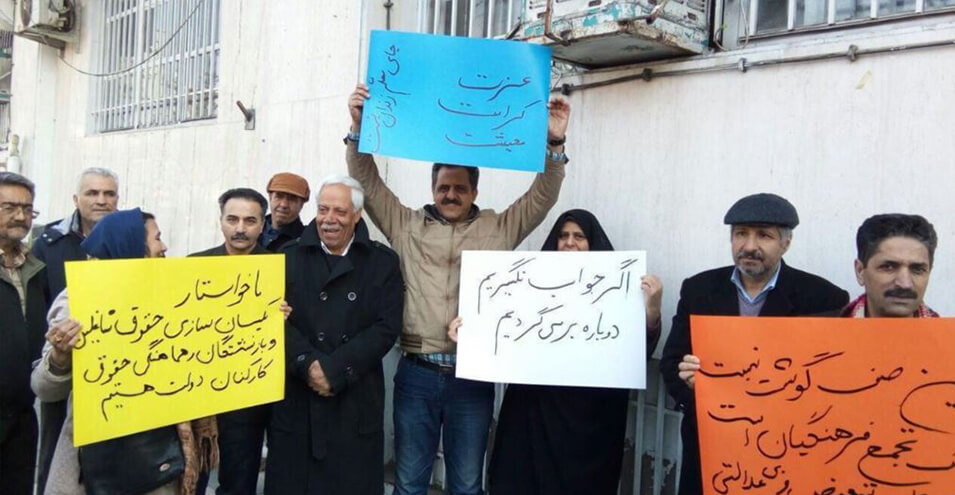
In the field of professions, in summer 2014, “it proceeded to arrest and widely threaten a number of civil and political activists and exert severe pressure on them with the aim of extracting confessions.”(11) Also throughout all these years, the main complainant and file-maker for Narges Mohammadi, vice president of the Human Rights Defenders Center, was the intelligence ministry of the Islamic Republic, which proceeded to the point of pressure and restrictions, considering his illnesses in prison that could have led to his death in prison.(12) Many lawyers were also arrested by the Ministry of Intelligence and sent to prison with long-term sentences, an example of which is Nasrin Sotoudeh’s sentence of over thirty years in prison. The file of court lawyers is exclusively in the hands of the Ministry of Intelligence, and this ministry in the government of a jurist named Hassan Rouhani considered its duty to be dealing with independent Iranian lawyers. Examples include the arrest of many lawyers such as Ali Sakeni and Payam Draftsman, who were arrested in May and June 2020.(11)
The Ministry of Intelligence has always had a long reach in dealing with civil and ethnic activists. Rouhani’s government did not refrain from this. Although at the beginning, Rouhani’s government appointed Ali Younesi, an old security official, as his special assistant for ethnic and religious minority affairs, it was not long before that gesture of trying to get closer to different ethnicities and religions and sects in Iran gave way to the same previous approach of suppression and crackdown. Civil activists of Iranian ethnicities were arrested and believers in religious and sectarian minorities, from Bahá’ís to Christian Evangelical churches and Gnostics of Gonabad and Sunnis, were subjected to threats and harassment. Also in April 2019, one of the religious teachers from Kurdistan was prevented from traveling to Zahedan and attending the graduation ceremony of religious scholars in Zahedan, and Christian priests and Evangelical churches in the furthest corners of the country were arrested. The situation of Iranian Bahá’ís and their suppression has been part of the unstoppable activities of the Ministry of Intelligence from the beginning and continues.
The Ministry of Intelligence, in the field of violating citizens’ rights to protest and social freedoms, created the disasters of suppression in December 2016 and November 2019, and as mentioned before, pioneered the execution of political, ethnic and religious activists. From Kurds like Zanyar and Loghman and Ramin to young Sunni people who were executed in Rajaei Shahr Prison.
In the field of women, the Ministry of Intelligence remained one of the primary factors of suppression. An example is the arrest of Esrin Derkale, a women’s rights activist in August 2019. Before that, Maryam Mohammadi and Narges Khorrami, other women activists, had been arrested.
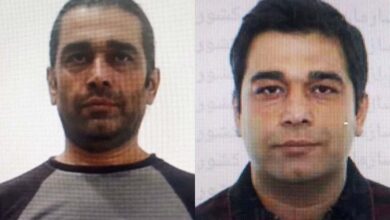
During Rouhani’s term, the condition of prisoners in prison became more catastrophic. The Ministry of Intelligence fully cooperated in the attack on political prisoners on April 18, 2014, which resulted in beating and disruption of the lives and looting of the property of political prisoners in Ward 350. Also, many prisoners in Ward 209 of Evin Prison, which is a special ward of the Ministry of Intelligence, spent and are spending days and months in solitary confinement, and are still imprisoned in the Ministry of Intelligence’s special ward in Evin after more than a year. Ali Younesi and Amirhossein Moradi are prominent examples.(13)
Workers and laborers were another group of victims of Hassan Rouhani’s intelligence ministry. Ismail Bakhshi and Sepideh Qolian were beaten and arrested on November 18, 2018 by the Khuzestan Intelligence Office. When Sepideh was in detention, her family confirmed her torture after a visit. According to one of her relatives in the intelligence detention facility, “They hit her feet and hands with cables and struck her back with a baton; they kicked her blindfolded against doors and walls. The interrogators tell her we will spread so much rumor about you and fix the story that you will be killed by your relatives or workers.”(11)
What was mentioned above is only a very small part of thousands of incidents and disasters and human rights violations committed by Hassan Rouhani’s government intelligence ministry during these eight years of his government. A ministry that instead of performing its natural duty, kidnaps people from outside the country and abducts political opponents like Ruhollah Zam from outside the country, brings them to Iran and executes them. A ministry of intelligence whose minister at the beginning of his work had the smallest security background and the president and his entire cabinet claimed that others have imprisoned and executed for 38 years. While Hassan Rouhani and his intelligence ministry in these eight years became pioneers of imprisonment and execution in the history of torture and human rights violations in Iran. In fact, Mahmoud Alavi and his president Hassan Rouhani and the intelligence ministry in these eight years can be called one of the disaster-creators in the field of human rights, even in the history full of human rights violations of the Islamic Republic. A government that was supposed to bring a citizens’ rights charter became a complete violator of citizens’ rights. It seems true what they say: The scorpion’s sting is not out of malice; it is the nature of its character.
Sources:
1 – Interesting details about Alavi becoming minister, Young Journalists Club, April 26, 2017
2 – Lesser-known accounts of the formation of the Ministry of Intelligence, ISNA, October 12, 2019
3 – Hassan Rouhani also criticized rivals’ human rights record: They only knew execution and imprisonment for 38 years, Voice of America, May 7, 2017
4 – Transfer of 31 political prisoners to solitary and destruction of their belongings, HRANA, April 19, 2014
5 – No news of Saba Azar Pak after 11 days, HRANA, June 8, 2014
6 – Baktash Abtin: I still have to be interrogated by the Ministry of Intelligence for my poems in another session, HRANA, May 3, 2015
7 – Letter from Zanyar Moradi from prison; Six years have passed, HRANA, August 6, 2015
8 – Javid Houtan Kiyan; Still deprived of law practice and under treatment, HRANA, October 16, 2015
9 – Execution of numerous Sunni prisoners in Rajaei Shahr Prison in Karaj was carried out, HRANA, August 3, 2016
10 – Summary of the bloody protests of November 2019, Second edition, HRANA, December 3, 2019
11 – Ministry of Intelligence of the Islamic Republic of Iran, Dadgostaar. Database of human rights violators in Iran
12 – Shirin Ebadi: The Ministry of Intelligence intends to kill Narges Mohammadi, Deutsche Welle, March 10, 2020
13 – Court hearing not held; A report on the latest situation of Ali Younesi and Amirhossein Moradi, HRANA, April 13, 2021
Source: HRANA