Araghchi: There are understandings regarding lifting sectoral sanctions
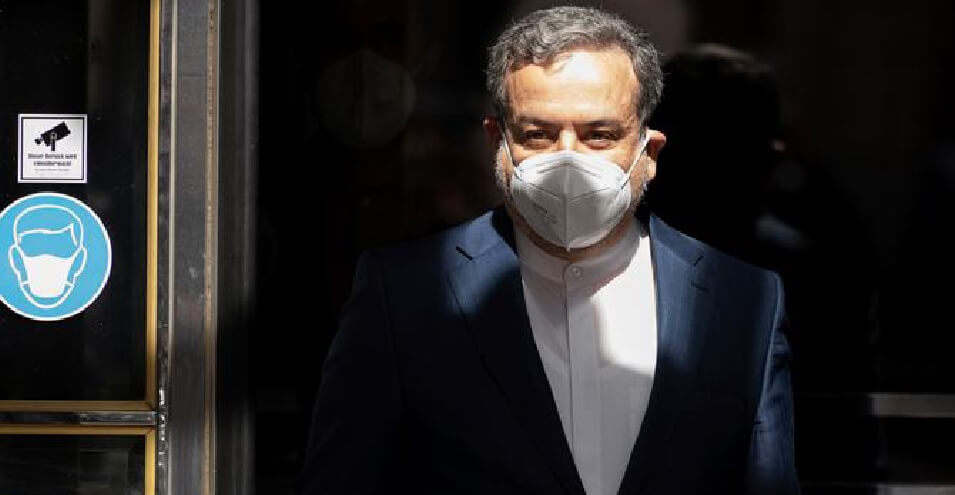
Abbas Araghchi says American sanctions are of two types and he believes there are understandings about removing part of them. Two members of parliament quoted Araghchi as saying that the US and the 4+1 countries have accepted the lifting of JCPOA sanctions.
The political deputy of Iran’s foreign minister and head of the Iranian delegation in the JCPOA Joint Commission talks appeared before the parliament’s National Security and Foreign Policy Commission on Saturday, the 5th of Ordibehesht, and presented a report on the course of these negotiations.
Abbas Araghchi and two other participants in this meeting made statements about negotiations on lifting American sanctions against the Islamic Republic that have significant differences.
Shahryar Heidari, deputy chairman of the National Security Commission, quoted Araghchi after this meeting as saying that sanctions are divided into two categories; one is sanctions of a general nature that include air, maritime, banking and insurance sanctions, and the other is sanctions on individuals and legal entities.
According to Mehr News Agency, Heidari quoted the deputy foreign minister as saying: “According to Iran’s agreement with 4+1 and America, it has been decided that sanctions of a general nature will be lifted and for lifting sanctions of a specific nature, discussions will be held in the third round of negotiations.”
According to this report, Fida Hossein Maleki, another member of the National Security Commission, made an almost similar statement: “According to the deputy foreign minister, the Americans have accepted to lift sectoral sanctions such as sanctions related to oil, banking, shipping, industry and economy.”
Araghchi’s different narrative on the possibility of lifting sanctions
These narratives were reflected in the same way in some domestic media and several Persian-language foreign media, but Abbas Araghchi, after leaving this meeting, made statements in an interview with IRIB news agency that do not indicate certainty about the lifting of sanctions.
The deputy foreign minister, in remarks whose video has been published, among others, on the Twitter account of the Journalists Club, says that regarding sectoral sanctions that affect different parts of Iran’s economy such as oil, petrochemicals, insurance, automobiles and construction, there is “better understanding.”
The United States withdrew from the nuclear agreement and the Joint Comprehensive Plan of Action (JCPOA) in Ordibehesht 1397 during Donald Trump’s presidency and reimposed sanctions against the Islamic Republic that had been lifted or suspended.
America’s condition for returning to the JCPOA
Iran, on the first anniversary of America’s withdrawal from the nuclear agreement, reduced the implementation of its JCPOA commitments in five stages, and this process has continued to date.
The Joe Biden administration has repeatedly announced its readiness to return to the nuclear agreement but made the Islamic Republic’s return to JCPOA commitments a condition, and Iran, in turn, has made the immediate lifting of all sanctions a condition for this.
A new round of the JCPOA Joint Commission meeting in Vienna has increased hope for finding a solution to end this dispute. In recent days, with the continuation of expert negotiations between representatives of the Islamic Republic and the five remaining countries in the JCPOA, optimism about the success of this process has increased.
The Joint Commission negotiations in Vienna are conducted by delegations headed by deputy foreign ministers, and are chaired by Enrique Mora, the deputy responsible for foreign policy of the European Union.
Vienna talks with “indirect” US participation
For the first time since America’s withdrawal from the nuclear agreement in Ordibehesht 1397, these negotiations are being held with the presence of a delegation from the United States that participates indirectly in them.
Apparently, the US is not ready to lift all sanctions, especially those imposed on individuals and legal entities. Fida Hossein Maleki also quoted Araghchi as saying that the Americans have “issues” regarding the lifting of human rights sanctions.
So far, all parties involved in Vienna negotiations have expressed optimism about their success. Nevertheless, it is still unclear whether the US will agree to Iran’s request to lift all sanctions or whether the Islamic Republic will backtrack from its positions.
Jake Sullivan, the White House National Security Advisor, said last week that no sanctions will be lifted until the US is certain of Iran’s complete return to JCPOA commitments.
Source: DW