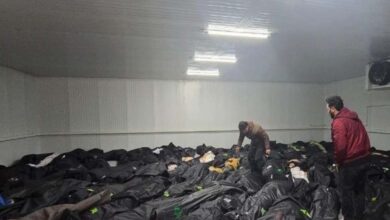
Civil activists protest government violence in Saravan; Amnesty International calls for independent investigations
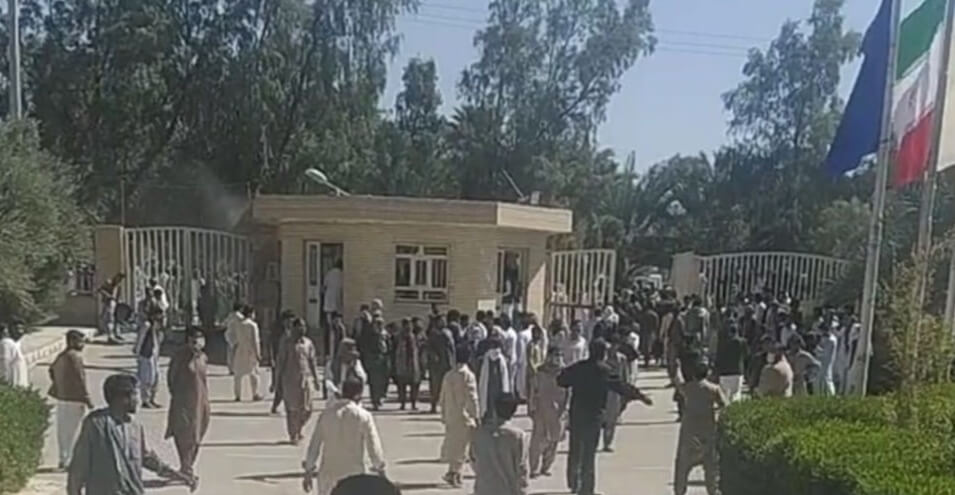
A number of Iranian civil and political activists issued a statement in response to recent violent incidents in Saravan, calling for the Iranian government to be accountable to the families of the killed and an end to the security situation in the region.
Amnesty International also issued a statement on Tuesday, March 3rd, accusing the Islamic Revolutionary Guards Corps of violating international laws and the illegal use of lethal weapons against fuel smugglers.
Unrest in the city of Saravan occurred after the fourth of Esfand, when Revolutionary Guards personnel opened fire on fuel smugglers who were protesting new restrictions, killing and wounding some of them. On the fifth of Esfand, some residents of Saravan city attacked the Saravan governorate office in protest of the deaths of fuel smugglers, which was met with police assault.
The civil activists’ statement, signed by figures such as Parasto Forouhar, Jafar Panahi, Mostafa Tajzadeh, Narges Mohammadi, Noushin Ahmadi Khorasani, Parvin Ardalan, Zia Nabavi, Mohammad Rasoulof, and Kazem Alamdari, addressed the spread of poverty in Sistan and Baluchestan province, a province that “has the highest unemployment rate, malnutrition, and school dropouts”.
The statement says: “In an environment where public poverty has been severely exacerbated due to the lack of industrial and commercial infrastructure and recent droughts in the Baluchestan region, some of the poorest segments of society have been forced to smuggle fuel for survival and to escape starvation, whose lives are constantly endangered by persecution and fleeing from law enforcement and military forces, accidents and overturning and catching fire, and they are shot down this way”.
Iranian government officials initially claimed that some fuel smugglers were killed as a result of shooting by Pakistani personnel, but a Pakistani local official denied in an interview with Radio Farda any shooting by the country’s border guards at fuel smugglers.
Meanwhile, the governor of Sistan and Baluchestan also justified dealing with protests and the security situation in the region by mentioning “enemies’ plots” and “false news from hostile media” as factors in the spread of protests.
The signatories of this statement, however, “while concerned about the continuation of security policies and possible suppression in the region” and emphasizing “the adoption of programs to improve the livelihood of the Baloch people,” called for the “region to quickly exit the current security situation and the responsible officials that led to the formation of the initial incident and subsequent incidents to be identified and appropriate legal action to be taken”.
On the other hand, Amnesty International issued a statement saying that the Revolutionary Guards used lethal weapons in dealing with a group of unarmed fuel smugglers, an action that resulted in the death and wounding of several members of the Baloch minority.
Based on statistics from Baloch human rights activists, the organization said that at least 10 people, including a 17-year-old boy, were killed in this incident.
Amnesty International concluded by calling for independent investigations in this regard.
Source: Radio Farda