How Khamenei’s Decision for Iran Not to Join FATF Has Deprived Iran of Coronavirus Vaccine
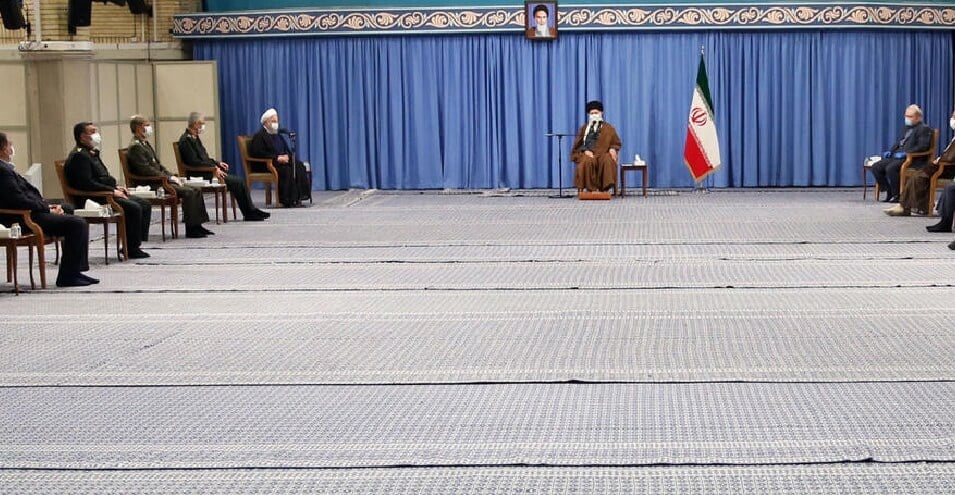
While some countries have begun coronavirus vaccination and many countries have finalized vaccine purchases, the decisions of Islamic Republic officials not to fully join the Financial Action Task Force, a special group for combating money laundering and financing of terrorism known as “FATF” (FATF), have faced Iran’s vaccine purchases with difficulty.
On Monday, Ali Motahari, former representative of the Islamic Consultative Assembly, posted a message on Twitter saying that due to the Islamic Republic of Iran being placed on the FATF’s blacklist, Iranian officials were unable to transfer $50 million, which is Iran’s share from the World Health Organization’s coronavirus vaccine for eight million Iranians, and Iran’s quota was lost. One day later, on Tuesday, December 2, the spokesman of the Iranian government also implicitly confirmed Ali Motahari’s account in his press conference, stating that non-membership in FATF has shown its effects on financial transactions, claiming that problems arose in transferring money to the World Health Organization, but Iran’s contract with the World Health Organization remains intact. However, he admitted that the Iranian government has not yet finalized vaccine purchases, even in limited numbers.
The ambiguous and contradictory statements of Islamic Republic officials regarding the purchase of coronavirus vaccine, which at times had cited sanctions as an excuse for not purchasing the coronavirus vaccine, led to protests by Iranian Twitter users in recent days. It has now become clear that Iran’s failure to join FATF has been the main problem in halting the vaccine purchase process.
The Financial Action Task Force, “FATF,” which was established in 1989, prepares a list of countries that have provided financial assistance to terrorist groups and lack anti-money laundering measures.
Iran does not join this international agreement because of the IRGC
So far, 194 countries in the world have joined it by approving the financial laws and regulations of this task force, but the Islamic Republic of Iran, through decisions of institutions appointed by the leader of the Islamic Republic, did not approve accession to two conventions required by FATF (the International Convention for the Suppression of the Financing of Terrorism and the United Nations Convention against Transnational Organized Crime) and remained on this task force’s blacklist.
The Islamic Republic of Iran approved two other bills requested by FATF, bills to amend the law on combating the financing of terrorism and to amend the law on combating money laundering, but concerns about the process of transferring money by the Islamic Revolutionary Guards Corps for the activities of this military force abroad, as well as opposition from the leader of the Islamic Republic and his appointees in the Guardian Council and the Expediency Discernment Council, led to Iran’s accession to the two aforementioned conventions being halted.
Khamenei’s role in opposing this international agreement
Ayatollah Ali Khamenei implicitly called in 2018 for the bills on accession to these conventions to be set aside and asked Parliament to “independently” enact its own laws in the field of money laundering and combating the financing of terrorism.
He later entrusted this matter to relevant authorities and in fact delegated the responsibility of rejecting these bills to his appointees in the Guardian Council and the Expediency Discernment Council. The Guardian Council opposed the approval of these bills, and the Expediency Discernment Council was also unable to reach consensus after more than a year.
Throughout these years, officials of the Islamic Republic repeatedly announced that American sanctions prevented the purchase of medicines and essential goods needed by people, and the United States has repeatedly explicitly stated that these items are not subject to sanctions. It has now become clear that the decision of the appointees of the leader of the Islamic Republic not to join Iran to FATF has been the main barrier to many of Iran’s vital purchases from other countries.
Mike Pompeo, the U.S. Secretary of State, said last year in response to Iran’s failure to join FATF and remaining on the blacklist: Iran has shown that it deliberately refuses to cooperate on combating money laundering and combating the financing of terrorism so that its economy has no transparency and can continue to export terrorism.
He had warned that if Iran does not accede to the Palermo Convention and the Convention on the Suppression of the Financing of Terrorism, it will face the consequences.
Source: Voice of America