Amnesty International Calls for Halt to Finger Amputation Sentences for Six Iranian Prisoners
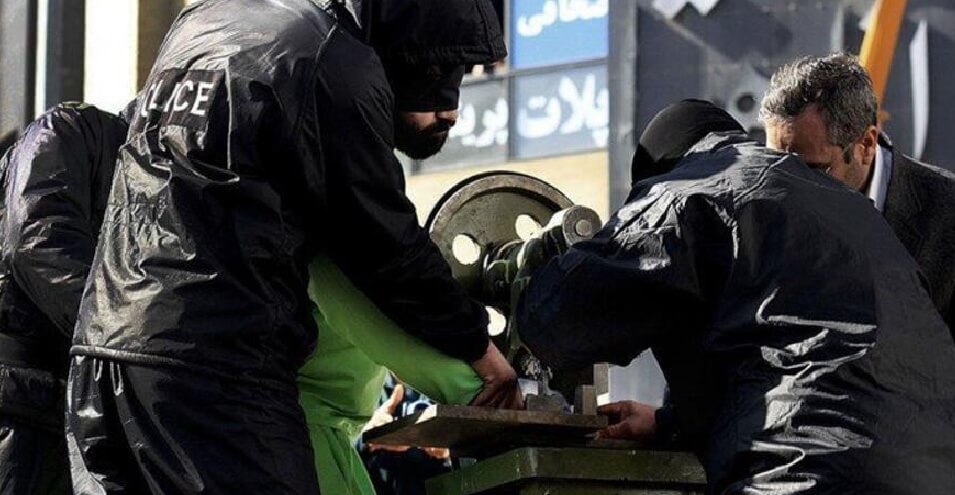
Amnesty International released a report calling for the cessation of imminent finger amputation sentences for six prisoners in Iran.
Amnesty International announced on Thursday, December 4, that the human rights organization has learned that prosecutorial authorities and officials at Urmia Central Prison are preparing to bring a guillotine to the prison to amputate the fingers of six prisoners.
According to the organization’s report, the six prisoners—Hadi Rostami, Mehdi Sharfian, Mehdi Shahivand, Kasra Karami, Shahab Taymouri Aineh, and Mehrdad Taymouri Aineh—have been convicted of theft following unfair trials and based on confessions obtained under torture.
Amnesty International called on Iranian authorities to immediately stop the execution of these sentences.
Diana Al-Tahawi, Deputy Director of Amnesty International’s Middle East and North Africa Section, stated: “Iranian authorities are once again preparing their torture tools to deliberately maim, mutilate people, and cause them psychological suffering through extremely cruel corporal punishments.”
Previously, Voice of America reported that the sentence of finger amputation for Hadi Rostami, Mehdi Shahivand, and Mehdi Sharfian Haft-Cheshmeh was confirmed by a ruling issued by Branch 13 of Iran’s Supreme Court on May 11, and was referred to Urmia’s judiciary for execution.
In this court order issued by Ali Shoshteri, head of Branch 13 of Iran’s Supreme Court, it states that according to Article 268 of the Islamic Penal Code, the defendants were sentenced to “amputation of four fingers of their right hand from the end in such a manner that the thumb remains.”
Al-Tahawi stated: “Limb amputation is torture with judicial approval and a serious crime under international law. We call on Iranian authorities to immediately rescind amputation sentences, remove all forms of corporal punishment from the law, and provide effective reparations to the victims.”
The Deputy Director of Amnesty International’s Middle East and North Africa Section, believing that officials responsible for issuing and executing such torture should be tried in fair courts, further called on the international community, including the European Union and its member states, and UN human rights bodies to immediately intervene to prevent the amputation of these six persons’ fingers by Iranian authorities.
This is not the first time the Islamic Republic of Iran has issued limb amputation sentences in recent years. Previously, Hussein Raisi, a lawyer and professor at Carleton University in Canada, told Voice of America that Iran, as a UN member that signed the International Covenant on Civil and Political Rights in 1986, is committed to complying with Article 7 of this covenant, which states that “signatory states are obligated to cease and not incorporate into their laws corporal punishments affecting the body that constitute a form of torture and degrade human dignity, such as hand and foot amputation and whipping.” However, since 1982, the Islamic Republic has reneged on part of its human rights and international obligations by reintroducing these sentences and punishments into its legal system.
In late December 2018, Mohammad Jafar Montazeri, Iran’s Prosecutor General, described the failure to amputate a thief’s hand as a “mistake” that he said was not being carried out in Iran out of fear of “agitation” under the guise of “human rights.”
These sentences are being issued at a time when economic corruption in Iran has grown significantly under current and former government officials in recent years. The United States has repeatedly condemned institutionalized financial corruption and the plundering of Iran’s natural resources by regime affiliates, considering them among the main factors in Iran’s economic and financial problems.
Source: Voice of America