Tsunami of Nowruz Trips Accompanied by Accidents and Lack of Facilities
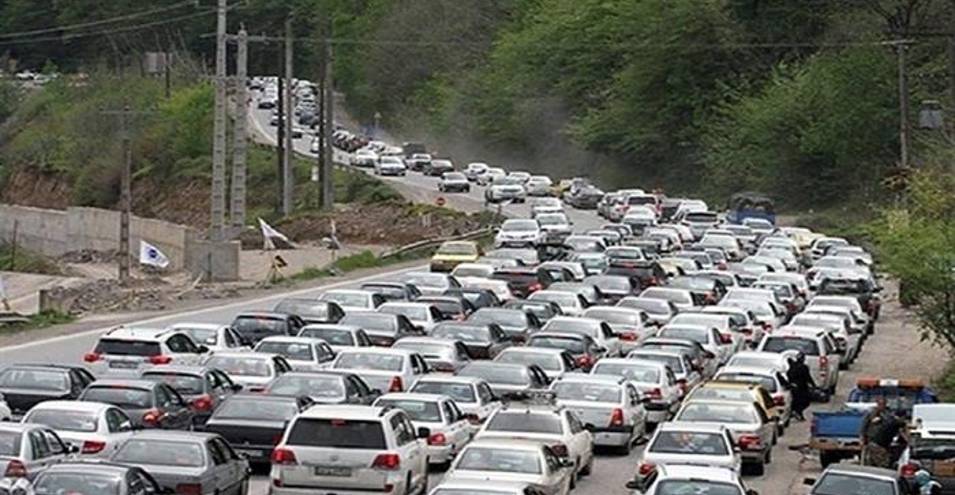
According to the latest statistics, 520 people lost their lives in road accidents during Nowruz travel. Lack of facilities, unpreparedness for the “tsunami of Nowruz trips,” and environmental damage have also been significant.
According to the statement of the deputy commander of NAJA traffic police, 1401 has been recorded as one of the “accident-prone years” in Iran. Based on the latest statistics from March 15, 2021 to April 3, 2022, 520 people lost their lives in road accidents.
Timour Hosseini, pointing out that northern provinces, Khuzestan, Bushehr, Isfahan, Razavi Khorasan, and southern provinces had the highest traffic during this year’s Nowruz, said this year has been recorded as one of the “accident-prone years” and “illegal overtaking on two-way roads without separation” was the cause of most accidents.
According to Hossein Ashteri, commander of the Law Enforcement Force, Nowruz trips have increased 50 percent compared to last year. He advised people to be “careful” during the remaining days of the holidays to have safe trips. It is unclear how people can be “careful” given unsafe roads and non-standard vehicles to prevent accidents.
In November 2020, Ayoub Sharafti, deputy commander of Iran’s traffic police, announced in a conversation with ISNA that “more than 3,000 accident-prone points exist on the country’s roads, of which only 60 accident-prone points have been secured.”
Claim of Predicting “Travel Tsunami”
Ezzatollah Zarghami, Minister of Cultural Heritage, Handicrafts and Tourism, said on April 7, 2022 at the Central Tourism Services Coordination Headquarters: “The prediction I made that we would face a travel tsunami has more or less come true, but thank God we faced it with complete readiness.”
Zarghami, acknowledging the reality that accommodation facilities are not commensurate with travel demands, added: “With a jihadi movement, all facilities that had the capability to accommodate people, such as schools, Husseinieh centers, shrines, sports stadiums, etc., were put into use.”
Mehr News Agency reported on March 13, 2021 about “lack of facilities and a significant increase in Nowruz trips” under the title “travel tsunami.”
In this report, referring to high travel demand, it was mentioned: “Travel demand must be controlled because otherwise not only will the tsunami not help tourism and museums, but it will also damage them, and unfavorable traffic and accommodation services will not leave any pleasure for travel as passenger numbers increase.”
On the other hand, Manouchehr Fakhri, deputy governor for civil affairs of Kermanshah province, considering the occurrence of “travel tsunami” in Nowruz likely, said: “Given that the coronavirus epidemic has continued for more than two years, people psychologically need to travel, and although we have the omicron variant spreading, there is a possibility of a travel tsunami occurring.”
Despite the fact that responsible institutions expected a significant increase in travel during Nowruz 1401, adequate measures were not taken for it, because there are insufficient infrastructure and facilities for tourism in Iran.
Zarghami, without providing a convincing explanation for the lack of facilities, only expressed hope that he could raise the existing problems in the government cabinet or with relevant ministers. According to him, the death of this number of citizens is “painful” and efforts should be made through cooperation of organizations and public awareness to reduce casualties.
The Minister of Cultural Heritage, Handicrafts and Tourism requested from people: “In religious environments, such as shrines, mosques, and religious places that have special rules and some behavioral and moral proprieties like dress codes should be taken more seriously, please keep them in mind.”
Deplorable Situation of Garbage Accumulation in Northern Iran
While recreational and infrastructure facilities for travel and tourism in the country are not provided, citizens’ carelessness in protecting the environment, particularly garbage accumulation on roads and in cities in northern Iran and on the shores of the Caspian Sea, is significant.
Based on published statistics, in Mazandaran province alone, approximately 3,000 tons daily and on peak travel days approximately 7,000 tons of garbage are produced and collected. In this province, nearly “30 garbage mountains” exist in the depths of forests, along rivers, and in mountainous areas.
According to Mohammad Ibrahim Larijani, mayor of Tonekabon in Mazandaran province, the average garbage on ordinary days of the year is a maximum of 120 tons per day, but on the first day of Farvardin this amount reached 183 tons, on the second day to 206 tons, and on the third day of Farvardin to 212 tons.
Garbage accumulation and disposal are factors that have brought the process of forest destruction in northern Iran to a concerning situation.
Source: DW