How China Buys Developing Countries Through Loans
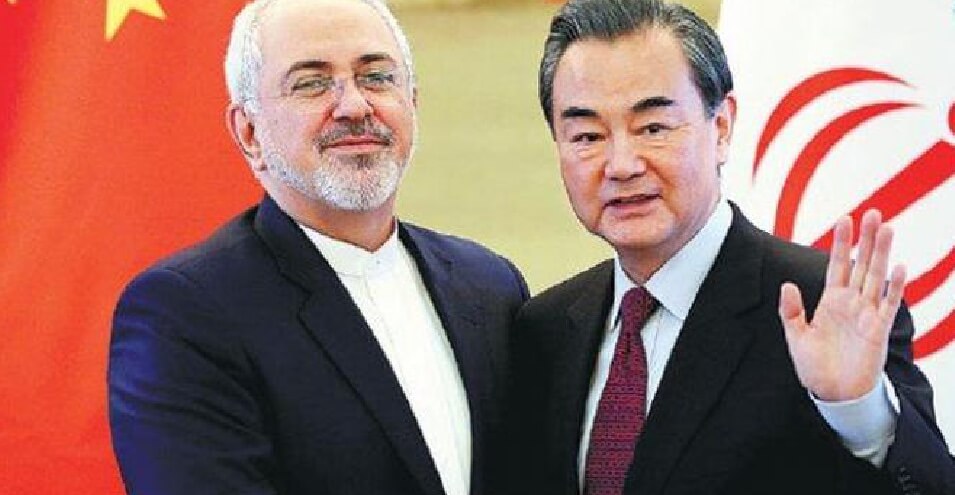
The comprehensive economic cooperation agreement between China and Iran has once again drawn attention to China’s financial policies in developing countries. China considers this agreement and similar documents “confidential.” Now more precise information has been revealed from some leaked documents.
The 25-year cooperation agreement between Iran and China is not the first example of China’s economic activities in developing countries. Many other countries, from Laos to Venezuela, from Costa Rica to Ghana, from Argentina to Honduras and Ecuador and dozens of other countries, have so far received “loans” from China.
The content of the 25-year comprehensive cooperation agreement between Iran and China has not been disclosed. However, researchers from American universities, in collaboration with several think tanks such as the Kiel Institute for the World Economy in Germany, have managed to obtain access to the full text of 100 Chinese credit agreements.
The contents of these 100 agreements reveal the policies of China and the hidden points in this country’s cooperation agreements with developing countries.
Why Confidential?
After signing a comprehensive cooperation agreement with China, the Islamic Republic of Iran announced that the text of this agreement is confidential and that China has prevented the disclosure of the details of this agreement.
A phenomenon that is not new. China has so far invested at least 400 billion dollars in various projects in developing countries. In this way, China has become the world’s largest loan provider in the global economy.
Until now, there has been no precise information about how loans are provided and the conditions China sets for giving these loans and credits.
Some German media, including the website “Spiegel Online” and the newspaper “Süddeutsche Zeitung,” have published some of the results of research by American universities and think tanks that have obtained access to the texts of these agreements.
One of the conditions stipulated in these agreements was to consider them “confidential.” All countries that have received loans from China have guaranteed that they will remain silent about the points raised in these agreements.
It should be noted that loan provision by international financial institutions, various countries, and including the Paris Club, unlike China’s agreements, has been transparent and the text of these loan provisions is published.
What Is China Hiding?
Based on information released, China has so far injected hundreds of billions of dollars into projects for building bridges, dams and ports in various countries around the world.
The agreements are structured in such a way that they allow China to exercise control over borrowing countries in return for providing loans. Control that is not merely economic in nature.
The repayment of loans received by developing countries will be either in the form of oil exports or in dollars. If the loan-receiving country is unable to repay its loan, China will gain access to some of that country’s facilities, including its ports.
Access rights to the bank accounts and assets of that country outside its borders are among the means available to China to compensate for financial losses to that country.
China’s loan repayment conditions are more unfair compared to other industrialized countries. Usually, those developing countries that face financial difficulties agree to such agreements. For example, Iran, due to financial sanctions, has seen fit to sign such an agreement with China.
Christoph Trebesch, a professor of economics at the University of Kiel in Germany and one of those who participated in research on the conditions for loan provision by China, says that revealing the provisions of these agreements is considered a breach of agreement by China and has consequences for the loan-receiving country.
These agreements provide that whenever loan-receiving countries fail to fulfill their financial obligations, Chinese state banks are entitled to benefit from that country’s financial resources.
On the other hand, loan-receiving countries are committed at the time of signing the agreement not to use loans from another country to repay their loans to China.
Political Influence
On the other hand, providing these loans not only paves the way from an economic perspective for China to access the ports and other infrastructure facilities of developing countries, but also creates conditions for the expansion of China’s political influence.
In the text of the agreements, there are often clauses that oblige the loan-receiving countries to respect the interests of the People’s Republic of China.
For example, any action by these countries that is considered harmful to the interests of any Chinese institution or organization would constitute a violation of the cooperation agreement, and the “offending” country must bear its costs.
Interconnected Loans
Most of the loans that China provides to developing countries are spent on projects that are interrelated.
Sometimes China invests in multiple projects simultaneously. Early termination of one of these projects is essentially impossible based on the agreement between that country and China.
Such a case can be seen in the story of Mauricio Macri, the former president of Argentina. Macri decided in 2015 to stop a dam construction project that was being built with a Chinese loan.
China then informed the Argentine president that the dam construction project was linked to the railway line construction project, and if the dam construction project was stopped, that other project would also not be carried out.
The newspaper “Süddeutsche Zeitung” has referred to the “New Silk Road” project and writes that by providing loans, China is essentially increasing the political dependence of these countries on itself.
Source: DW