Biblical Narrative Distorted in Chinese Textbook: Christ Condemns Woman to Stoning
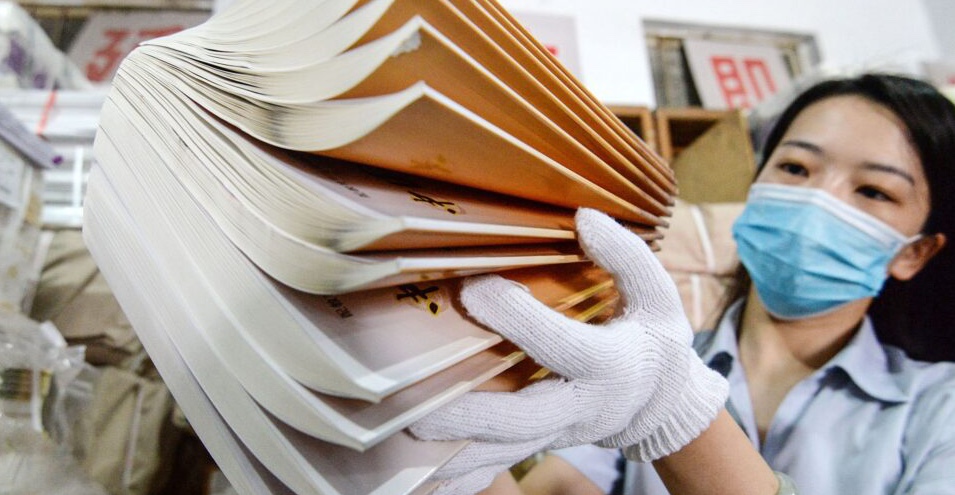
A textbook on ethics in China has distorted a biblical story and altered its ending so that Christ condemns a woman to stoning for being a “sinner.”
This distortion, the latest move by China’s atheist Communist Party to control and suppress religion in the country, has angered Christians, with many of them requesting the Vatican to reconsider its cooperation with the Chinese regime.
The textbook is titled “Professional Ethics and Law” and is taught in all technical and vocational schools in China. China’s Ministry of Education’s content review committee approved the use of this textbook in 2018. One section of the book contains the story of “Jesus and the Woman Caught in Adultery.” However, instead of quoting the correct narrative, the textbook distorts the ending of the story and portrays Christ as a murderer.
In the original text of this narrative in the Gospel of John, a group of people interrupts Jesus’s teaching session and brings a woman accused of adultery before him. They ask Jesus whether this woman should be stoned according to Moses’s Ten Commandments. After ignoring the disruption, Jesus tells them that whoever has not sinned in their life should cast the first stone. Following Jesus’s words, they realize that none of them are free from sin and leave the gathering. Jesus then asks the woman if anyone has condemned her, and she answers no. Jesus then says, “Then neither do I condemn you. Go now and leave your life of sin.”
On the other hand, the Chinese textbook completely changes the narrative: “When everyone had left, Jesus personally stoned the woman and said, ‘I too am a sinner, but if the law could only be enforced by those free from sin, there would be no such thing as law.'”
The textbook then asks readers: “Based on this short story, what is your view on the law?”
These distortions were exposed after photos of the textbook were shared on social media by a priest. Shortly afterward, a Christian education instructor confirmed the existence of this content and said that the textbook’s content varies across different regions in China. Social media users became angry about this distortion of the story, with most calling the text “blasphemous,” and some writing that the real devil is the Chinese Communist Party itself.
“China Aid,” an organization based in the United States that supports Christians inside China, condemned this damaging distortion of the Bible and said that this text seriously distorts Christ’s image in religion, and the purpose of publishing this altered narrative is to endorse the philosophy of the ruling party.
China Aid stated in a statement:
“The text of the Chinese Communist Party’s textbook directly states that if legislators must be free from sin, the law cannot exist. In other words, because unlawful behavior by Chinese judicial officials in enforcing the law is inevitable, other governments are obligated to tolerate this. The Chinese Communist Party regime has long sought to reinterpret and redefine the principles of the Bible in order to conform to socialist values of Xi Jinping, China’s current leader, and previous leaders.”
The Chinese Communist Party has pursued a policy of severe suppression of secret believers, Christians, and other religious groups, including destruction of churches and detention of members and leaders. In September 2019, Chinese authorities ordered a Catholic church in Jiangxi Province in eastern China to replace an image of the Virgin Mary and her son with an image of China’s leader, Xi Jinping. The authorities also ordered the church to hang the Chinese flag at the church entrance and write above the church door: “Follow the Communist Party, be grateful to it, and obey it.”
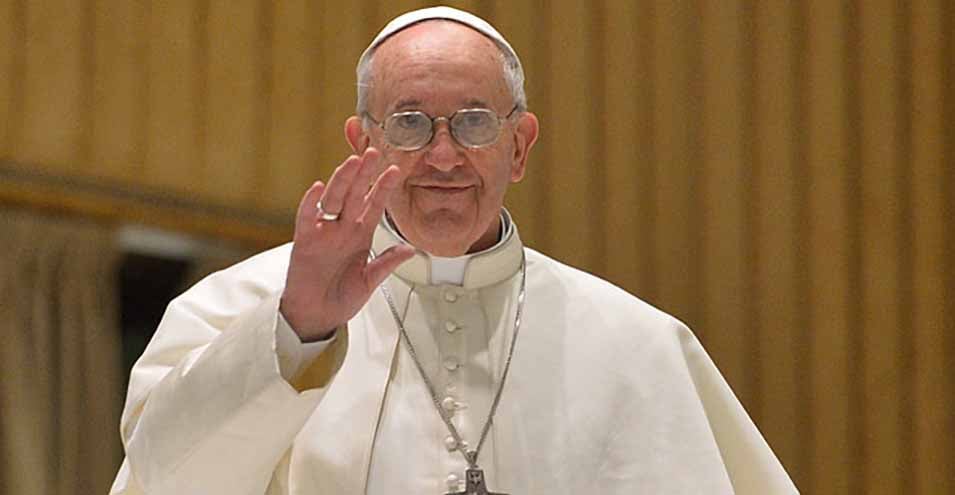
Many Christians have requested the Vatican to review its relations with the Chinese Communist regime. In September 2018, the Holy See signed a historic agreement with the Chinese Communist Party regarding the appointment of priests in the country. Before this agreement, Chinese Catholics were divided into two groups: those who worshipped in underground informal churches loyal to the Vatican, and those who attended the Catholic Church under the control of the Communist regime. After signing this agreement, Pope Francis immediately recognized seven bishops approved by Beijing without coordination with the Vatican.
This deal and its vague details faced sharp criticism from Catholics and human rights advocates outside China, who, pointing to the systematic persecution and torture of Christians by the Chinese Communist Party, described this move as a “surrender” to the regime. According to Reuters, in an interview with a senior Vatican official, it is expected that the two sides will meet soon to renew this agreement.
Mike Pompeo, U.S. Secretary of State, has recently requested the Vatican to take a stronger stance against human rights violations by the Chinese Communist Party. In an article in an American religious magazine on September 18, he wrote: “It is clear that the agreement between China and the Vatican has not protected Catholics from persecution by the Party, and their horrific treatment of Christians, Tibetan Buddhists, Falun Gong practitioners, and other spiritual practitioners has not stopped.”
Source: Epoch Times