New York Times: Satellite Images Indicate Iran Moving Centrifuge Production Underground
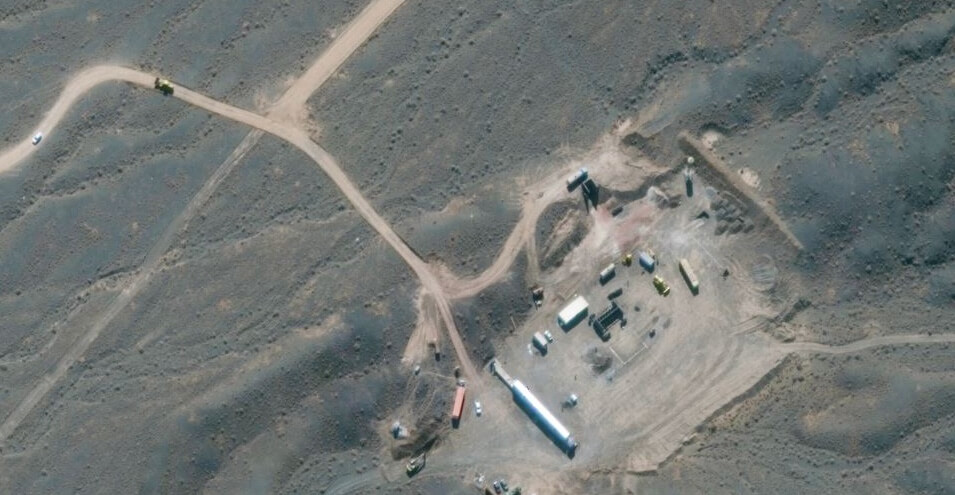
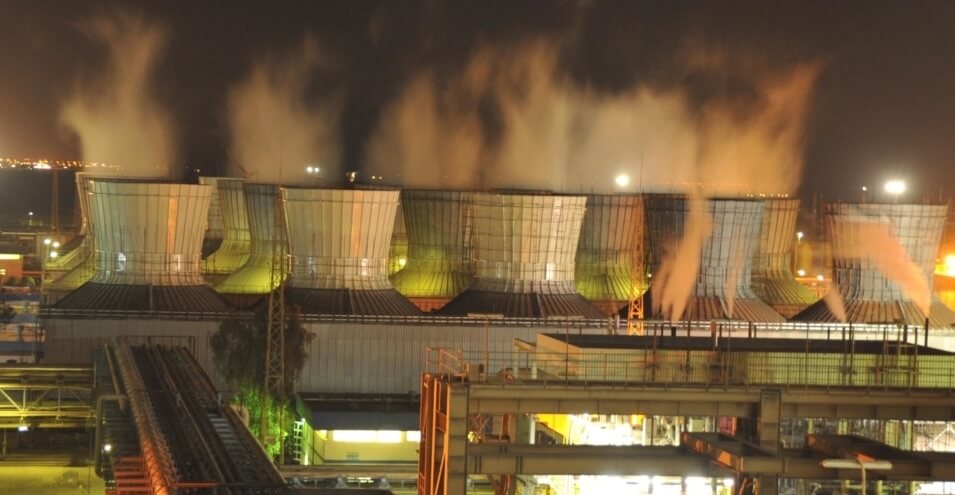
The New York Times reported on Wednesday, December 9, that satellite images taken of the Natanz nuclear site show that the Islamic Republic of Iran is constructing a new facility deep inside a mountain.
According to the report, Iran is building this facility in place of a structure that exploded on July 2 at the Natanz nuclear facility.
A team of experts who reviewed satellite images for the New York Times stated that relocating uranium enrichment centrifuges to this underground facility would protect them from airstrikes or potential sabotage operations.
These experts said the new facility is located on a mountainside south of the destroyed Natanz center, situated 225 kilometers south of Tehran.
The images apparently show two tunnel entrances on two sides of the mountainside, at a relatively short distance from each other, alongside excavated soil. Since mid-July, accumulated soil from potential excavation had not been observed at this location.
Jeffrey Lewis, a weapons control expert at the Middlebury Institute in California, told the New York Times that the distance between the two excavated openings and the size of the openings are sufficient for a facility the size of an underground atomic site for storing centrifuges similar to the hall that exploded on July 2.
Mr. Lewis added that it can be assumed that this location would be “safer” for Iran to protect its centrifuges because it is remote from road access and the mountainside would also protect it against potential airstrikes.
According to the New York Times, it is assessed that Iran has placed the construction of additional tunnels on its agenda, indicating that the facility under construction will be larger than the previously destroyed site.
Iran has not yet responded to this New York Times report.
Iranian officials, following the explosion in the centrifuge balancing hall at Natanz, said this incident would not hinder the continuation of Iran’s nuclear program.
Ali Akbar Salehi, head of Iran’s Atomic Energy Organization, had said that a new facility would be built inside a mountain to replace the destroyed building.
Iran’s political and security officials said the July 2 explosion resulted from “industrial sabotage.” Iran has indirectly accused Israel of the explosion.
The New York Times reported in mid-July that the explosion was Israel’s work.
Israeli experts claimed that the explosion at the site, which was established eight years ago for enriching uranium to a concentration higher than that required for peaceful purposes, has set back Iran’s nuclear program by two years.
Under the JCPOA, Iran apparently suspended work on enrichment, construction, and deployment of more advanced centrifuges from 2015.
One year after the United States withdrew from the JCPOA, Iran announced it had taken five steps to reduce its nuclear commitments in protest of Europe’s lack of seriousness in protecting the JCPOA and the ineffectiveness of the INSTEX mechanism.
Tehran also began injecting gas into more advanced centrifuges last week, a few days after the assassination of Mohsen Fakhrizadeh, deputy defense minister and senior nuclear scientist, and his military industries, who was killed on December 27 in Absard, Damavand.
Three European countries this week warned Iran to reverse these steps and return to its JCPOA commitments.
António Guterres, Secretary-General of the United Nations, also called on Iran on December 9 to address concerns about nuclear programs and long-range missiles and revive its JCPOA commitments.
The New York Times’ new report was published on the day Hassan Rouhani, president of the Islamic Republic of Iran, said in his government meeting on Wednesday, while strongly criticizing Europe’s call to Iran, that if the other parties adhere to the JCPOA, “each centrifuge installed in our nuclear facilities can also be removed.”
Mr. Rouhani said: “The return (of the United States) to the JCPOA and the fulfillment of commitments does not require time and negotiations, and both (Iran and the United States) should return.”
Mr. Biden has said that returning to the JCPOA is on his agenda, although he knows it will be difficult.
Israel, suspected by Iran as the primary suspect in the Natanz site explosion and the assassination of Mohsen Fakhrizadeh, without taking responsibility for these events, has said that the United States’ return to the JCPOA is a “mistake” and may even mean “war.”
Source: Radio Farda