Iran News

Azerbaijan and Armenia Ceasefire Breaker with US Mediation
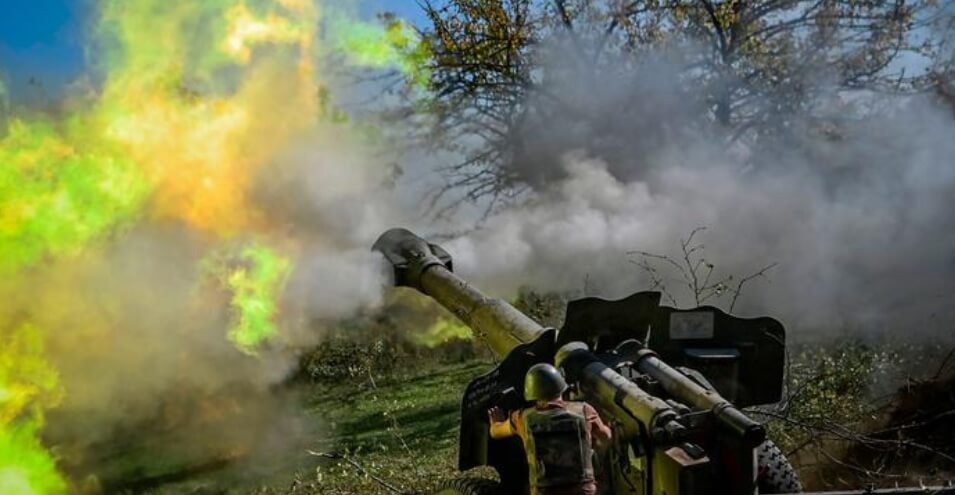
Azerbaijan and Armenia agreed on a new humanitarian ceasefire starting Monday morning at 8 AM local time. However, Azerbaijan’s Defense Ministry reported just minutes after the ceasefire announcement that Armenia had bombed the city of Terter.

The US State Department announced on Sunday evening, November 4 (October 25), through a statement that Azerbaijan and Armenia had agreed to begin a humanitarian ceasefire starting at 8 AM local time on Monday, October 26.

In the US State Department’s statement, it was noted that the agreement was reached during a meeting between Stephen Biegun, Deputy Secretary of State, and Jeyhun Bayramov and Zohrab Mnatsakanyan, Foreign Ministers of Azerbaijan and Armenia respectively. Both parties reaffirmed their commitment to implementing the humanitarian ceasefire agreement that had been reached at the Moscow meeting on October 10.

However, the ceasefire mediated by the United States was immediately violated. Azerbaijan’s Defense Ministry reported five minutes after the ceasefire that Armenia had bombed the city of Terter and attacked Azerbaijani forces’ positions from the city of Lachin.

Armenia’s Defense Ministry spokesperson also reported on his Twitter account at 8:45 AM that Azerbaijan had broken the ceasefire.

The United States, however, has stated that it will mediate to bring Azerbaijan and Armenia closer together for a peaceful resolution of the Nagorno-Karabakh dispute through meetings between the foreign ministers of the two countries and members of the OSCE Minsk Group.

Mike Pompeo, US Secretary of State, on Saturday, November 3 (October 24), in separate sessions with Jeyhun Bayramov, Azerbaijan’s Foreign Minister, and Zohrab Mnatsakanyan, Armenia’s Foreign Minister, called for an end to the war in the Nagorno-Karabakh region.

After negotiations and consultations with his Azerbaijani and Armenian counterparts in Washington, Pompeo asked both sides to end violence while protecting their own civilians.

Azerbaijan and Armenia have previously agreed twice on ceasefires for the purpose of collecting bodies and exchanging prisoners of war, but these ceasefires were not respected.

Russia, the United States, and France, as co-chairs of the “Minsk Group,” have intensified their efforts to find a political solution in Nagorno-Karabakh.

Activation of Minsk Group Efforts

Members of the Minsk Group are scheduled to meet in Geneva on Thursday, October 29, to achieve a comprehensive ceasefire between Azerbaijan and Armenia.

The Minsk Group was established in 1992 by the “Organization for Security and Cooperation in Europe” to peacefully resolve the Nagorno-Karabakh crisis. The co-chairmanship of the Minsk Group is held by Russia, France, and the United States. In addition to these three countries, Belarus, Germany, Italy, Portugal, the Netherlands, Sweden, Finland, Turkey, as well as Armenia and the Republic of Azerbaijan are members of the Minsk Group.

After approximately three decades, the Minsk Group has failed to establish a lasting peace in the Nagorno-Karabakh region. Fighting flared up again in late September.

Trump’s Welcome of the Nagorno-Karabakh Ceasefire

Donald Trump, President of the United States, welcomed the agreement reached in Washington and congratulated it in a Twitter message to Nikol Pashinyan and Ilham Aliyev, Presidents of Armenia and Azerbaijan.

Trump also thanked Mike Pompeo, Secretary of State, and the White House National Security Team for mediating to establish the ceasefire.

Azerbaijan and Armenia have previously agreed twice on ceasefires in Moscow, but neither agreement was implemented, and both sides accused each other of violating the ceasefire.

Azerbaijan’s Victory on the Battlefront

Simultaneous with the ceasefire, Ilham Aliyev announced through a tweet the liberation of the city of Qubadli. This city has strategic importance. Azerbaijani officials stated that with the liberation of this city, they have implemented one of four UN Security Council resolutions for the withdrawal of Armenian forces from Nagorno-Karabakh.

With the liberation of Qubadli, Khankendi, the center of Nagorno-Karabakh, which Armenians call Stepanakert, has been surrounded from three fronts: Shushi, Kelbjar, and Qubadli.

In recent days, the Republic of Azerbaijan has successfully liberated the cities of Fuzuli, Hadrut, Jabrayil, and Zangilan.


Source: DW

Related Articles

Back to top button