Iran’s Senior Military Commanders Support Raisi ‘in Fighting Corruption’
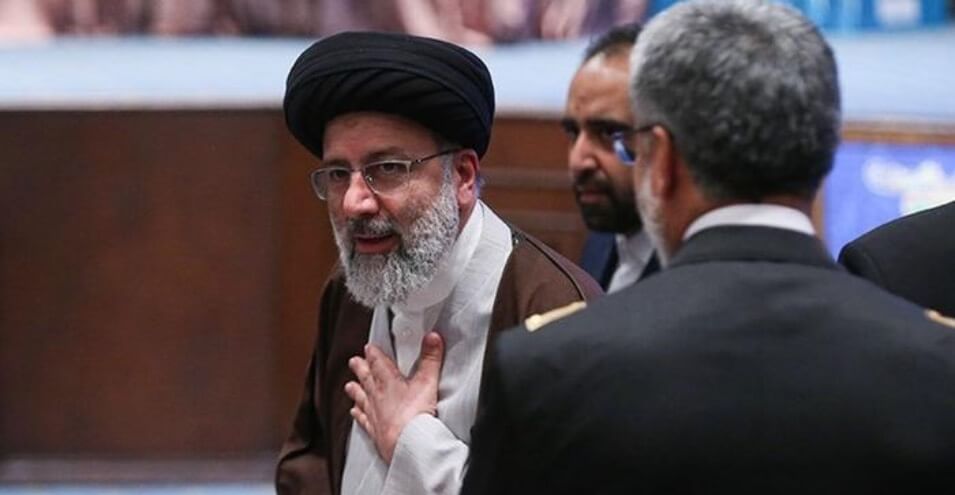
The Commander-in-Chief of the Islamic Revolutionary Guard Corps and the Chief of Staff of Iran’s Armed Forces have commended the performance of Iran’s Judiciary Chief “in fighting corruption.” Ebrahim Raisi has described corruption within the judicial apparatus as an “exception” and stated: “One should not assume that corruption has gripped everywhere.”
Hossein Salami, Commander-in-Chief of the Islamic Revolutionary Guard Corps, and Mohammad Bagheri, Chief of Staff of Iran’s Armed Forces, on Tuesday, June 23, commended Ebrahim Raisi, the Judiciary Chief, for his “efforts in fighting corruption.”
Salami, in his message to Raisi, described the Guard Corps as “ready for comprehensive cooperation with the Judiciary in dealing with criminals” and characterized his leadership of this branch as the beginning of “transformation and doubled motivation” in “combating corruption and crimes.”
The Commander-in-Chief of the Guard Corps stated that the Guard Corps is ready to cooperate with the Judiciary in “ensuring public health, establishing security and justice.”
Mohammad Bagheri, Chief of Staff of Iran’s Armed Forces, in a message to Ebrahim Raisi, regarded his performance during this period as a factor that has caused people to view this branch as “their true refuge in implementing justice, restoring public rights, and seriously and resolutely combating oppression and corruption.”
Bagheri described Raisi’s position as head of Iran’s Judiciary as the cause of “justice” and citizens’ “hope for the implementation of justice and law and justice-oriented treatment of law-breakers and those who violate people’s rights.”
These remarks were made days after the mysterious death of Gholamreza Mansouri, a former judge in the Judiciary and defendant number 9 in the financial corruption case of Akbar Tabari, former Executive Deputy of Iran’s Judiciary, on Friday in Bucharest.
Gholamreza Mansouri, who was accused of receiving a bribe of 500,000 euros, mysteriously passed away last Friday in Bucharest. The body of Mansouri, whose extradition Iran had requested from Romania, was found Friday in the “Duke” hotel in Bucharest.
Raisi: One Should Not Assume Corruption Has Gripped Everywhere
Iranian officials are attempting to demonstrate that cases of corruption in the Islamic Republic are “exceptions and not the rule.” Ebrahim Raisi emphasized yesterday in his weekly session that “one person’s violation should not be attributed to the judicial apparatus.”
He described the judiciary’s determination in dealing with “internal organizational violations” as “decisive” and said: “A violation by one person working in a part of the judicial apparatus is possible, but these cases are considered exceptions.” Raisi emphasized: “In fact, corruption and violations are not practices, but exceptions.”
Iran’s Judiciary Chief recalled that the judicial apparatus will have no “compromise or cover-up” in combating corruption and will not allow “public opinion regarding the Islamic Republic and its judicial system to be tainted and people to assume that corruption has gripped everywhere.”
Nevertheless, corruption cases at the level of prominent officials in the Islamic Republic in recent years have risen so high that, according to observers, public trust in officials has been severely diminished. Meanwhile, some anti-corruption whistleblowers have faced judicial prosecution.
Mahmoud Sadeghi, a former representative of Tehran in the Islamic Consultative Assembly, was sentenced in February of last year in several cases, the most important of which was “insulting” Sadegh Amoli Larijani, former Judiciary Chief, to a fine and 21 months in prison. Mr. Sadeghi’s statements in 2016 regarding the necessity of clarifying Amoli Larijani’s bank accounts resulted in a complaint against him and his prosecution.
A number of “activists in the field of fighting corruption” in June of this year wrote a letter to Ebrahim Raisi and, emphasizing the necessity of reviewing this case, described Sadeghi’s conviction as “in obvious contradiction” with the fight against corruption.
Source: DW