Reuters: Iran’s Support for Iraqi Shiite Groups Decreases Due to Coronavirus Crisis and Sanctions
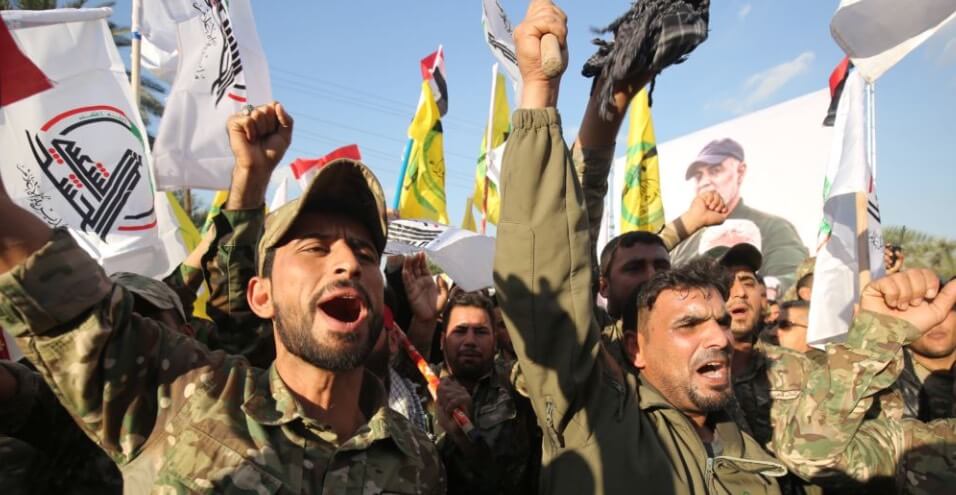
Reuters news agency reports, citing informed sources, that Iran’s financial assistance to Iraqi Shiite groups has decreased due to the coronavirus crisis and U.S. sanctions.
According to three commanders of Shiite paramilitary groups and an Iraqi official familiar with Iran’s government activities in the country, Iran’s financial aid to Iraqi Shiite groups has decreased significantly as a result of the coronavirus outbreak, including border closures to prevent virus transmission. These three commanders added that Iran’s financial assistance is typically provided in exchange for armed activities by these groups, including attacks on opponents of the Iranian government or attacks on American targets.
One commander of a powerful Shiite paramilitary group said Iran’s financial aid to these groups has decreased from around 5 million to 2 to 3 million dollars per month. According to him, due to this situation, Shiite groups are forced to meet their financial needs through other means, including economic activities.
The severe impact of American sanctions on Iran’s economic situation is another reason for the reduction in Iran’s financial aid to Shiite paramilitaries. An Iraqi official said Iran’s financial assistance has decreased by millions of dollars in recent years. American sanctions, falling oil prices, and ultimately the coronavirus crisis have reduced Iran’s military expenses, including the Revolutionary Guards’ budget.
Brian Hook, the U.S. State Department’s Iran envoy, also told Reuters: “The reduction in Iran’s financial support to Iraqi Shiite groups demonstrates that America’s maximum pressure policy to limit the Iranian regime’s financial resources to support proxy terrorist groups aimed at destabilizing the region has had an effect.”
The decrease in Iran’s financial aid to Iraqi Shiite groups coincided with the killing of Qasem Soleimani, commander of the Quds Force of the Revolutionary Guards. According to three commanders of Iraqi Shiite groups, Soleimani’s death was a heavy blow to these groups’ activities in Iraq and Syria and the pursuit of Iran’s objectives in the region.
Iraqi paramilitaries supported by Iran were organized during the fight against the group known as the “Islamic State” in 2017 under an organization called the “Popular Mobilization Forces.” This organization and forces under its command were later formally integrated into the Iraqi army and have participated in security and military operations.
A spokesman for the Popular Mobilization Forces refused to comment on these groups’ ties with Iran. He said the Popular Mobilization Forces receive their budget and weapons through official Iraqi government channels, although the original source of these aids could be the Iranian government.
A spokesman for the Revolutionary Guards’ public relations office denied Iran’s financial support to Iraqi paramilitary groups. He added: “The Islamic Republic of Iran has always supported the oppressed people in the region and beyond, and our policy has not changed. However, we do not provide financial aid to groups that fight against American hegemony in the region.”
Aliresa Miryouseffi, Iran’s spokesman at the United Nations, also responded to Reuters’ question about the reduction in Iran’s financial aid to Iraqi Shiite groups, saying: “The purpose of spreading these rumors is to create discord between the two countries, but these rumors are doomed to fail.”
He added that the Islamic Republic of Iran has always supported the Iraqi government but does not interfere in its internal affairs.
Shiite paramilitary groups are one of the main factors in Iran’s active presence in Iraq and countering Washington’s influence.
After withdrawing from the JCPOA in 2018, the Donald Trump administration resumed sanctions against Iran and last year added the Revolutionary Guards to the list of terrorist groups.
According to one Shiite paramilitary group commander, before the reimposition of American sanctions, the volume of Iran’s financial aid to Iraqi groups was between 12 to 15 million dollars per month.
Three commanders of Shiite paramilitary groups told Reuters that in addition to the reduction in financial aid, as a result of border closures due to the coronavirus outbreak, other Iranian assistance, including sending ammunition and training fighters sent to Syria, has been disrupted.
One of these commanders said all military training, which included matters such as urban warfare, the use of anti-tank missiles, and the use of drones, has been halted.
Source: Radio Farda