Security Forces on Anniversary of November 2019 Killings: “We Killed Them, We Did Well to Kill Them”
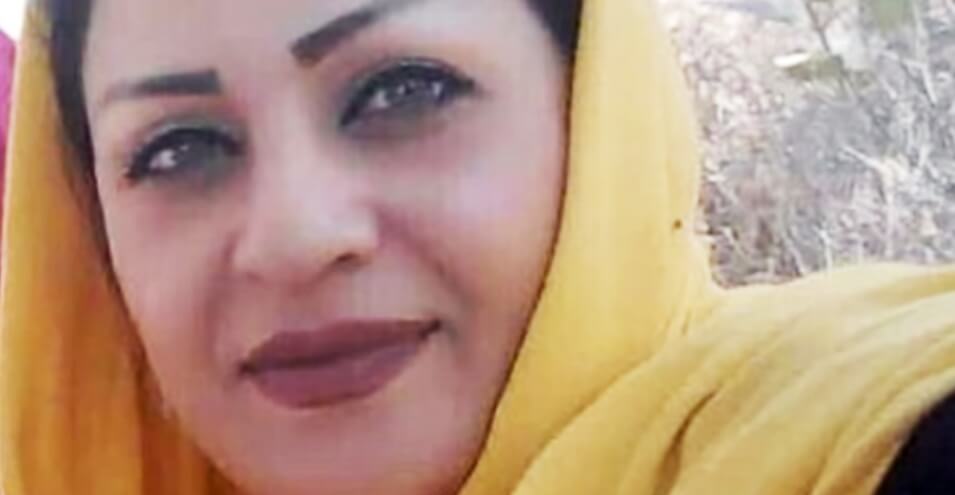
Coinciding with the anniversary of hundreds of deaths during Iran’s November 2019 protests, families of the killed were prevented by security pressures from holding commemorative ceremonies for their deceased children, with only family members and close relatives permitted to visit their loved ones’ graves.
Families of those killed in November 2019 told Radio Farda in interviews that their presence at their children’s graves occurred while security forces, including plainclothes officers and military personnel, prevented people from gathering hours beforehand.
Mohammad Shahbazi, brother of Amene Shahbazi who died on Sunday, November 17, from a bullet wound to her neck, told Radio Farda that they received calls from unknown numbers saying, “Only you can come to the grave, and that’s it. If there are extra people, we won’t allow it and we will take action.”
Mr. Shahbazi said: “A few people came to the grave and warned us, saying only you can be present and there should be no extra people. We were only ourselves and there was no one else.”
Sakineh Ahmadi, mother of Ibrahim Ketabdar who was killed on Saturday, November 16, by gunshot in Mehrdabad, Kaianshahr, Karaj, also told Radio Farda that due to the presence of security forces at the grave, the anniversary ceremony for her son’s death was not held. She also spoke of repeated contacts from security agencies with her family threatening to cancel the anniversary ceremony and threats made to family members.
The November 2019 protests, which initially began as a reaction to the sudden increase in gasoline prices, quickly changed direction and targeted the Islamic Republic’s government. However, these protests faced severe crackdowns, with hundreds of men, women, and even children killed over five days.
Iran’s Interior Minister said between 200 to 225 people were killed in these protests, but Amnesty International, announcing the details of at least 304 victims, emphasized that the actual death toll may be significantly higher.
However, Reuters reported that at least 1,500 people were killed in the November 2019 protests, citing “three sources close to Khamenei’s circle” and “a fourth official” as saying that the Islamic Republic’s leader told senior officials to “do whatever is necessary” to stop the protests.
To date, the Islamic Republic’s judicial and security authorities have refrained from providing official and accurate figures on the number of deaths in these protests and have not taken responsibility for the deaths.
What Does the Leader Have to Do With It?
Amene Shahbazi, a 34-year-old housewife who, according to her brother, worked as a taxi driver to help support the household, was killed on November 26 in Karaj when she was shot while helping an injured protester.
Mohammad Shahbazi told Radio Farda: “We had come from Karbala and my sister and her daughter had the flu. She went to get medicine when her landlord called asking where she was. She said she was coming. He called again, and a man answered saying someone’s leg was shot and Amene was bandaging it with her scarf. The third time he called, he said this woman has been taken away. We didn’t hear anything until two days later when I saw the bullet had hit her neck.”
Mohammad Shahbazi’s sister was one of at least 34 people who died whose names were publicized in Karaj. The Shahbazi family’s complaint to identify and introduce her killer remained unanswered: “We filed a complaint, but they haven’t given us any answer yet. Wherever we went, they sent us back and forth, and right now we can’t go anywhere and our hands are tied.”
Amene Shahbazi’s brother explained: “First we went to court, they said you need to go to the intelligence office. We went to intelligence, they said go to the general court in Mallard. At court they said wait for the investigation to be completed. Then they said the case went to security police and you need to wait for their response. They don’t respond, and we’ve become really tired and don’t know what to do anymore. I even asked if they were declaring him a martyr. The judge said everyone who said that said it in vain. I said the leader said it. The judge said it’s not his authority to decide! There’s a committee of ten to fifteen people who must confirm it, and the decision is not in my or your hands. I protested in court and said why are you answering us like this? My sister was a woman, she wasn’t armed or anything. I brought documents showing she had gone to get medicine, they said no, all of this is a story and anyone who came out at that time, from our perspective, is a rioter.”
Amene Shahbazi was the mother of two sons aged 14 and 12 and a daughter aged 4. Her brother said: “Her daughter is now 5 years old and is not doing well. She constantly asks about her mother. I don’t know what to say. She has no peace or rest. Her sons are not themselves. Their family has completely fallen apart. My mother is worse than all of them. My mother is silent. We ask mother what are you doing? Where are you? She says I’m talking to Amene in my heart. What answer can I give her? What can I say to her? When her daughter says to me uncle, you left my mother there, you covered her with dirt, go get her, what can I say to her?”
Mohammad Shahbazi said: “We listen to the news and I don’t understand when they say so-and-so was in the November uprising and was sentenced to death or that one got 5 years in prison and… why was everyone investigated except our families? Why were those they wanted to execute, their cases didn’t drag on, and those who should have been imprisoned, everyone was investigated except us? We are now in limbo, we don’t know what to do. I don’t know what to tell his daughter. Every time she sees me she says ‘uncle, go get mom.’ My mother is not young enough for me to have pulled her back and forth like this, she really can’t anymore. She comes crying and leaves crying. No one gives us any answer. We don’t know what to do. Every time we say a word, they threaten us saying we’ll come and take you.”
Threatening families of the killed and pressuring them into silence and not speaking to media has continued over the past year.
Amene Shahbazi’s brother said: “The first time I went to court, the judge threatened me saying why did you give an interview? I said I didn’t give an interview, I just told what happened. I didn’t say anything special and I didn’t insult anyone. He threatened that if we hear you do it again, we will do this and that to you. On the other hand, security police called several times and threatened that we are watching you, if you want to do something, want to take action or say something. These are things that happened over this past year. We didn’t intend to fight with anyone. We were pursuing our sister’s rights, why? A woman who wasn’t armed or anything. We’re just saying she went outside. Did she go to fight someone? Did she have a weapon? They don’t answer. You want to ask a question, they throw you out and don’t answer. It’s their force, and we really don’t know what to do anymore.”
Mohammad Shahbazi explained: “They asked me who called? I said everyone called. They said you shouldn’t give interviews. I said we spoke our minds. They said you don’t answer them anymore, we’ll come in a few weeks to apologize and the officials want to come apologize. What kind of apology? A year has passed and no one has called us, no one has asked how we are, nothing. A woman was shot and it’s very easy, nothing at all. This one passes it to that one and that one says trust in God, it will be fine. We haven’t insulted anyone or said anything, nothing. I even controlled my younger brothers. But eventually they have to give us some answer.”
According to her brother, Amene Shahbazi was a housewife but also worked as a taxi driver: “My sister worked as a taxi driver to make a living. Her husband was a motorcycle courier. What was this family after? Were they after changing the regime? We go there and they talk as if we committed thousands of crimes. Man, she was an ordinary person, an ordinary citizen.”
We Killed Them, We Did Good to Kill Them
At the same time in Karaj, Sakineh Ahmadi, mother of Ibrahim Ketabdar, reported the presence of security forces at her son’s grave and told Radio Farda: “We couldn’t hold a ceremony. They didn’t allow it. We went to the grave ourselves, but they had stationed officers all around us. They said you could only stay here for ten minutes. They didn’t allow a preacher to come. They completely canceled the ceremony and turned away our guests at the door and didn’t even allow them to enter.”
Mrs. Ahmadi said: “They had completely cleared the cemetery and wouldn’t allow anyone to enter. There were many plainclothes officers and a car every ten meters. Their numbers were very large. They warned us. They took Ibrahim’s father and brother and said you have no right to hold a ceremony. From Saturday they kept calling my son’s phone, my daughter’s phone, and everyone’s phone, saying you shouldn’t hold a ceremony. But I went to my child’s grave. How could I not go? They were very harsh there. It turned into an argument and they very casually said ‘we killed them, we did well to kill them.’ This burned my heart. Ten or twenty intelligence and military personnel were standing over our heads. Did we want to do something? We just wanted to hold a simple ceremony. But they wanted to play with our nerves and sanity.”
Ibrahim Ketabdar, father of two young children, was shot in the heart while standing outside his workplace with his hands in his pockets, and his death certificate stated “bullet wound to the heart, outside of conflict.”
The situation was the same in other Iranian cities. Families of the deceased told Radio Farda that days before, they had been contacted by the Ministry of Intelligence saying the ceremony would only be held with family members at their children’s graves and no one else was allowed to attend.
The anniversary of the November massacre has passed this way and continues to pass, just as last year the families of those killed were not allowed to hold mourning ceremonies and fortieth-day memorial services for their children.
Source: Radio Farda