A Historic Moment in Hostage Square with the Return of the Last Hostages from Gaza
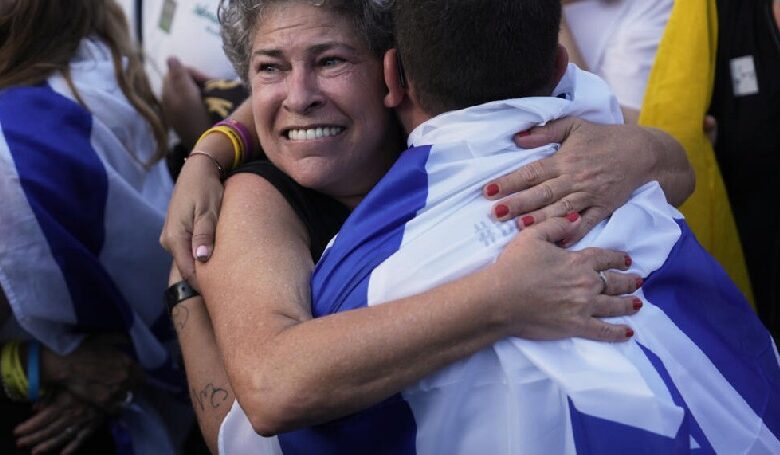
The liberation of Israeli hostages from Hamas marks a historic moment in hostage negotiations, symbolizing the end of one of the longest humanitarian crises of the decade and a turning point in the path toward Middle Eastern peace.
In the early hours of Monday, October 13, corresponding to Mehr 21 on the Persian calendar, thousands of Israeli citizens gathered in “Hostage Square” in Tel Aviv to celebrate the return of the last living hostages from the Gaza Strip. The crowd, waving blue and white Israeli flags and tears of joy as they welcomed their loved ones, witnessed a historic moment in one of the longest humanitarian crises of this decade.
According to Israeli media reports, Hamas, which is listed as a terrorist organization by the United States and the European Union, initially released seven hostages and shortly thereafter thirteen more through the International Red Crescent. As a result, all 20 living hostages returned to the country after two years of captivity. Additionally, the bodies of 28 deceased hostages are expected to be handed over to Israel in the coming days.
Among the freed hostages are names such as “Omri Miran,” “Gali and Ziv Berman (twin brothers),” “Matan Angrest,” “Ethan Mohr,” and “Alon Ohel.” Many of these individuals had been seen in poor physical condition in videos released by Hamas.
During his captivity, Alon Ohel lost the sight of one of his eyes. However, the first image of him after his release was a smile seen beside Red Crescent workers.
Before releasing some of the hostages, Hamas had arranged brief video calls between them and their families—an unprecedented move that signaled both propaganda softening by the group and hope for the families.
In one of these calls, the mother of “Matan Zangauker” told her son: “The war is over, in an hour I will hold you in my arms.”
She was one of the main faces of the global campaign for the hostages’ release and had met repeatedly with European and American leaders.
This liberation was part of a ceasefire and prisoner exchange agreement between Israel and Hamas, mediated by the United States, Egypt, and Qatar. Under this agreement, Israel committed to releasing approximately two thousand Palestinian prisoners, including nearly 250 serving life sentences.
On the same day, U.S. President Donald Trump traveled to Israel and delivered a speech before the “Knesset” (Israeli parliament). In his address, he said: “The return of the hostages home marks the end of a nightmare and the beginning of a new chapter in the Middle East.” He also emphasized in response to journalists’ questions: “The war is over, but peace requires care.”
Despite public celebration, there are concerns about the return of the bodies of 28 deceased hostages. The Israeli military stated that some bodies may not be found in Gaza’s destroyed areas. Meanwhile, human rights groups have warned that the reconstruction of civilian areas in Gaza and the return of Palestinian refugees require genuine commitment from both sides.
The Hostage Families Forum also stated in a statement: “The liberation of the hostages is not the end of the mission, but the beginning of healing and spiritual reconstruction for a nation.”
The liberation of the hostages is not merely a humanitarian event, but represents a turning point in the political and security balance of the Middle East.
This event could lead to the reconstruction of internal unity among political factions in Israel, something that had been severely damaged following the crisis of confidence in the Netanyahu government.
For Hamas, although this liberation represents a kind of retreat, it could be seen in the short term as an effort to preserve humanitarian credibility among the Arab public opinion worldwide.
For the United States, the Trump administration views this event as a diplomatic achievement in its return to power, an effort to reestablish Washington’s role in regional peace.
For the region, the main message of this event is a return to the path of diplomacy—a path that has grown weary from dozens of small and large conflicts and now looks toward a different future.
Middle Eastern analysts refer to this agreement as a “fragile starting point for peace,” peace that, while possibly temporary, plants seeds of renewed trust between longtime enemies in the soil of the region.