Prison Sentences Issued for Two Student Activists on the Eve of November 2019 Protests Anniversary
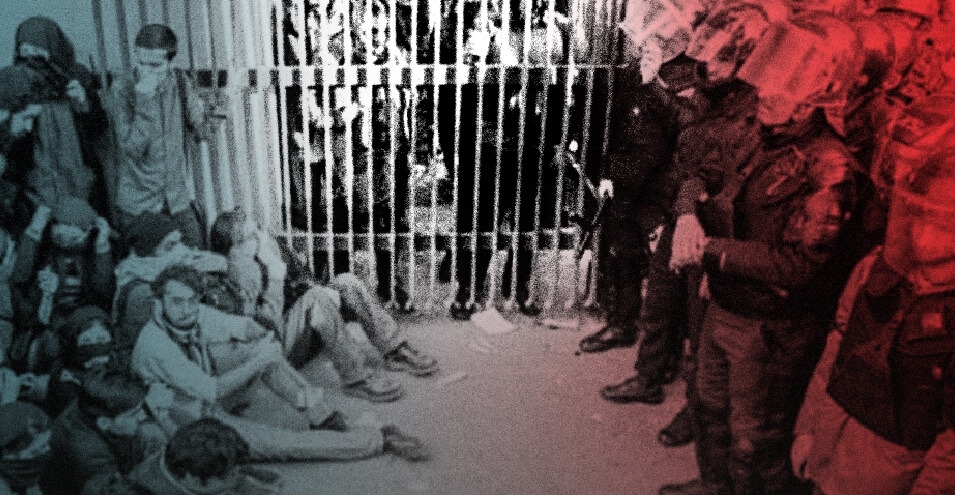
On Thursday, November 13, 2020, Marjan Esghaeii, a political science student at Tehran University and one of those detained during the November 2019 protests, announced on her Twitter page that she has been sentenced to one year of imprisonment and four years of suspended sentence by Branch 15 of the Tehran Revolutionary Court.
According to Marjan Esghaeii’s statement, the court’s verdict was issued on the charge of “assembly and conspiracy against national security through participation in student gatherings in November 2019” and was delivered to her. The sentence comprises five years of imprisonment, with four years suspended and one year to be served.
Marjan Esghaeii was arrested on November 17, 2019, for participating in a student gathering at Tehran University by agents of the Intelligence Organization of the Islamic Revolutionary Guard Corps and was transferred to the IRGC Intelligence detention facility in Evin Prison.
After 18 days and following interrogation procedures, Marjan Esghaeii was temporarily released from Evin Prison by posting bail, pending the conclusion of legal proceedings.
An informed source on Marjan Esghaeii’s case told the Iran Human Rights Campaign: “Marjan Esghaeii was tried in the same case in which Soha Mortazaei received a six-year prison sentence. There is one other person in this case.”
According to this informed source, both students were arrested for participating in Tehran University gatherings in November 2019.
This source familiar with the cases of student activists Soha Mortazaei and Marjan Esghaeii believes that the notification of prison sentences to these students on the eve of the anniversary of November 2019 protests could be considered as a warning to students and civil activists.
On Monday, November 9, 2020, the Telegram channel of the Student Guild Council of Iran announced that “Soha Mortazaei,” a student activist and former secretary of Tehran University’s Student Guild Council, has been sentenced to six years in prison. According to the guild, Soha Mortazaei’s sentence was issued by Branch 15 of the Tehran Revolutionary Court. The Iran Student Guild Council stated in its announcement: “Unfortunately, at a time when universities across the country are operating at half-capacity due to the likelihood of coronavirus spread, today Branch 15 of the Revolutionary Court issued its ruling of six years imprisonment on the charge of assembly and conspiracy with the intent to act against the country’s security to this student-guild activist.”
This student activist’s case was examined at Branch 15 of the Tehran Revolutionary Court under the direction of Judge “Abolqasem Salwati.” Mostafa Nili, Soha Mortazaei’s lawyer, stated that “sit-in at Tehran University in protest of the blacklisting and November 2019 protests at Tehran University and activities in the university’s guild council were among the charges against her.”
Soha Mortazaei, in September 2019, following her blacklisting and being barred from continuing her doctoral studies, engaged in a 21-day solo sit-in in front of the Central Library of Tehran University while holding placards.
A month later, during the nationwide November 2019 protests, Soha Mortazaei was arrested in front of a student dormitory and transferred to the IRGC Intelligence detention facility in Evin Prison. She was later transferred to Qarchak Prison, where she undertook a 22-day hunger strike.
On February 20, 2020, she was temporarily released from Qarchak Varamin Prison by posting a 500 million tomans bail, pending the conclusion of legal proceedings.
An informed source on Soha Mortazaei’s case, noting that the six-year prison sentence for this student activist is preliminary and has not yet become final, and that there is an opportunity to appeal, told the Iran Human Rights Campaign: “The case lawyer hopes this sentence will be overturned at the appeals court, though given Soha Mortazaei’s history of activism and the positions of the IRGC officer in charge of the case, overturning the sentence seems somewhat difficult.”
This informed source, referring to the 20-day deadline for appealing the sentence at the appeals court, told the Iran Human Rights Campaign: “Changes in Branch 36 of the Appeals Court and the departure of Judge Zargar from this branch have created some hope among lawyers for cases to be reviewed in this branch.”
Seyyed Ahmad Zargar, who headed Branch 36 of the Appeals Court of the Islamic Revolution in Tehran Province, was appointed as head of the Tehran Revolutionary Court a few days ago. He also previously headed the Second Division of the Special Court of Economic Crimes and served as secretary of the Headquarters for Promoting Virtue and Preventing Vice.
Many lawyers handling security cases at the Appeals Court Branch 36 under Judge Zargar’s leadership called the court “opinion confirmatory,” and according to them, cases that went to Branch 36 in previous years were reviewed in a short time and ultimately confirmed by the court.
Also on Monday, November 9, 2020, Hrana News Agency reported, citing an informed source, that Saba Kord Afshari, a political prisoner and women’s rights activist, was rejected at Branch 28 of the Supreme Court, and this civil activist’s 24-year imprisonment sentence was once again confirmed.
Saba Kord Afshari, a 22-year-old civil activist, was arrested on June 1, 2019, by security forces at her father’s residence in Tehran. Saba Kord Afshari was tried in late August 2019 at the Tehran Revolutionary Court under the direction of Judge Iman Afshari on charges of “spreading corruption and obscenity through removing hijab and walking without hijab,” “propaganda activities against the system,” and “assembly and conspiracy with intent to commit crimes against national security,” and was sentenced to a total of 24 years in prison.
Source: Iran Human Rights Campaign