Investigation into Controversy over 2030 Education Document in Parliament
UNESCO’s education document was one of the contentious issues in Iran’s presidential elections and served as a pretext for attacks and accusations against the government. Rouhani says he will not let this “conspiracy” pass, and the Intelligence Minister is set to appear before parliament to pursue the accusations.
During the twelfth presidential election campaign, a number of media outlets affiliated with principalists, particularly supporters of Ebrahim Raisi, launched extensive propaganda against the government under the pretext of implementing an education document known as the “2030 Education Action Framework” by UNESCO.
In notices and bulletins distributed in cities and villages and posted on social media, it was claimed that the implementation of this document would include teaching methods of self-gratification to children and promoting homosexuality among them.
Fatimeh Saidi, member of the presidium of the Parliament’s Education and Research Commission, says the Intelligence Minister has been invited to appear before parliament “to uncover the roots of accusations related to the 2030 document.”
Tehran’s representative in parliament and member of the presidium of the Hope faction wrote in a note published Friday, the fifth of Khordad, on her Telegram channel: “The creators of these lies directly subjected over one million teachers to the most heinous accusations; they distributed unsigned letters whose content was entirely false, yet in the end the people did not fall for these lies.”
Saidi said that during the election period “we witnessed many instances of misbehavior,” each of which can be pursued separately. She emphasized that she will pursue the “accusations against teachers” to the end.
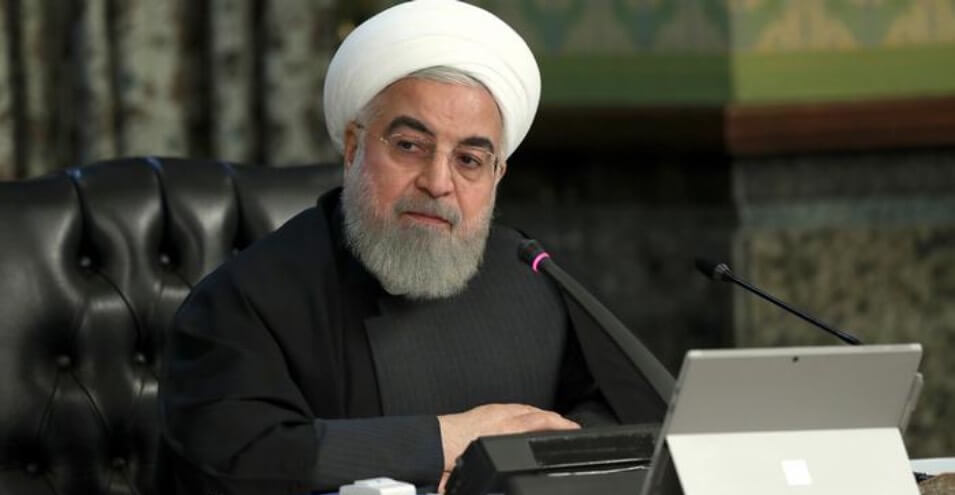
President Hassan Rouhani and his First Vice President Ishaq Jahangiri repeatedly accused their rivals of lying about this education document in election speeches and debates.
One day before the elections, Jahangiri wrote in a statement about propaganda against this education document: “Some have spread extensive and highly false rumors in the society of faithful and zealous people of the country, which will have irreparable consequences and dangers for the system and the country’s social capital.”
The First Vice President, referring to “the continuation of poisoned rumors and destructive measures” which, according to him, are based on false and incorrect information, characterized these propaganda efforts as “a clear example of spreading obscenities and slander against the country and the sacred system of the Islamic Republic of Iran, insulting committed teachers and the country’s education, and disturbing public minds.”
The UNESCO education document emphasizes issues such as environmental protection education, gender equality, eliminating discrimination against minorities, civil rights, and the necessity of providing equal social opportunities for women and men.
Providing Incorrect Information to Khamenei?
Shortly before the elections, the Leader of the Islamic Republic, Ali Khamenei, strongly opposed the UNESCO education document in a meeting with a group of educators and said that Iran “will not accept such documents.”
In one of his election speeches, Hassan Rouhani attributed Khamenei’s reaction to incorrect information provided to him about UNESCO’s educational recommendations and how it would be implemented in different countries.
The initial draft of the “2030 Education Action Framework” was presented in June 2015 to the World Education Assembly meeting in Incheon, South Korea, and its final text was approved in November of that year at the meeting of high-ranking education officials, on the sidelines of the 38th UNESCO General Conference.
Ali Asghar Fani, the then Minister of Education, announced at that assembly: “The Islamic Republic of Iran does not consider itself committed to the sections of the ‘2030 Education Action Framework’ that in any way conflict with national regulations and priorities, religious beliefs, and cultural values of Iranian society.”
Rouhani: I Will Not Let This Conspiracy Pass
After winning the presidential election, Hassan Rouhani called the propaganda against the UNESCO education document a conspiracy and said: “How much they went around spreading poison, saying Islam is lost and in all our schools morality is trampled. Whoever made accusations, insulted, and slandered, I have forgiven everyone, but I will not let this 2030 conspiracy pass.”
The president, by asking his rivals “why did you insult our teachers and students,” clarified that he will pursue this matter even until the end of the twelfth government.
Therefore, the invitation for Intelligence Minister Mahmoud Alavi to appear before parliament’s Education Commission should be met with the government’s approval.
As the Tehran representative wrote on her Telegram channel, the Intelligence Minister has been invited to parliament to inform representatives about “the latest measures taken by security institutions” to uncover the roots of rumor-mongering and the spread of false news about the UNESCO education document.
Source: DW