Parliamentary Economic Commission Reports $25 Billion in Annual Smuggling
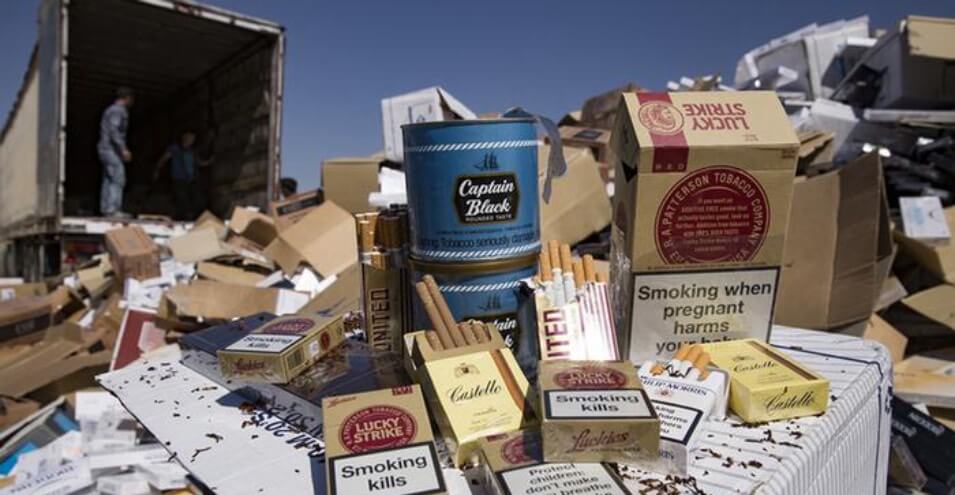
After two years of investigation, Iran’s Parliamentary Economic Commission reported annual smuggling of $25 billion while examining government policies against contraband, stating that many institutions have failed to cooperate in fighting smuggling.
The Economic Commission’s report on “investigating and inspecting government policies against smuggling and reasons for ineffectiveness in combating it” was presented in the open parliament session on Monday, May 13. According to this report, published by Farsi News Agency, official statistics show that “smuggled goods in various years constitute 22 to 33 percent of the country’s imported goods,” but only 1 to 8 percent of this total has been detected. In other words, “the vast majority of smuggled goods find their way to the domestic market.”
The commission noted that these are official statistics from the Anti-Smuggling Headquarters. However, “if the amount of smuggling exceeds the aforementioned estimates, the proportion of smuggled goods from total country imports will increase.”
The parliamentary investigation and inspection committee also obtained figures different from those officially announced by the Anti-Smuggling Headquarters in years 2016 and 2017.
The results of these investigations show that the volume of smuggled goods in 2016 and 2017 was between $21.5 to $25.5 billion, while the figures announced by the mentioned headquarters were approximately $12.5 billion in 2016 and $13.1 billion in 2017. The investigation committee stated: “This stark discrepancy raises numerous questions and doubts regarding the method of estimating smuggling volumes.”
The report described the phenomenon of smuggling of goods and currency as “one of the main challenges of the Islamic Republic system” and one of the “manifestations of economic corruption” that “has a direct negative impact on production and employment as well as monetary and financial sectors.”
The phenomenon of smuggling in the Islamic Republic is nearly as old as the system itself. One of the first to speak openly about it was Mehdi Karroubi, who raised it during his presidency of the sixth parliament. He reported 33 unauthorized docks and said that some of them were controlled by institutions engaged in importing and exporting goods.
In July 2012, Mahmoud Ahmadinejad at a conference on preventing smuggling of goods referred to “our own smuggler brothers” and revealed huge revenues from cigarette smuggling. He said: “Between 55 to 60 billion cigarettes are consumed in Iran, equivalent to 2 trillion tomans. This figure tempts all first-class smugglers in the world, let alone our own smuggler brothers.”
At that time, these remarks were met with a response from Mohammad Ali Jafari, the then-commander of the Revolutionary Guards. He told Mehr News Agency: “This is a deviant discussion raised by people who, in our view, have a vested interest. This organization, like other military institutions, has military docks at its disposal, but no commercial transactions take place in them. Armed forces naturally have military docks due to their military situation, but they have never used this position for smuggling goods.”
He claimed these forces had never used this position for smuggling goods. Said Mortazavi, the then-head of the Anti-Smuggling Headquarters, had also said a year before: “There are no unauthorized docks, and their cases have been closed.”
The power factions’ dispute over the volume of smuggling of goods and currency did not end with Ahmadinejad’s term. In early December 2014, Hassan Rouhani at a conference titled “Fighting Corruption” held with the presence of the heads of three branches said: “If information, guns, money, newspapers, news agencies, and other manifestations of power are concentrated in one institution, even if Abu Dhar and Salman are there, it will become corrupt.”
Lack of Cooperation with Necessary Steps to Combat Smuggling
However, examining “government policies against smuggling” shows that not only “Abu Dhar and Salman,” but many government institutions have also failed to provide necessary cooperation with this commission. The report states: “The Customs Organization, despite having the necessary infrastructure, has not taken comprehensive measures for information exchange until the date of this report’s preparation.”
The report also pointed to failures in actions that should have been taken by the Anti-Smuggling Headquarters, including “failure to issue insurance policies for fleets with unregistered transport documents, health insurance companies’ refusal to provide insurance coverage for drugs without identification codes, prevention of issuance of bills of lading for origins and destinations not registered in the comprehensive warehouse and goods storage center system.”
Another issue is the lack of “organization of the Central Bank’s foreign exchange intervention,” which from the time of the report’s preparation until its reading in parliament “has not taken positive measures.” The committee stated: “In order to uncover facts and realities in the smuggling field, it has designed and implemented multiple measures, including: designing and implementing various inspections of customs and goods and currency entry and exit points.”
Smuggling Occurs Through “Official Channels”
The investigation and inspection committee emphasizes that the methods used for smuggling of goods and currency “have tangible evidence” and their report is based on definite information and multiple cases rather than probability and assumption.
An important point in the report is that the investigation committee found three methods of smuggling goods that, according to the report’s authors, “despite statements by some officials, including Customs Organization officials, the vast majority occurs through official procedures from official channels.”
The committee called for serious pursuit of the “Development and Permanent Security Bill for Border Areas” by the Interior Ministry, including in the provinces of West Azerbaijan, Kurdistan, Kermanshah, and Sistan and Baluchestan. Other issues the report refers to include the failure to complete and launch the convicted smugglers database, deficiencies in handling major and large cases, enforcement of sentences, lack of special courts to handle smuggling cases, and failure to complete the system for identifying and combating contraband goods.
The report’s authors state: “This even happens in trillion-toman cases, and the offender ultimately receives imprisonment instead of a monetary fine.” According to statistics provided by the Enforcement organization regarding the amount of collected fines from cases, “collected fines from 2013 to 2017 were less than one percent, approximately 0.25 percent, and in contrast to the enormous volume of smuggling in the country, smugglers will face less than one percent in financial penalties.”
Institutions That Have “Performed Poorly”
The investigation committee’s report referred to “weak performance” of 12 institutions including the Chamber of Commerce, Customs Organization, Ministry of Economy, Free Zones and Special Economic Zones Secretariat, Guild Chamber, Ministry of Foreign Affairs, State Property Organization, Cooperative Chamber, Ministry of Interior, Broadcast Media Organization, and Ministry of Health, Treatment and Medical Education.
The report states that regarding legal obligations in the field of anti-smuggling, “no specific action was taken for more than 40 obligations and measures were incomplete for more than 70 obligations.”
The investigation committee mentioned the Anti-Smuggling Headquarters’ measures related to the Minister of Justice and reported the non-registration of convicted persons’ information in the contraband convicts database.
Overall, the report cast light on aspects of corruption prevalent in various government departments and institutions; a government in which people have witnessed everything from gasoline smuggling to the “disappearance” of oil drilling rigs. Two years ago, according to reports published in Iranian media, the financial circulation of gasoline smuggling from Iran to neighboring countries equaled the total development budget of this country. Hassan Rouhani said in March 2019 in Gilan’s administrative council: “We gave the southern borders to the Revolutionary Guards to fight smuggling; well, there are ten smuggling operations and they catch one; it slips from their hands; it’s very difficult work.”
Source: DW